Constellation Views - 2026
 |
 |
 |
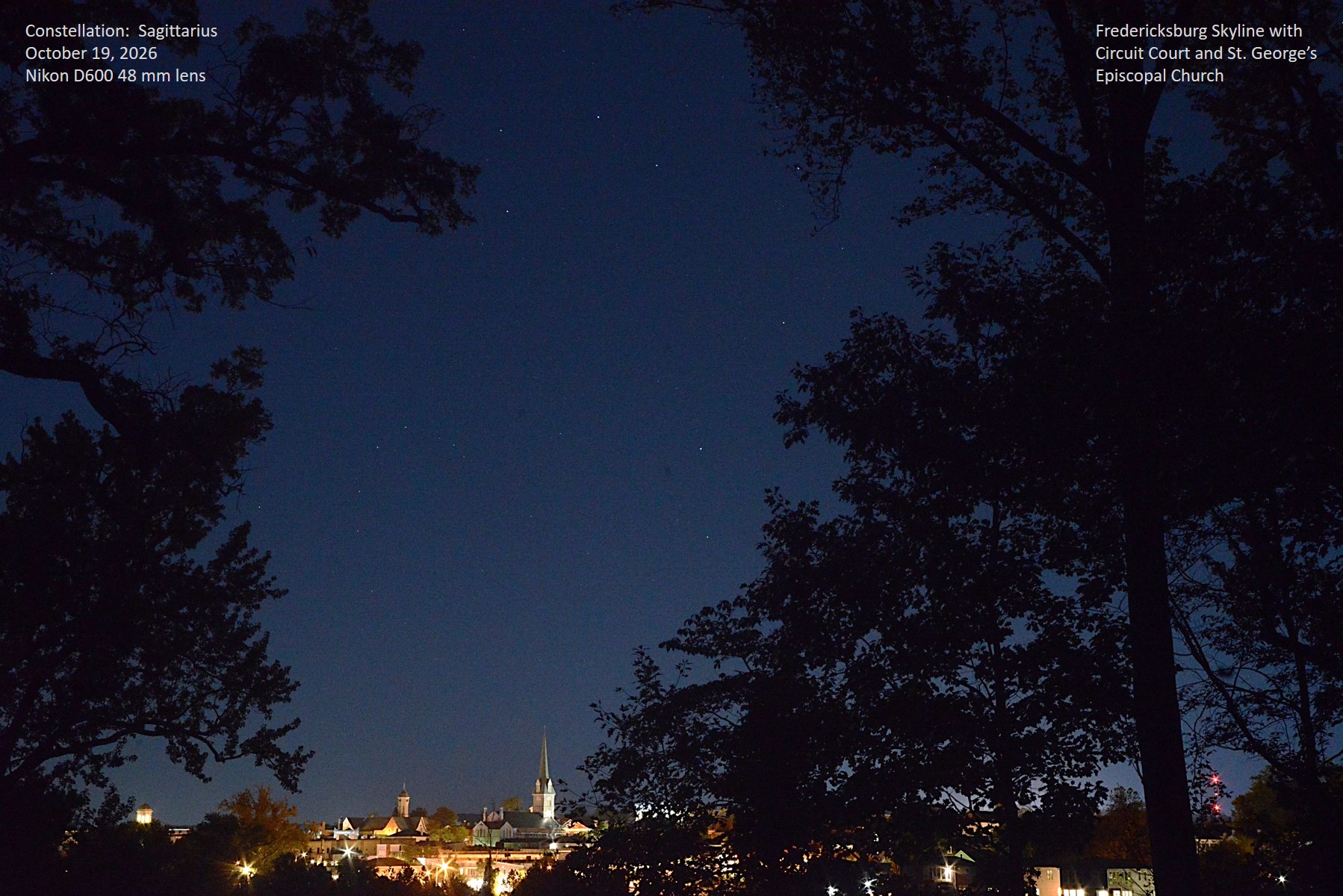 |
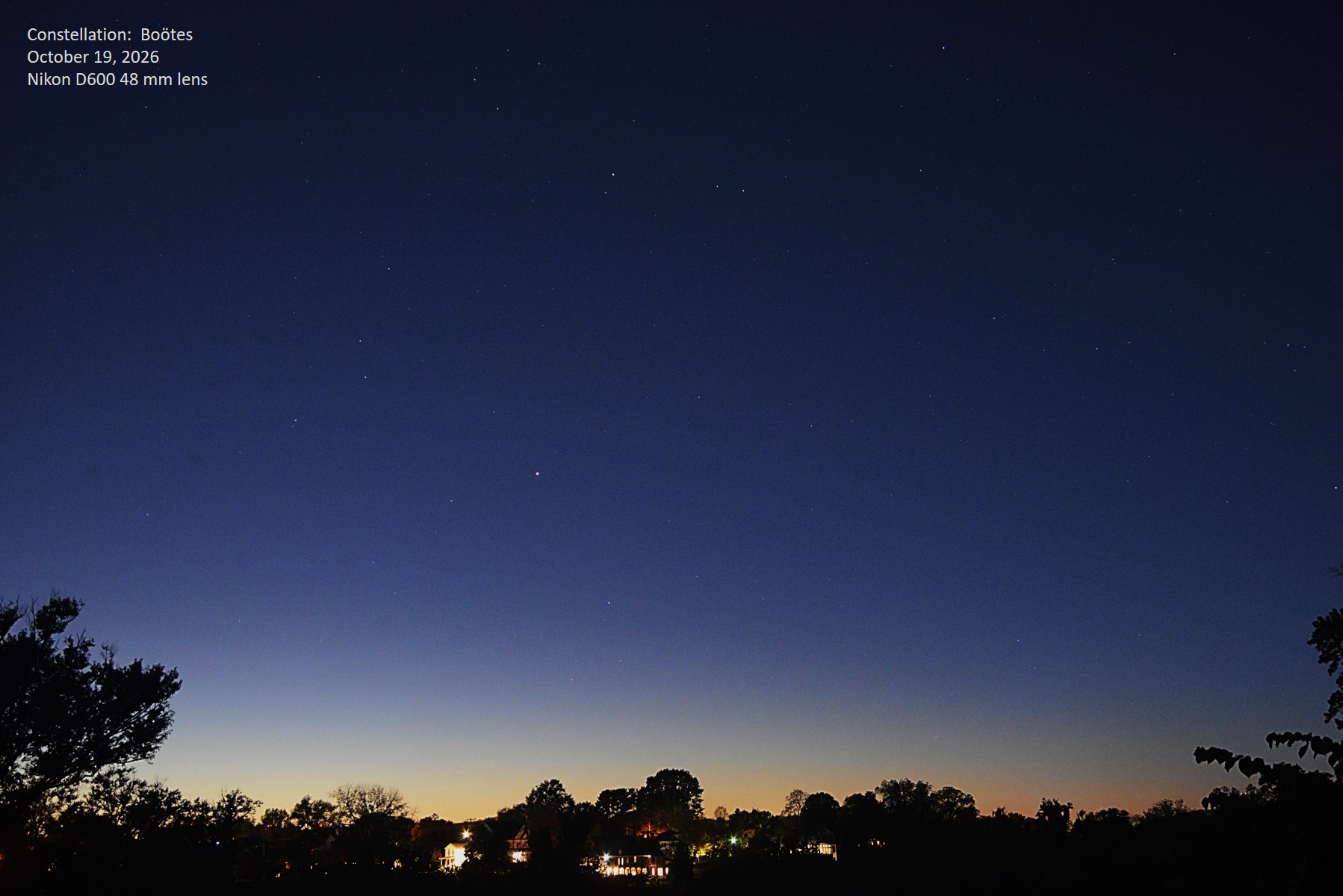
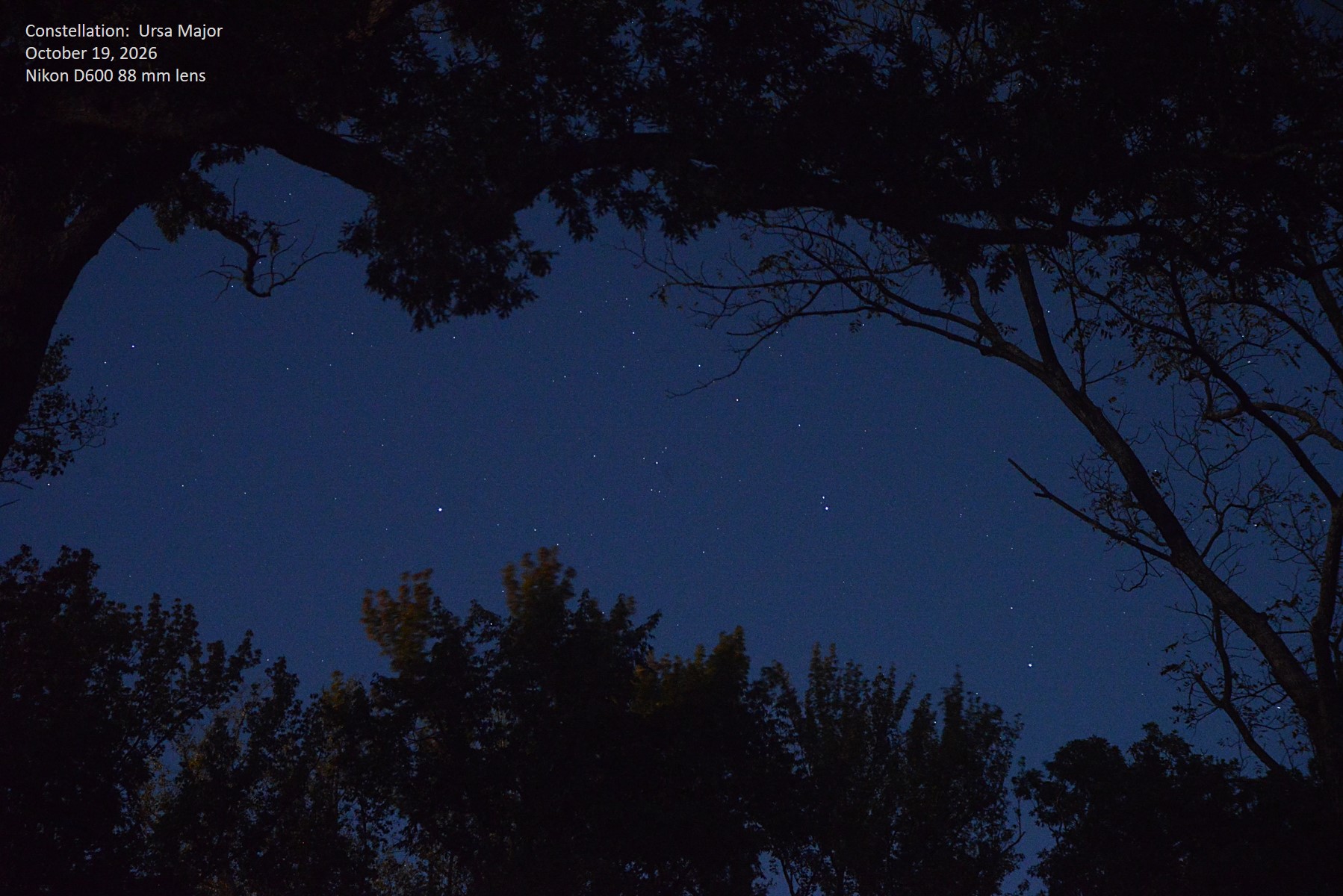
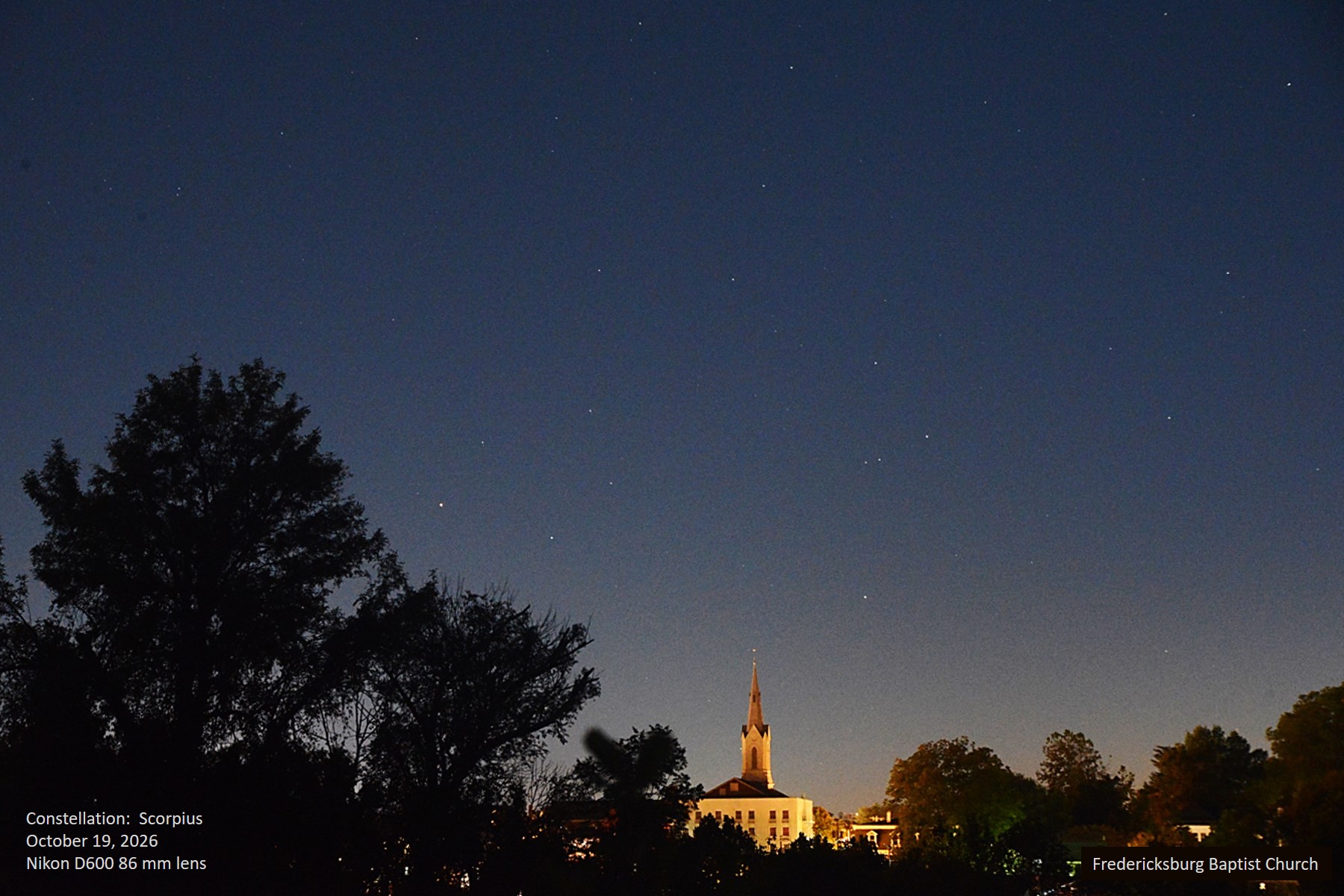
October 19, 2026: Constellations from Fredericksburg, VA From the embankment between Chatham Manor and the Rappahannock River on the evening of October 19, we got several images of the constellations viewed over the city skyline, or in the case of Ursa Major, a view through the massive trees below the Manor. |
|
 |
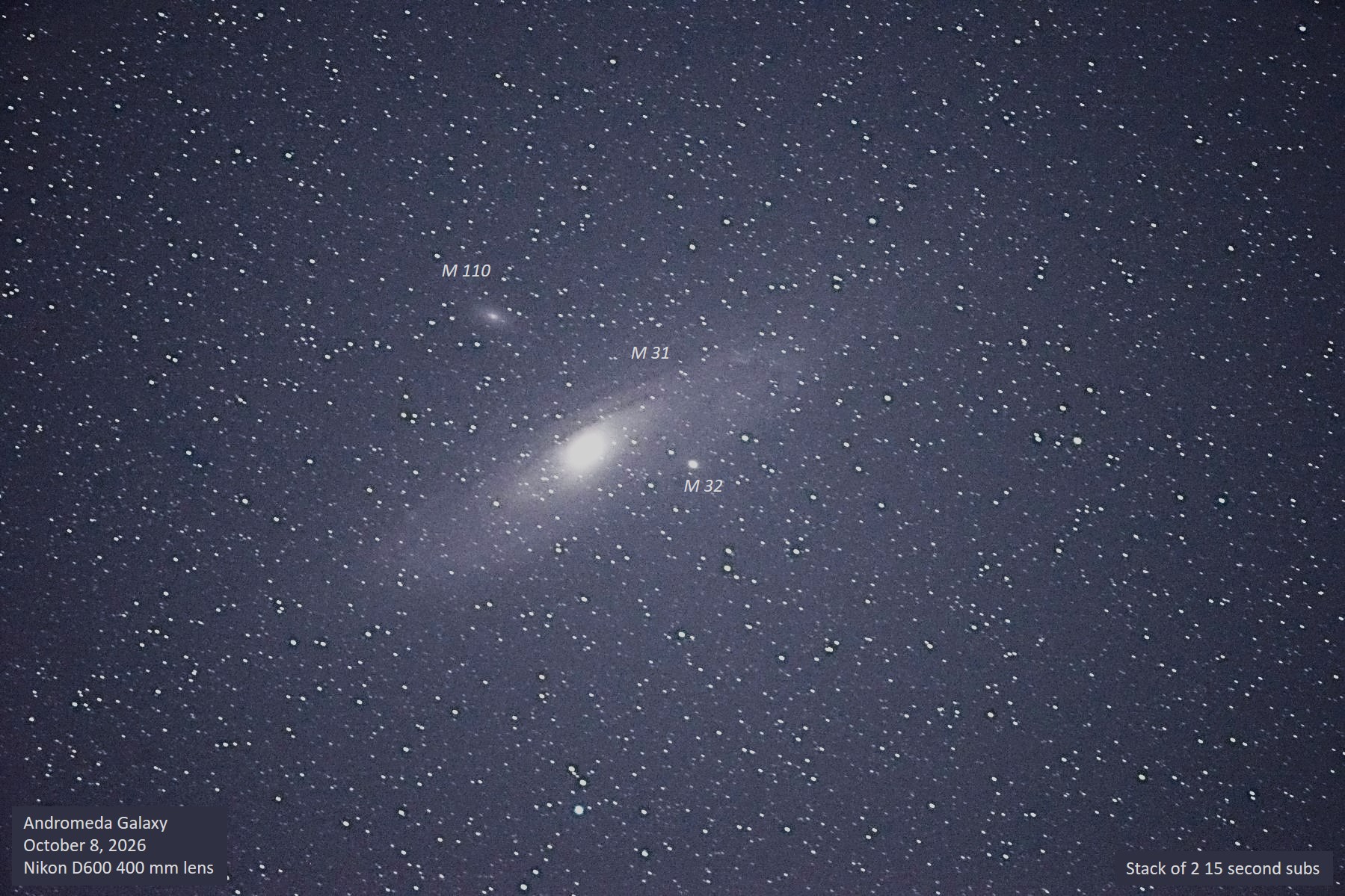 |
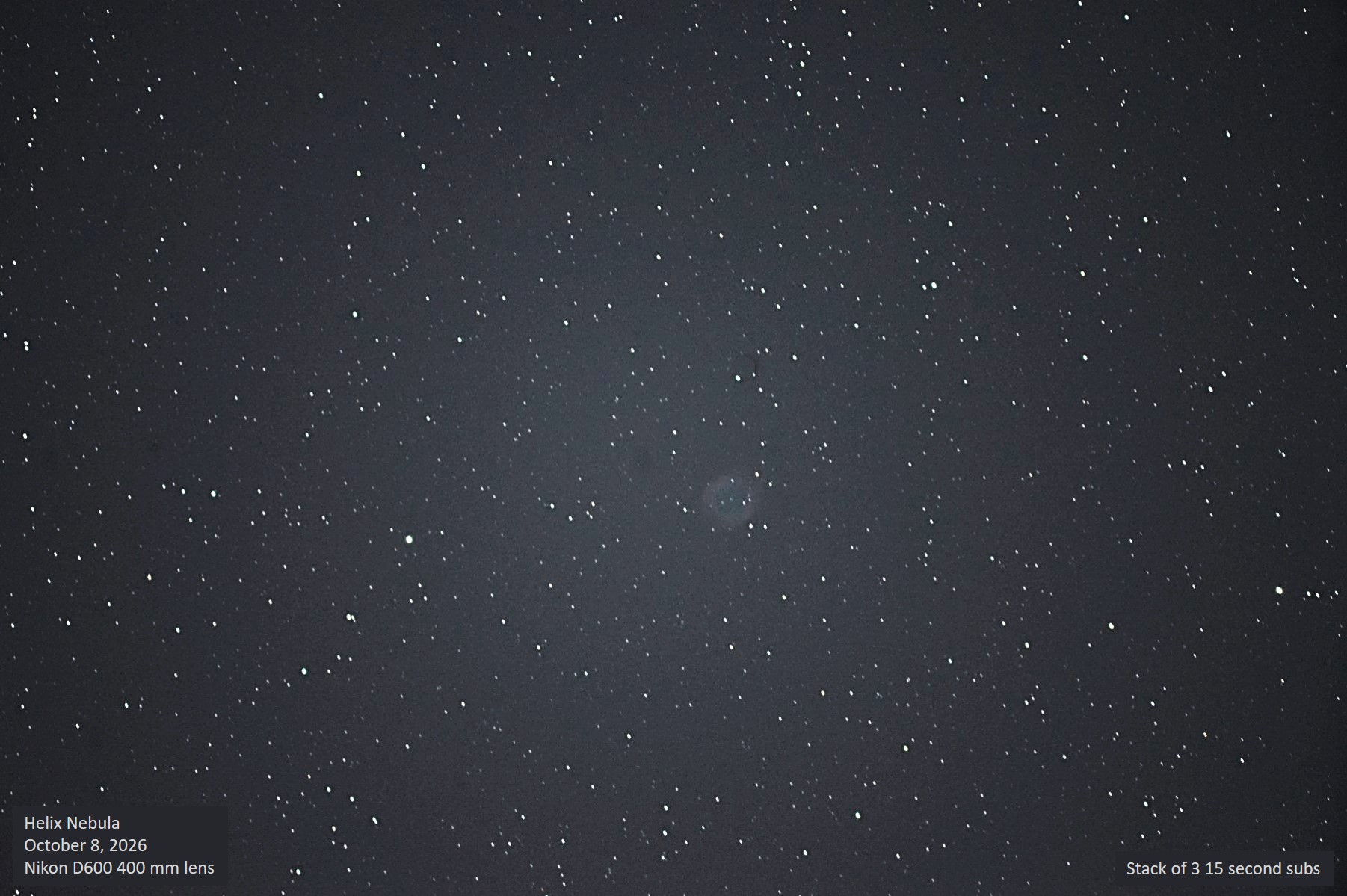
October 8, 2026: Helix Nebula and Andromeda Galaxy I used my new Nikkor 400 mm lens to take several 15-second exposures of NGC 7293, the Helix Nebula in Aquarius, as well as M31, the Andromeda Galaxy, and then used stacking software to combine each set. The Helix Nebula image is just a stack of three 15-second subs, while the Andromeda Galaxy is only two 15-second subs. |
|||
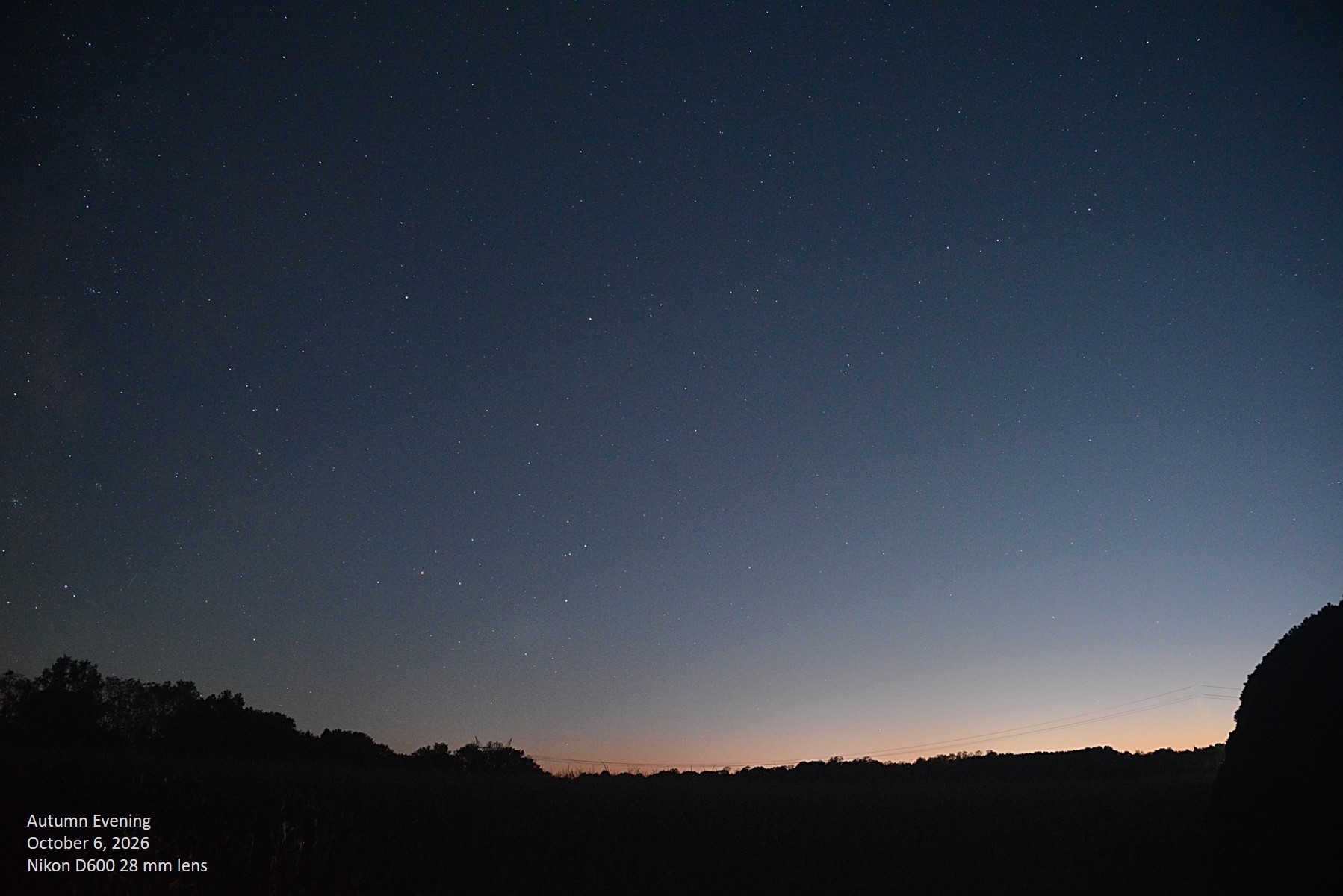 |
October 6, 2026: Autumn Evening The evening sky scene in early October goes from Scorpius on the left to Virgo and Boötes on the right, with Ophiuchus standing above the Scorpion. |
||||
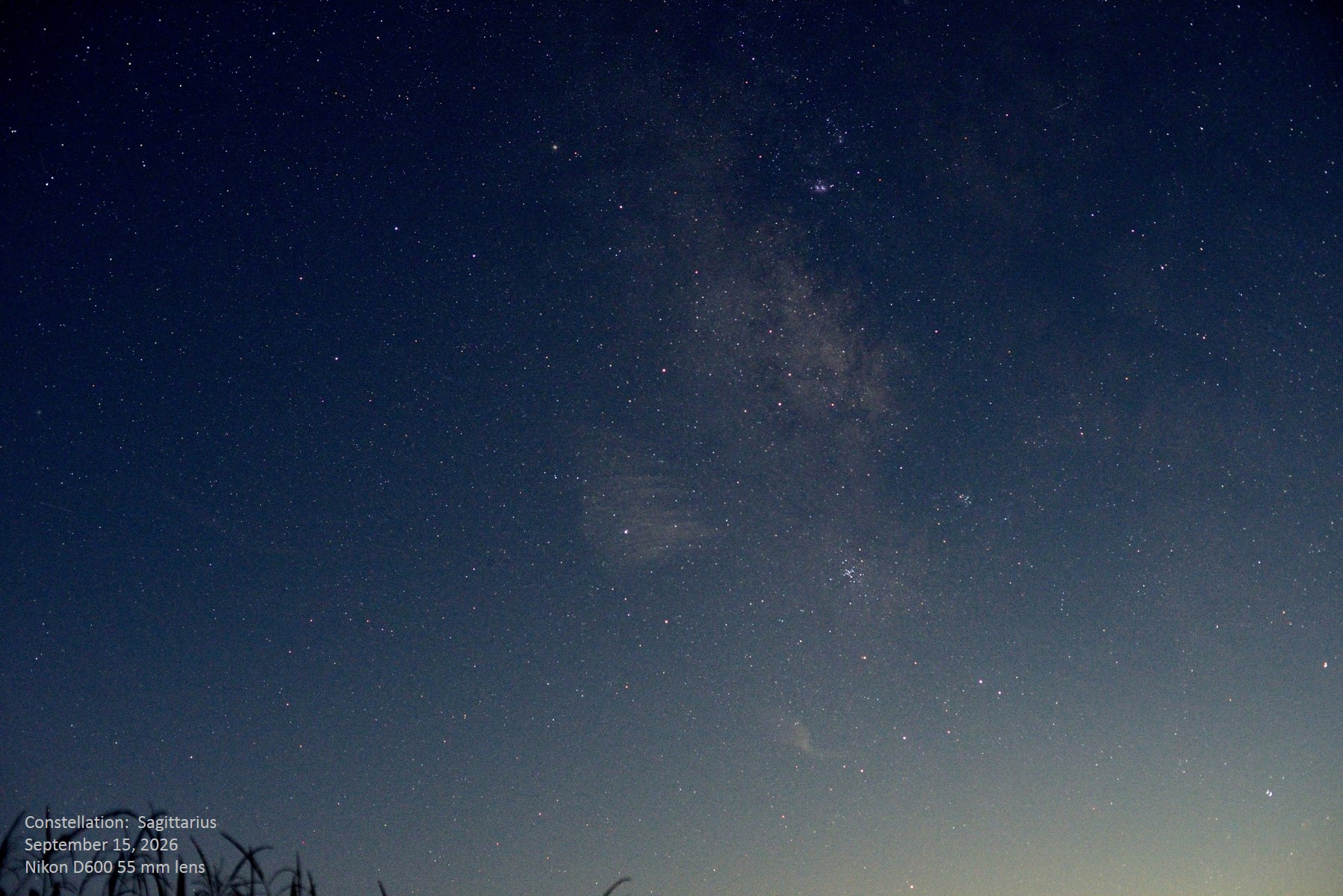 |
September 15, 2026: Sagittarius Sagittarius is tilted over to the southwest and the Teapot is spouting the steam of the Milky Way right after nightfall in late summer. |
||||
 |
 |
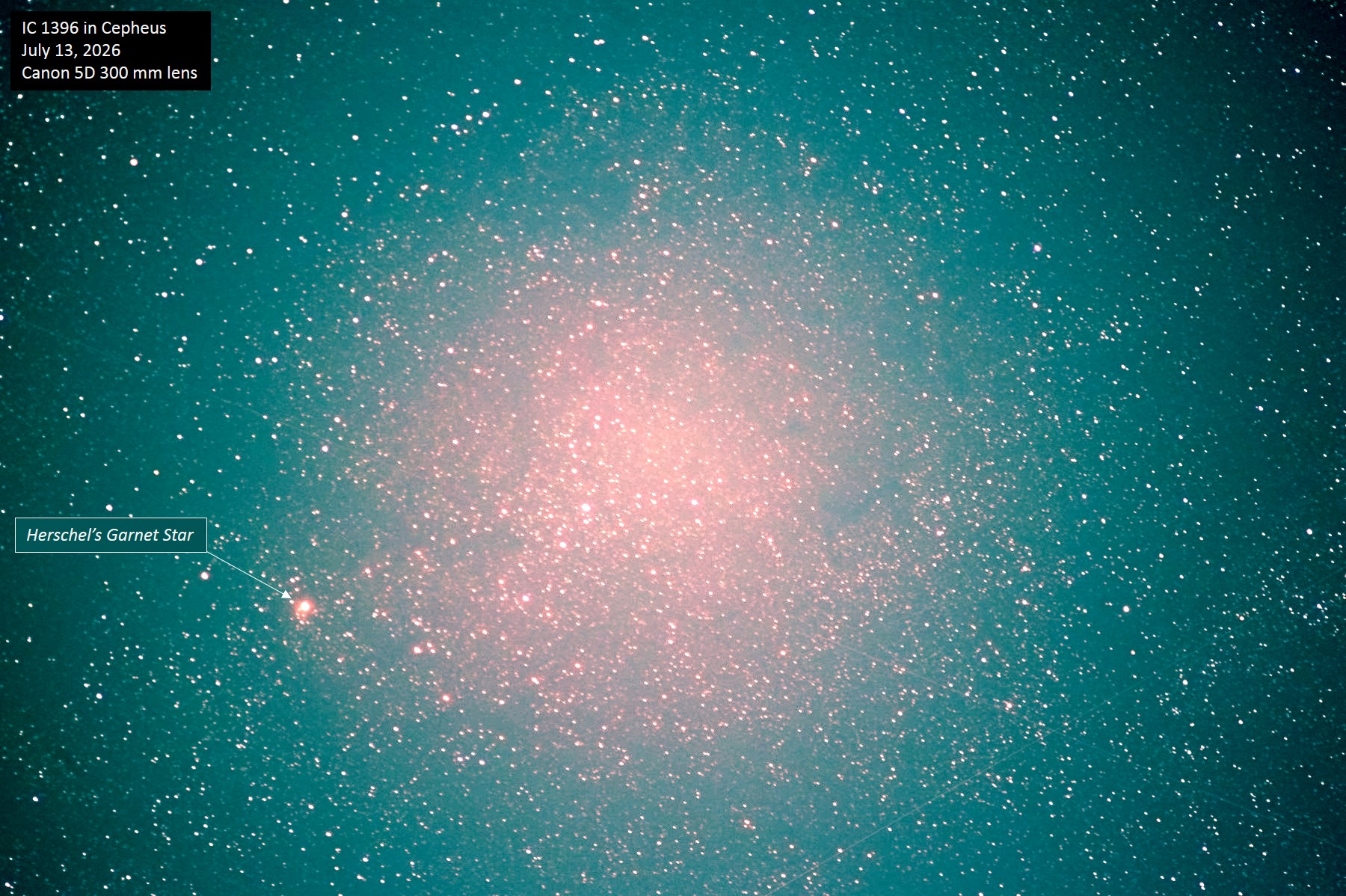 |
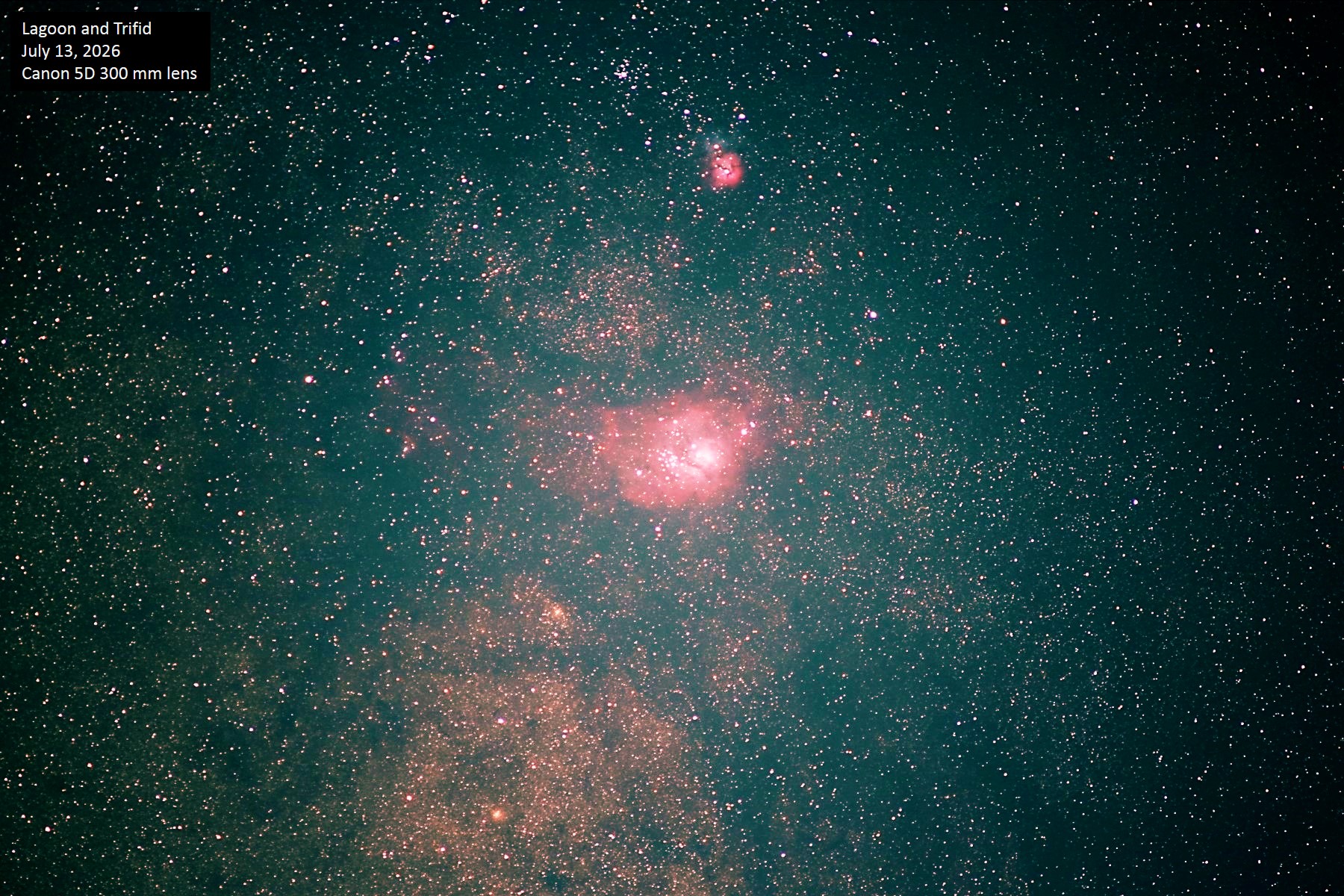
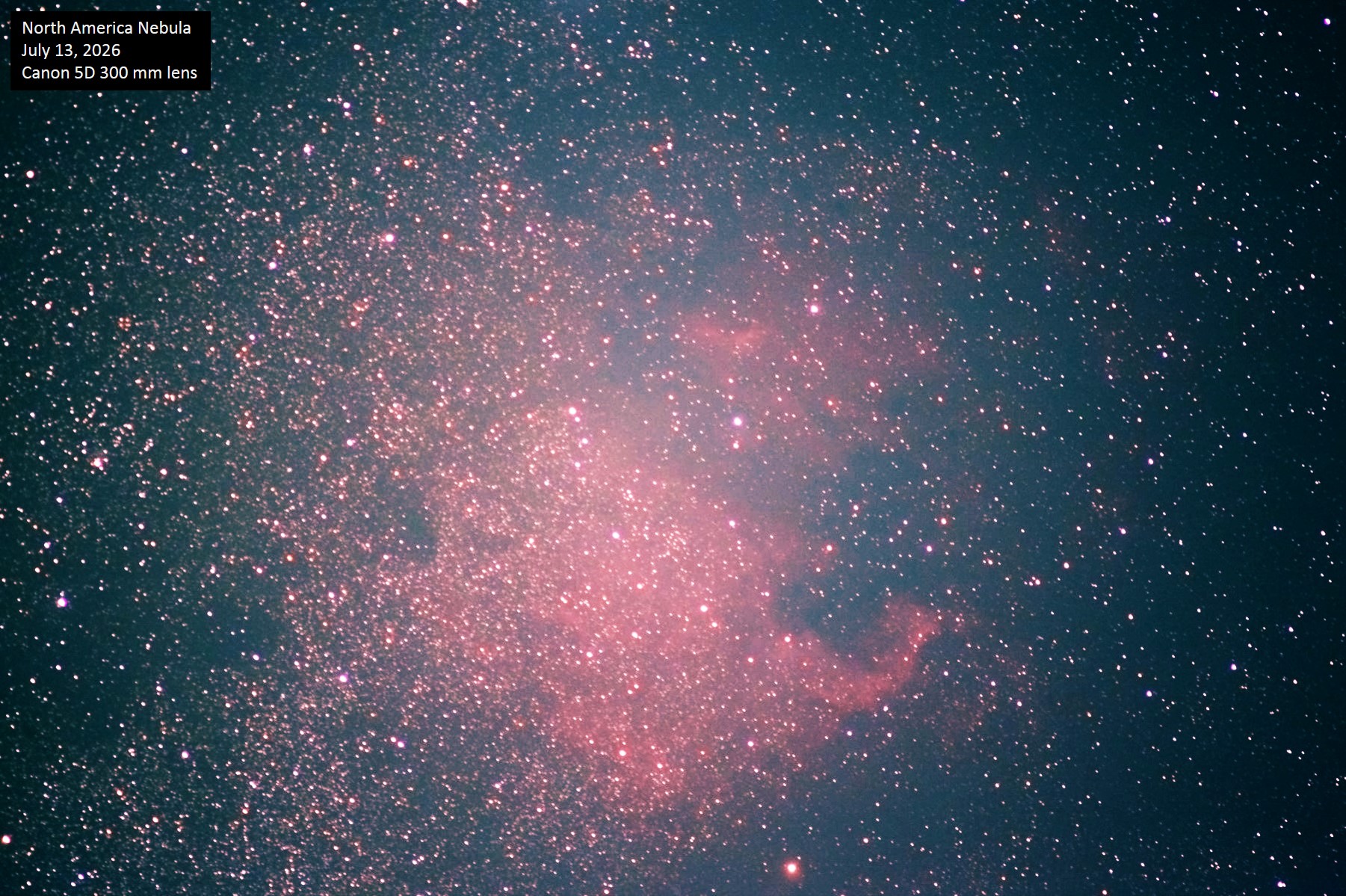
July 13, 2026: Summer Highlights I drove to the mountains because it was supposed to be clear there, but it was actually raining, so I headed back and after 6 hours of driving, arrived home to clear skies :\ These images are stacks of 12 20-second subs, so they total 4 minutes of exposure time each. My Canon 5D is modified to record deep into the red end of the spectrum. |
||
 |
 |
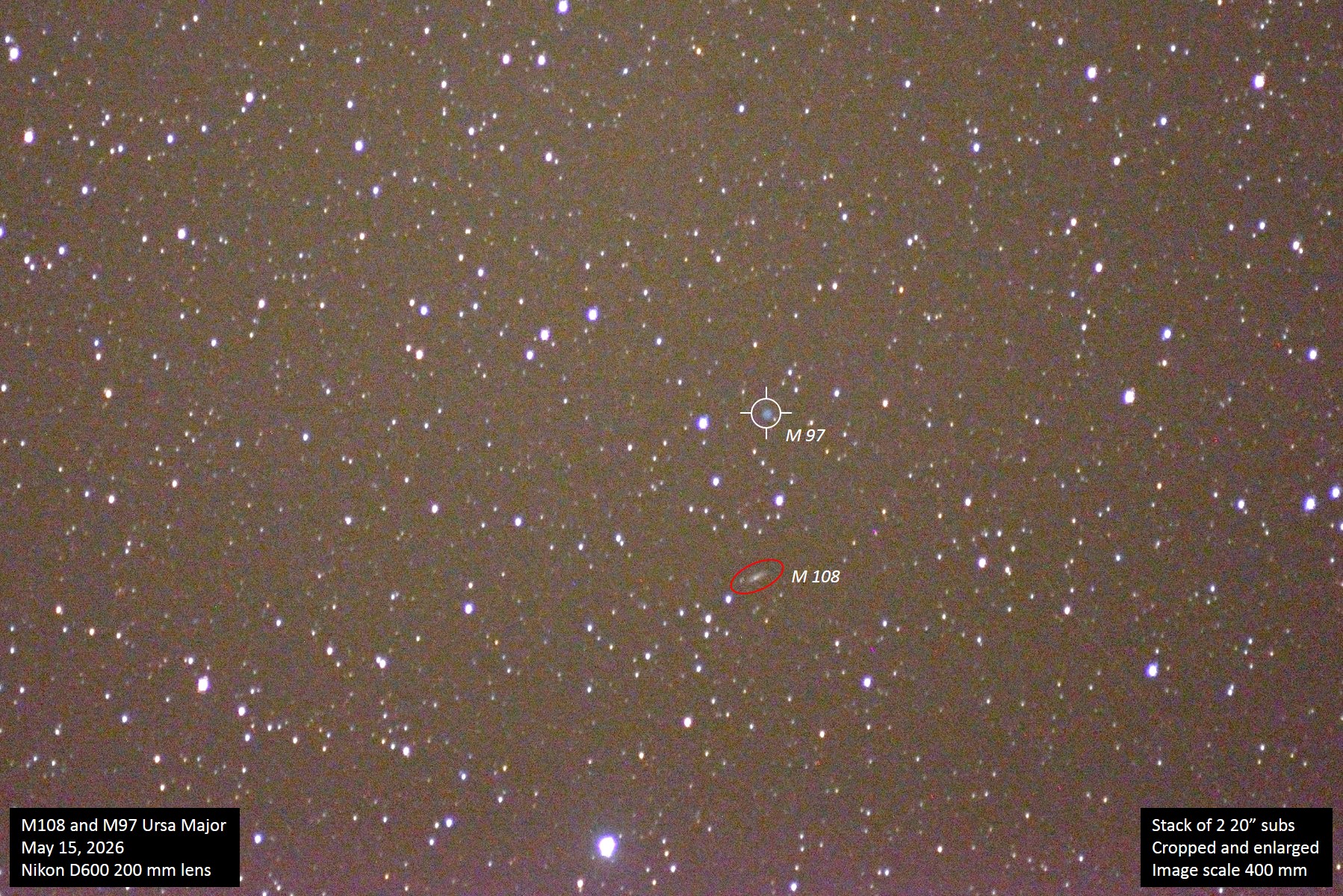 |
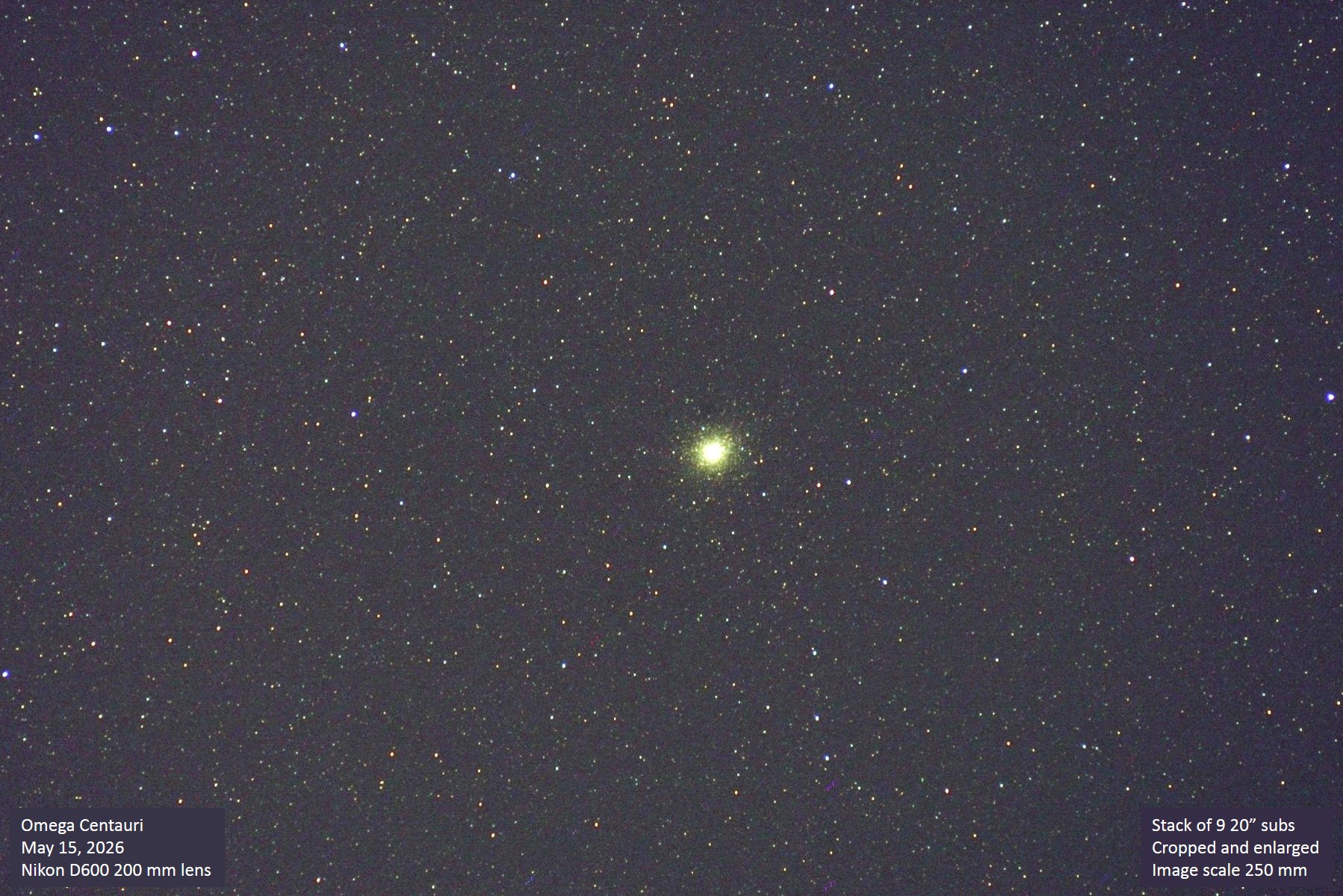
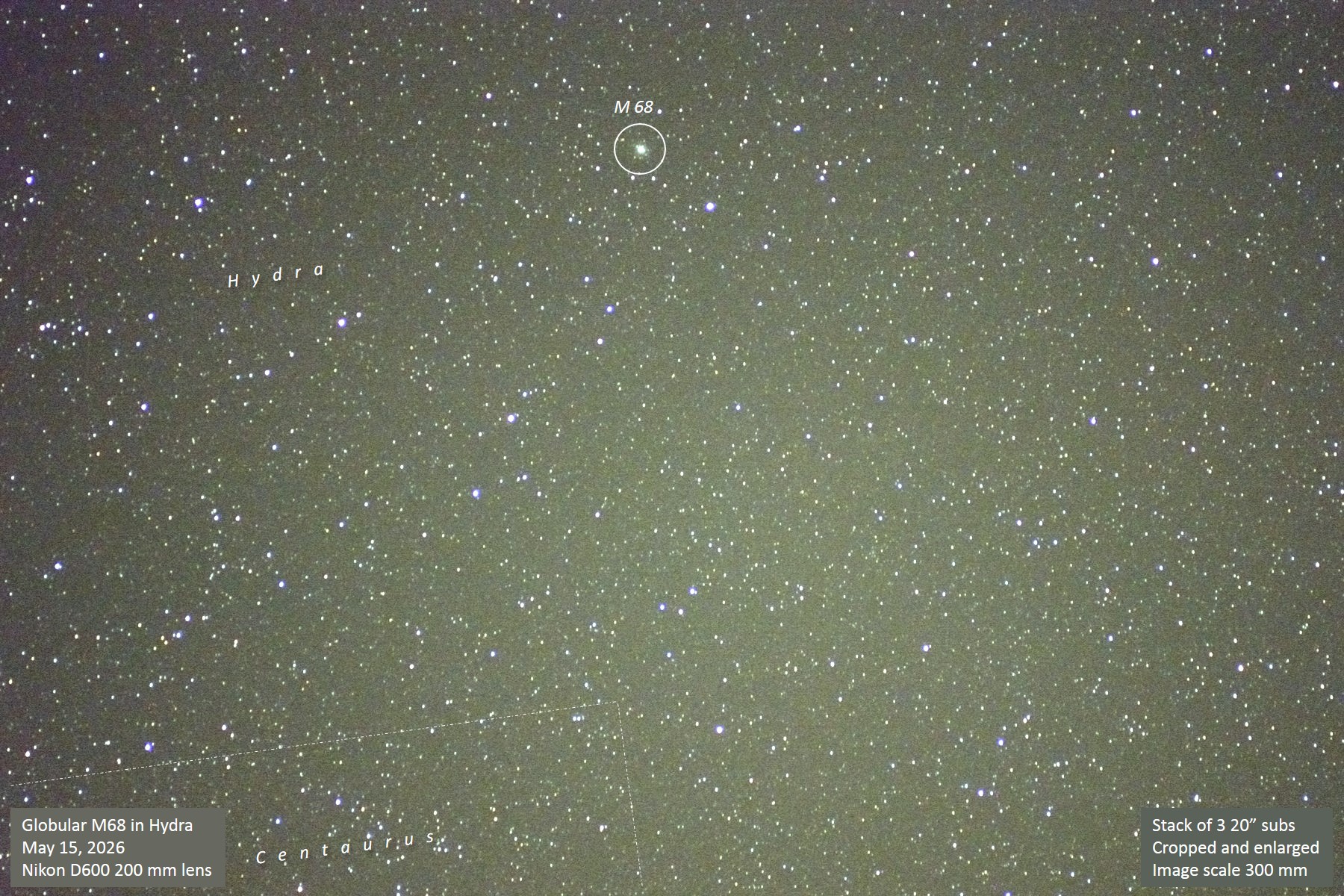
May 15, 2026: Focus on Deep Sky Objects from West Central Texas We profer stacked images of Omega Centauri, M68, and then the region of Ursa Major that includes the galaxy M108 and the Owl Nebula, a planetary known as M97. This view is more or less upside down, with celestial north pointing toward the bottom of the frame. |
||
 |
 |
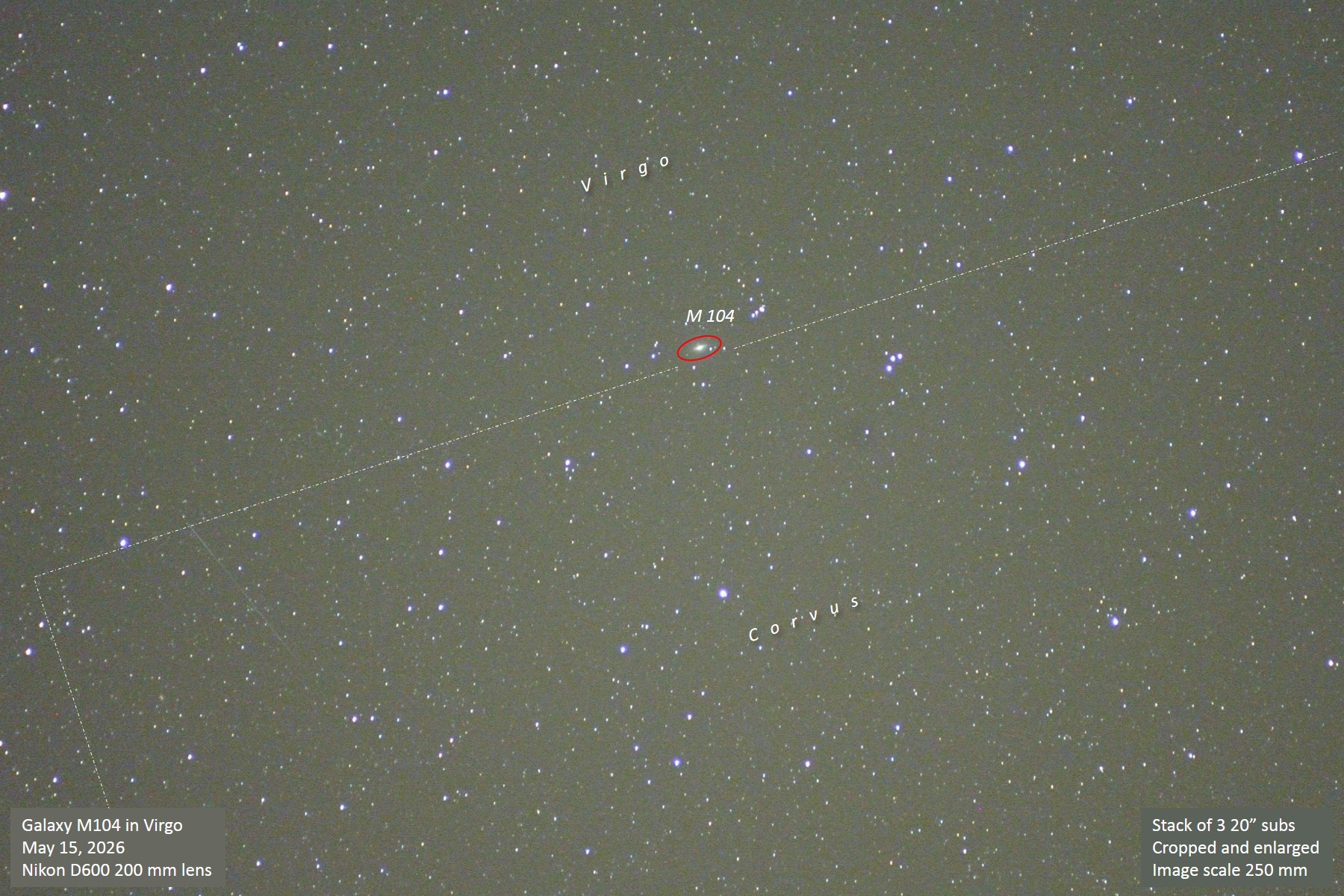 |
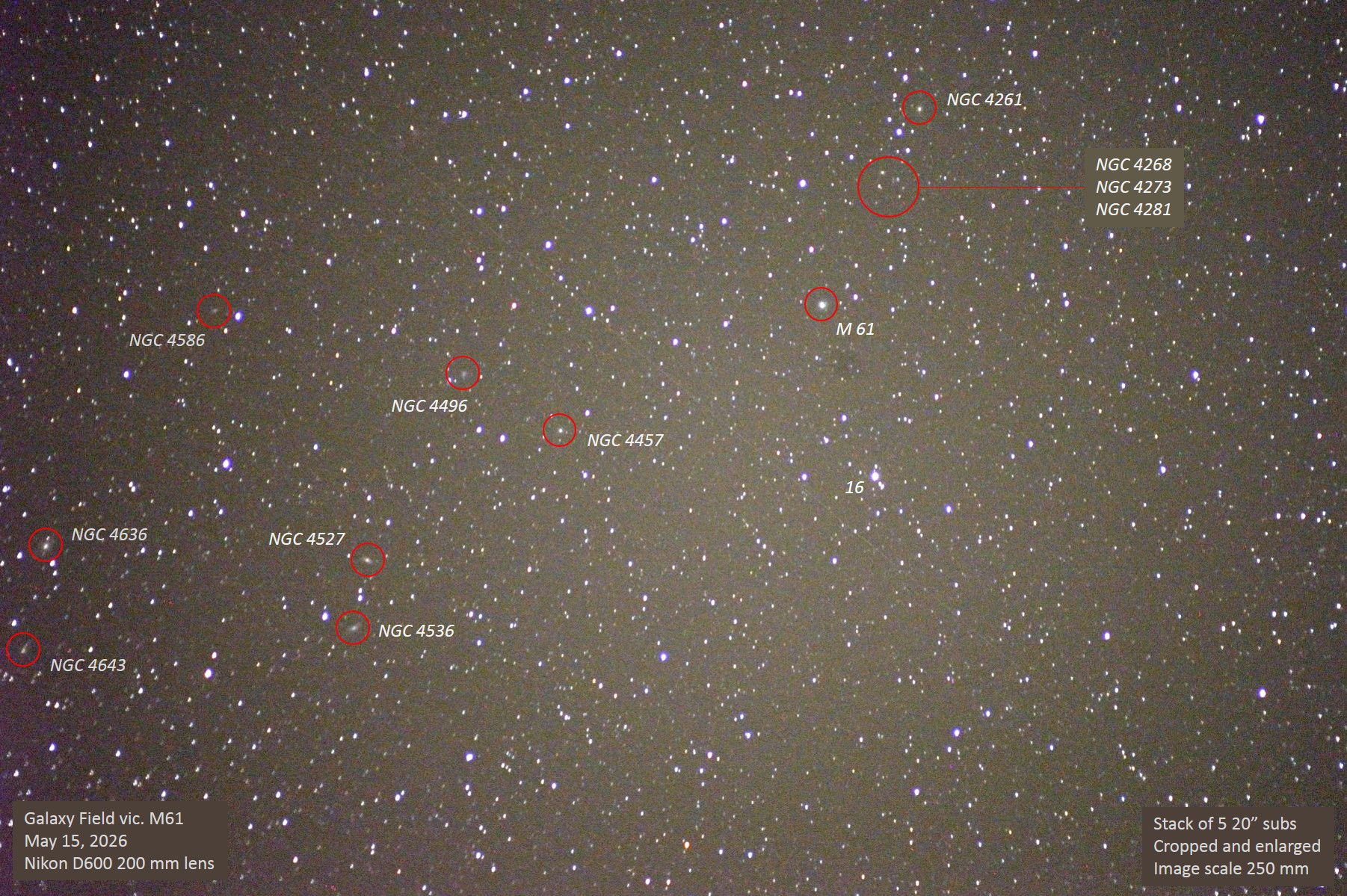
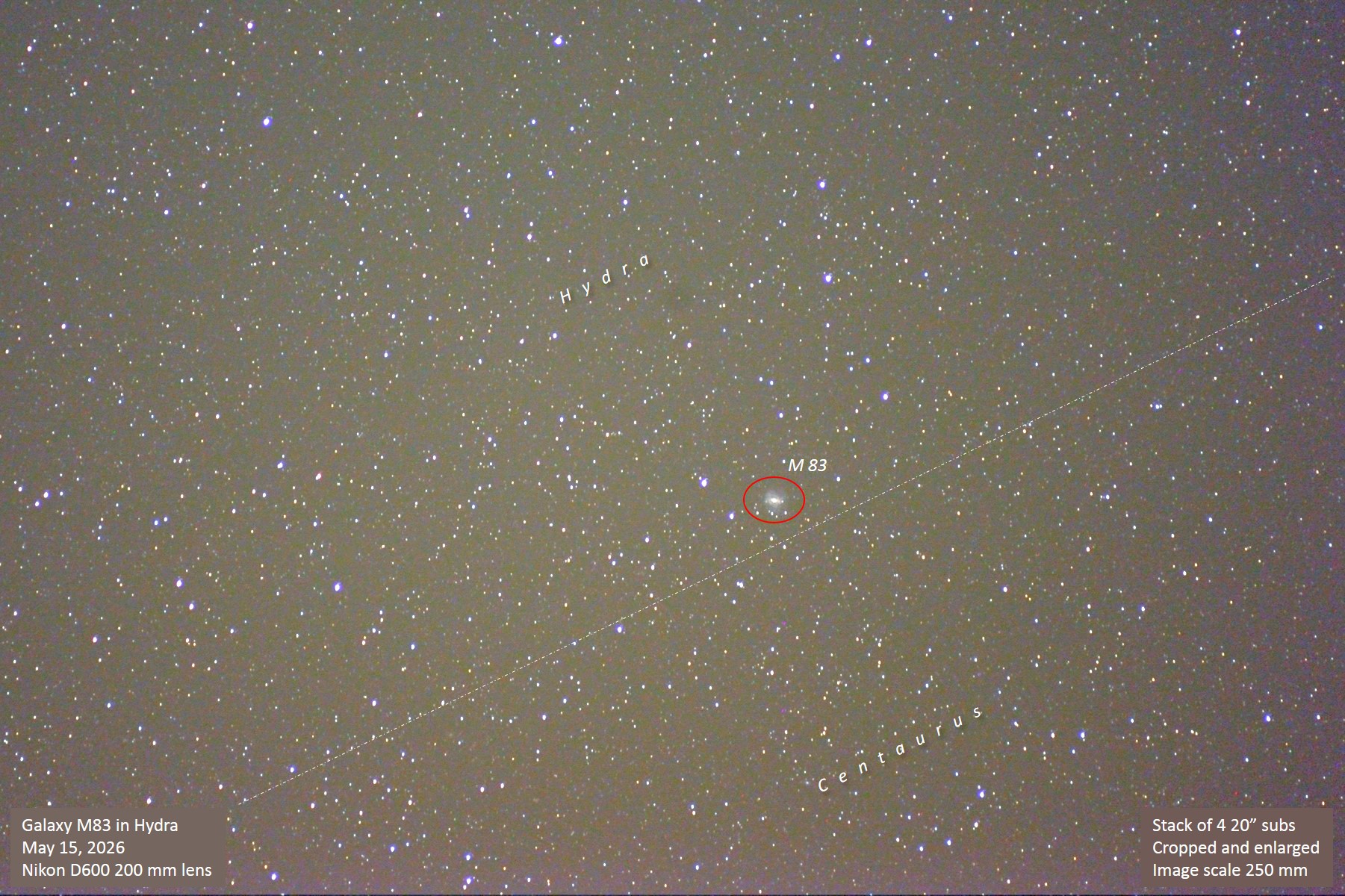
May 15, 2026: Focus on Messier Galaxies from West Central Texas These images are stacks of a few 20" subs of the fields around three prominent Messier galaxies in the springtime sky ~ M61 in Virgo, M83 in Hyrdra, and M104 in Virgo. These shots were made using a 200 mm lens but the results were cropped and enlarged to an image scale that would be equivalent to a 250 mm lens used with a full frame camera. |
||
 |
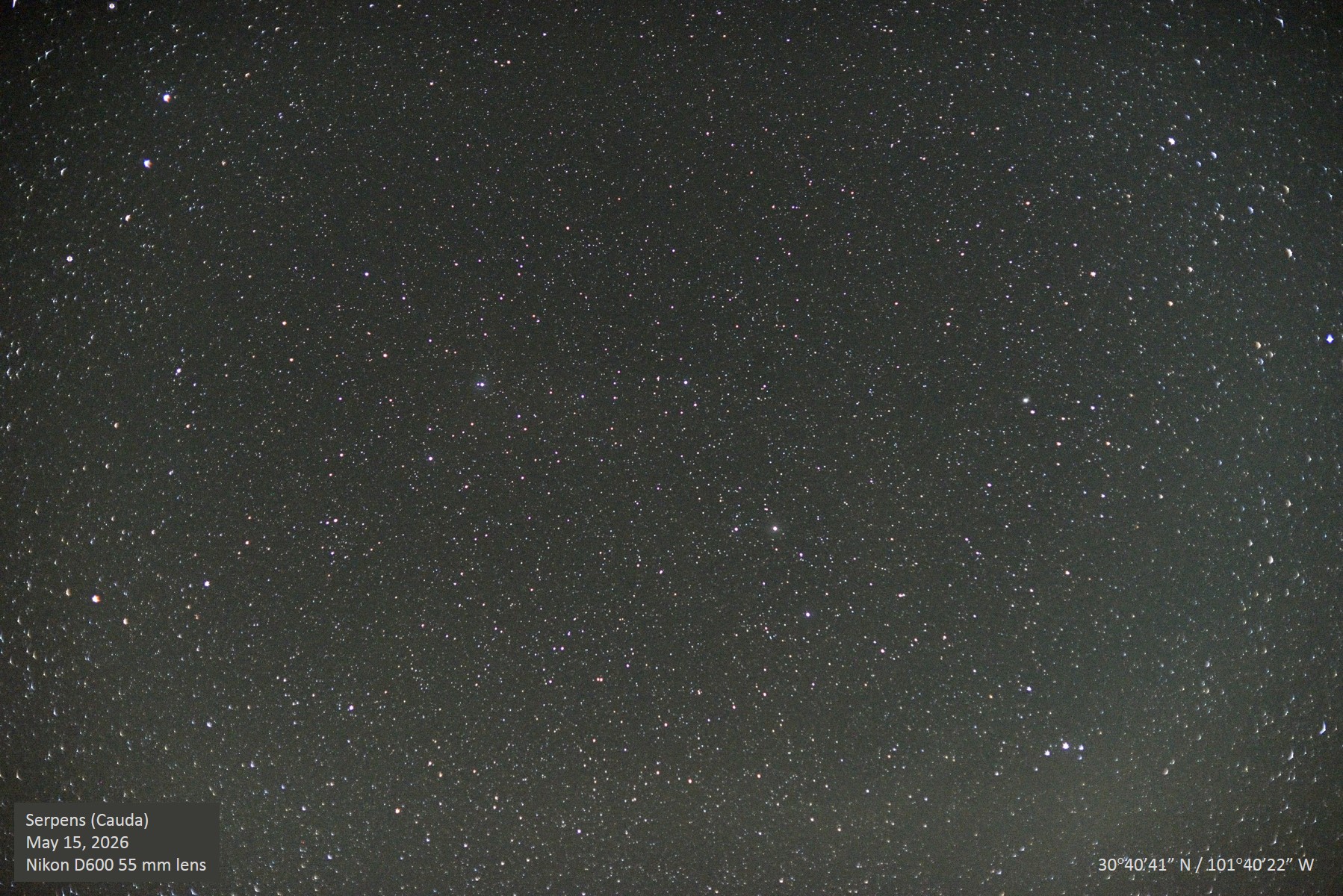 |
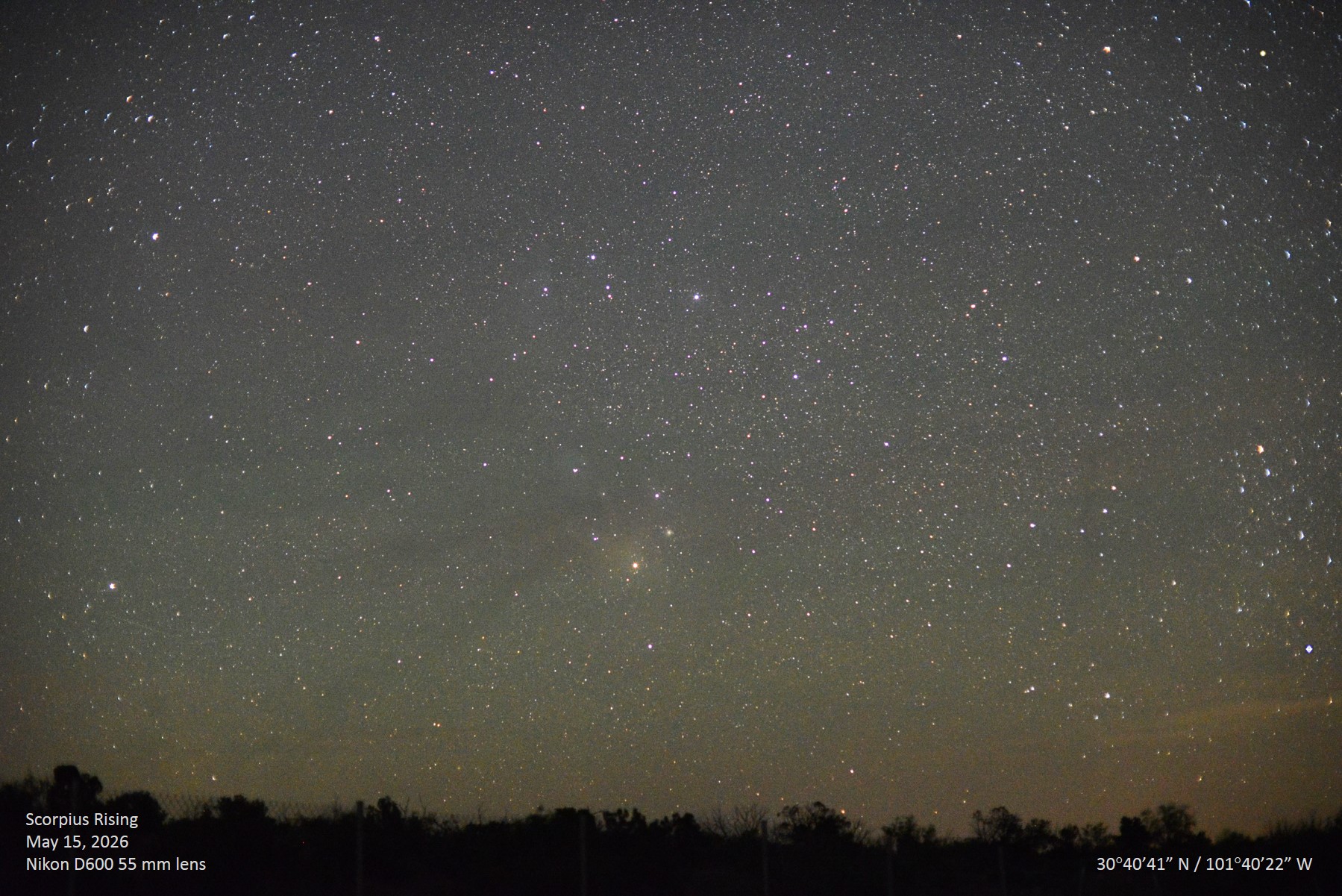
May 15, 2026: Astronomy from West Central Texas For one very beautiful evening in west central Texas at the edge of the Pecos River Canyon, I took some pictures of the constellations and objects. These views show Scorpius rising over the southeastern horizon and the head of the serpent, the constellation Serpens (Caput). |
|||
 |
 |
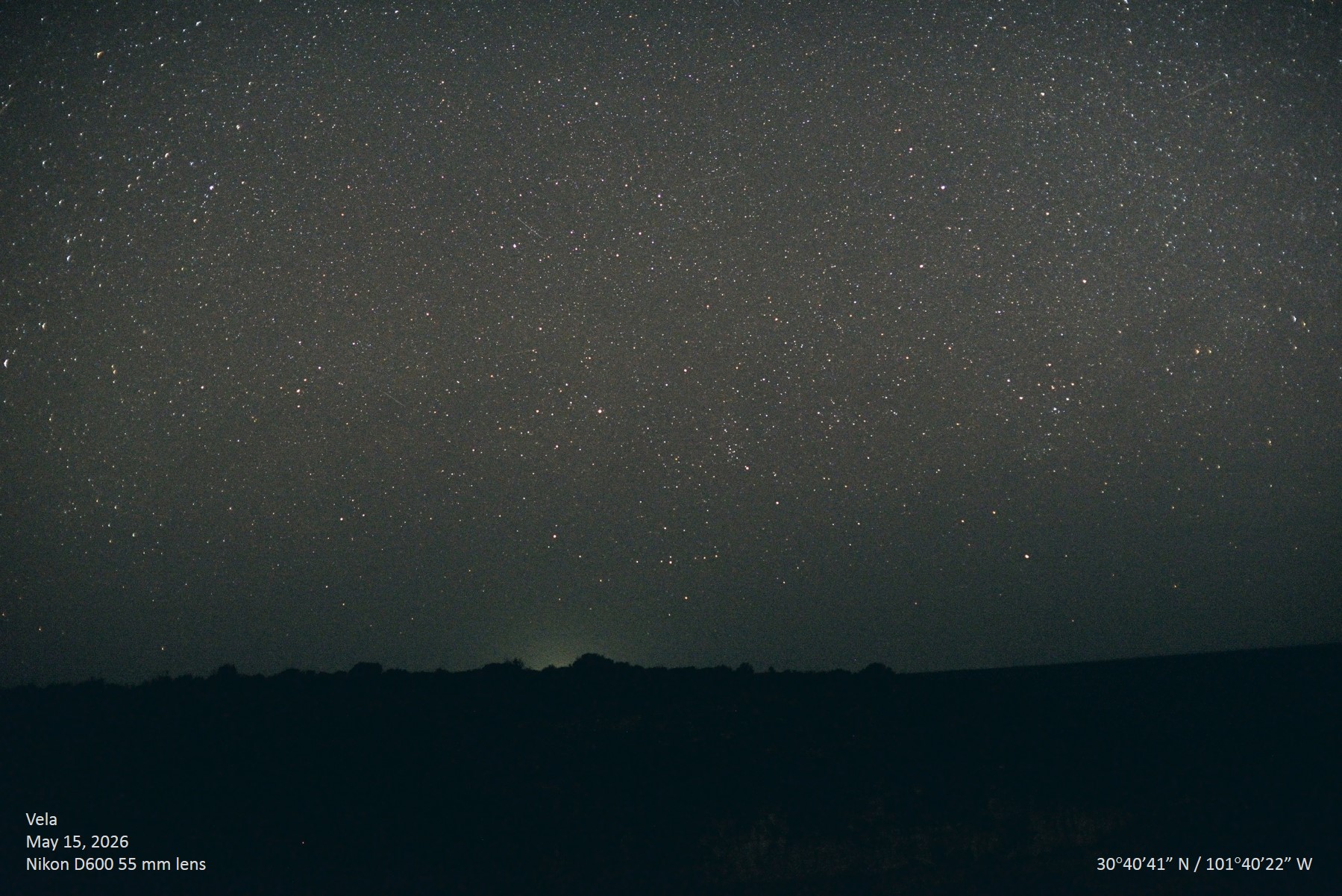 |
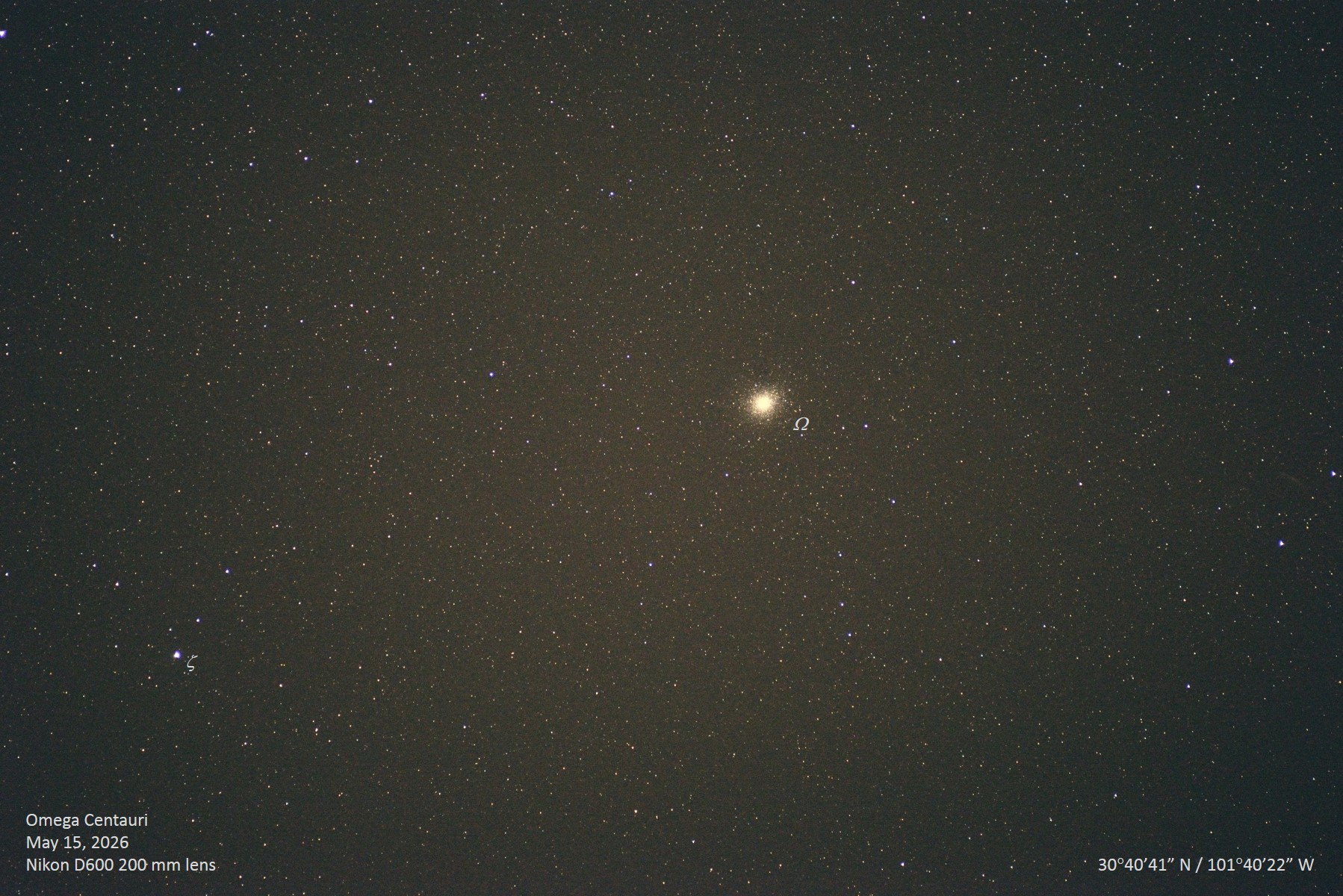
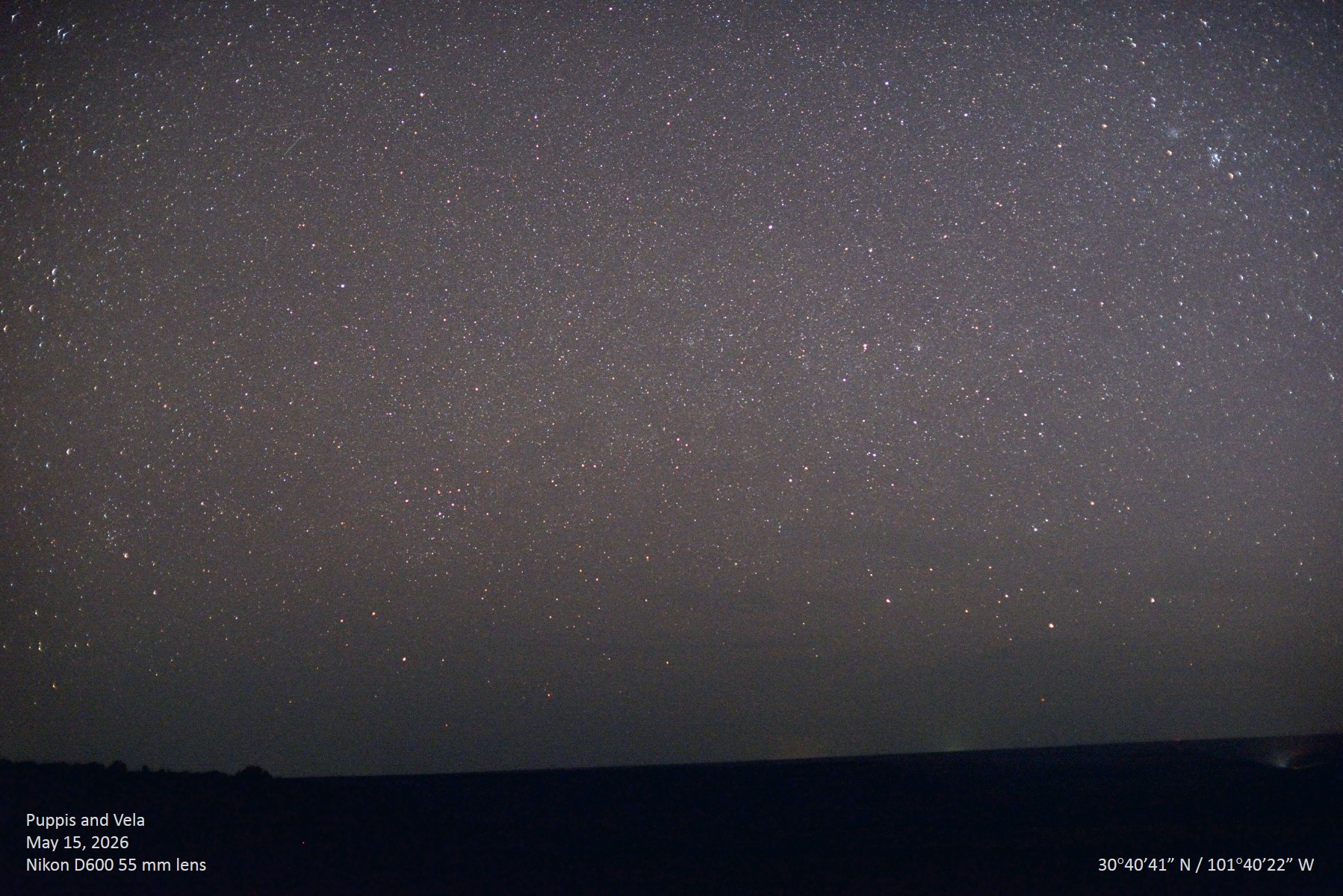
May 15, 2026: Astronomy from West Central Texas For one very beautiful evening in west central Texas at the edge of the Pecos River Canyon, I took some pictures of the constellations and objects. Here we have a telephoto view of the great globular cluster Omega Centauri, Puppis and Vela. |
||
 |
 |
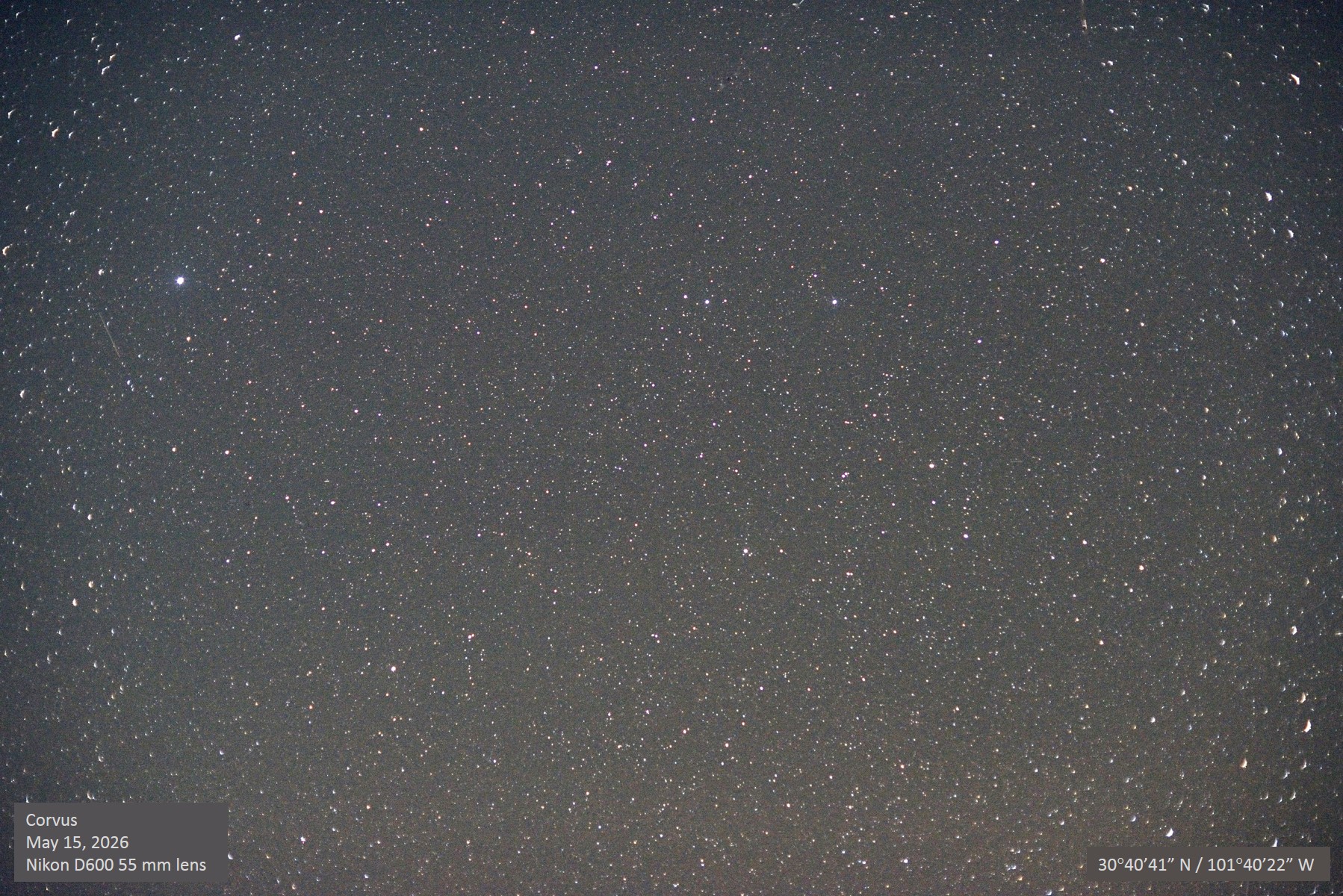 |
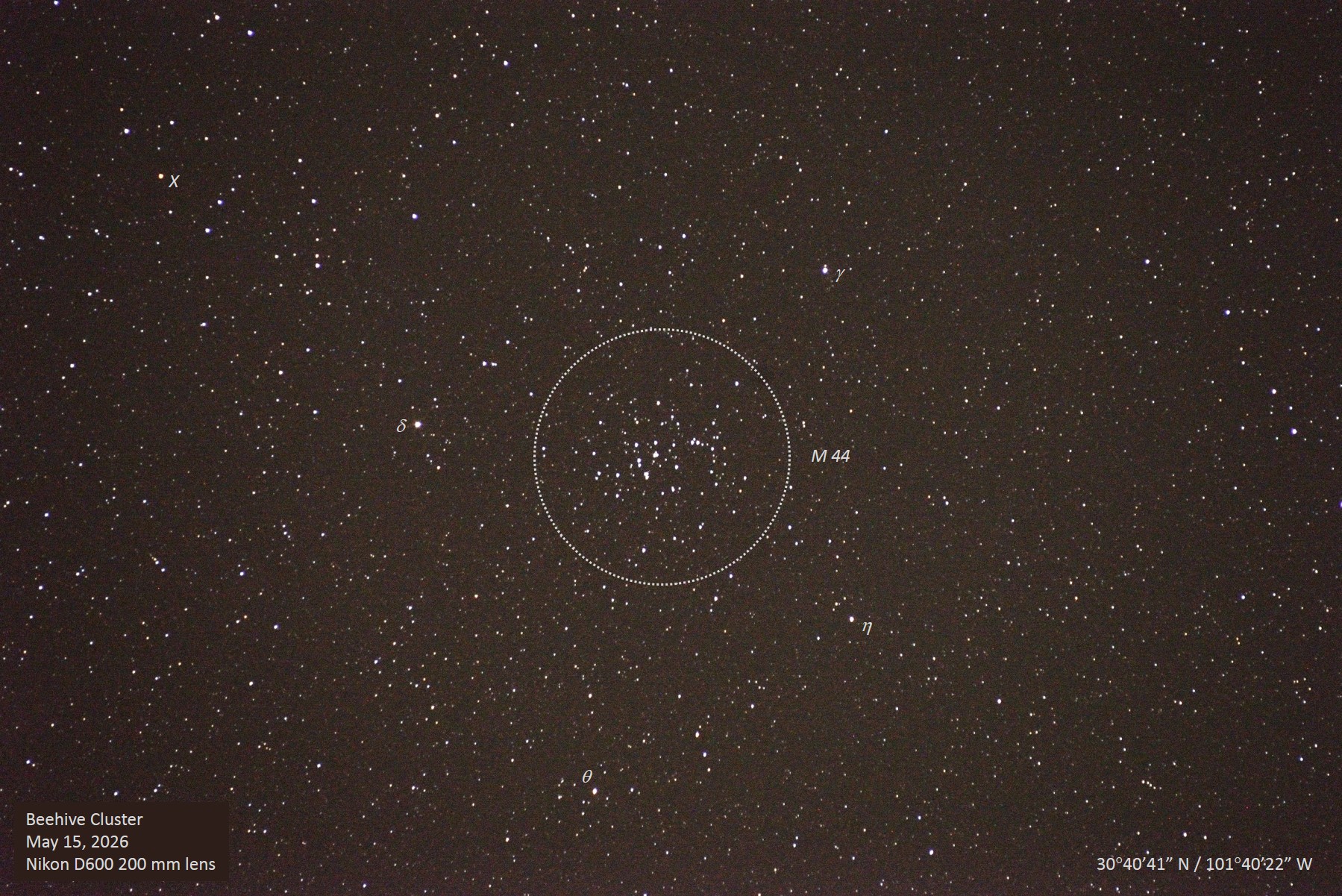
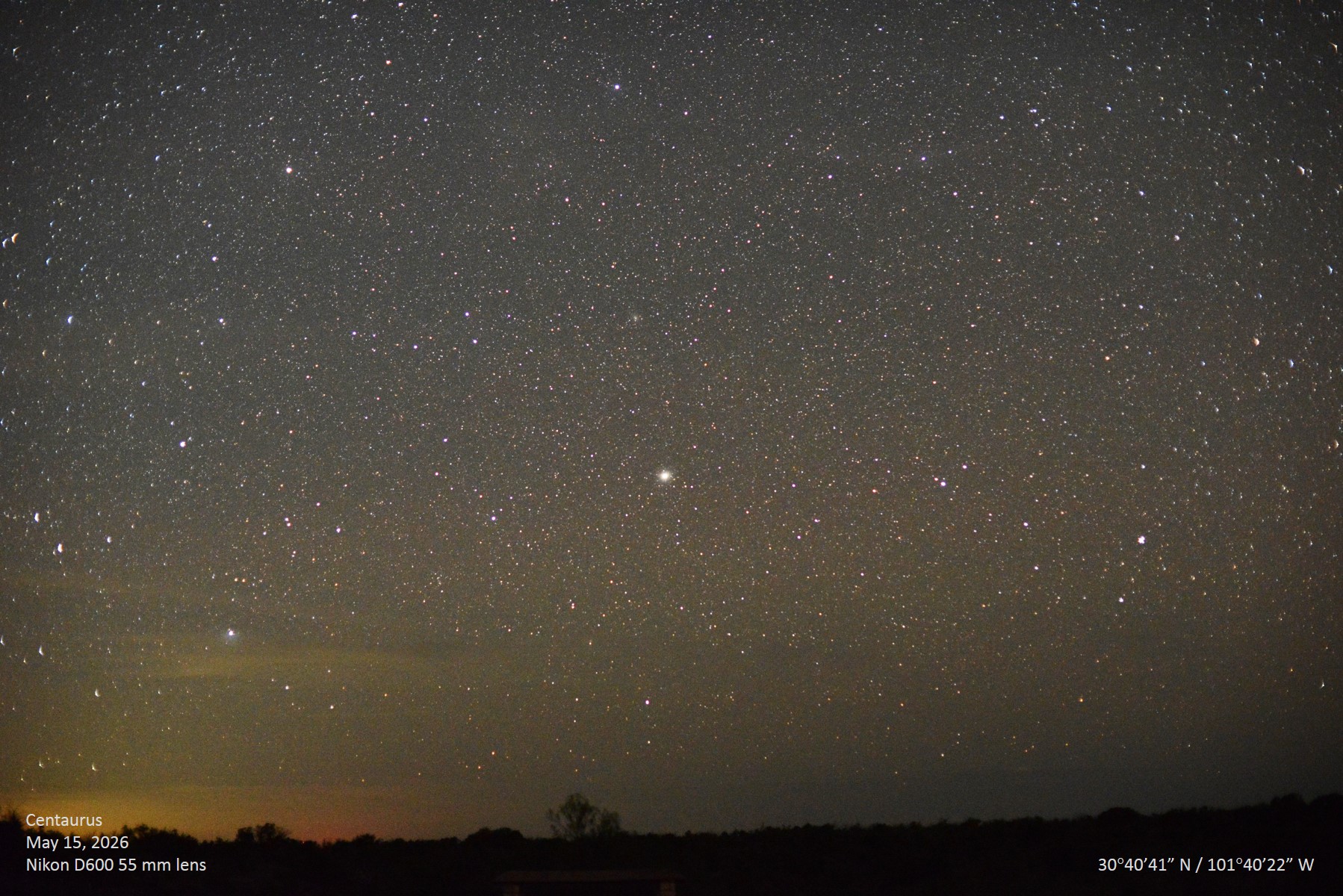
May 15, 2026: Astronomy from West Central Texas For one very beautiful evening in west central Texas at the edge of the Pecos River Canyon, I took some pictures of the constellations and objects. Here we have a telephoto view of the Beehive Cluster (M44) in Cancer, Centaurus, and a rare look at the constellation of the crow, Corvus. |
||
 |
 |
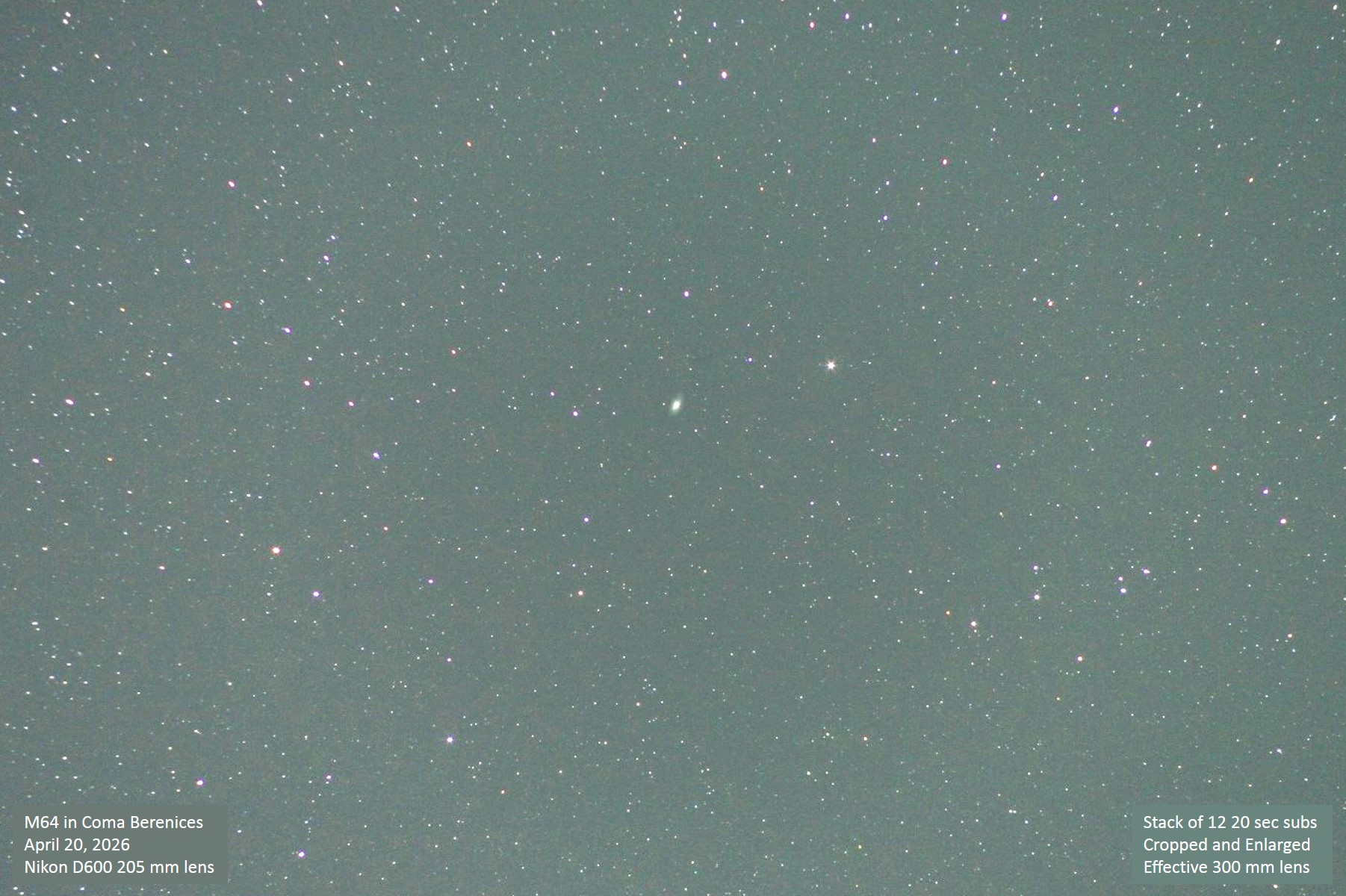 |
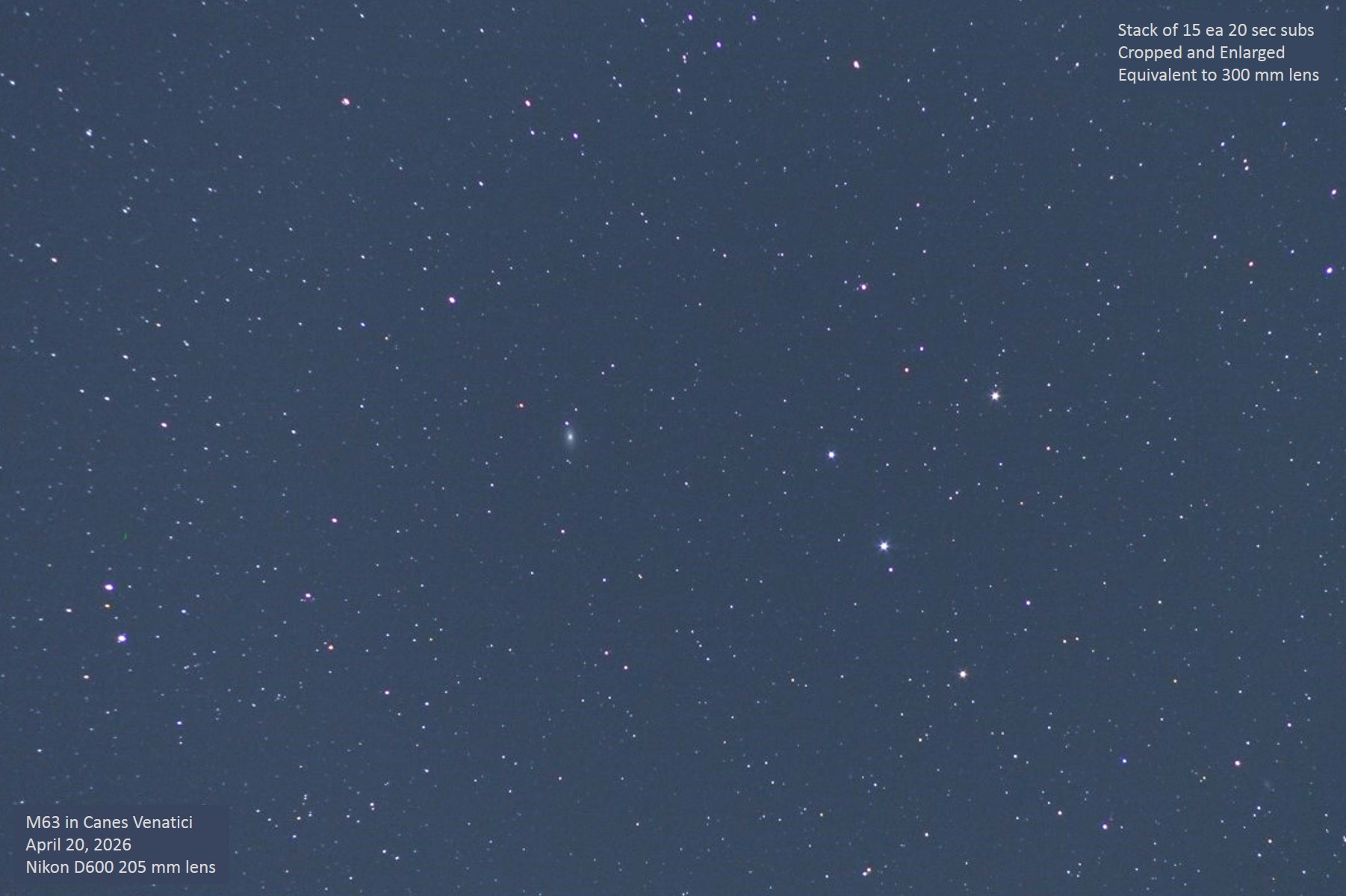
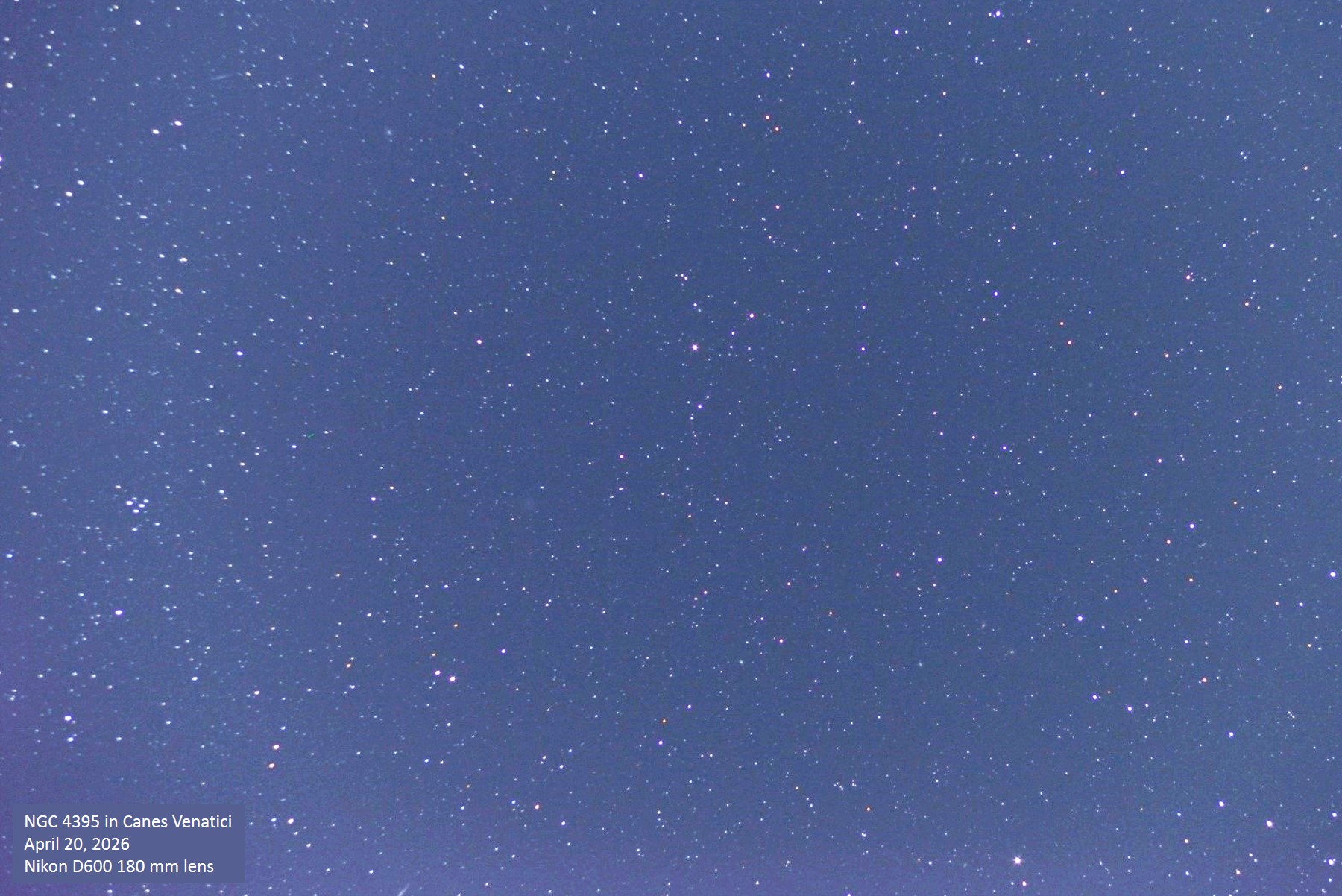
April 20, 2026: Canes Venatici and Coma Berenices Galaxies in Canes Venatici (M63) and Coma Berenices (M64), along with a host of others, are well seen on clear nights in the spring, such as this cool, transparent night in east-central Virginia. |
||
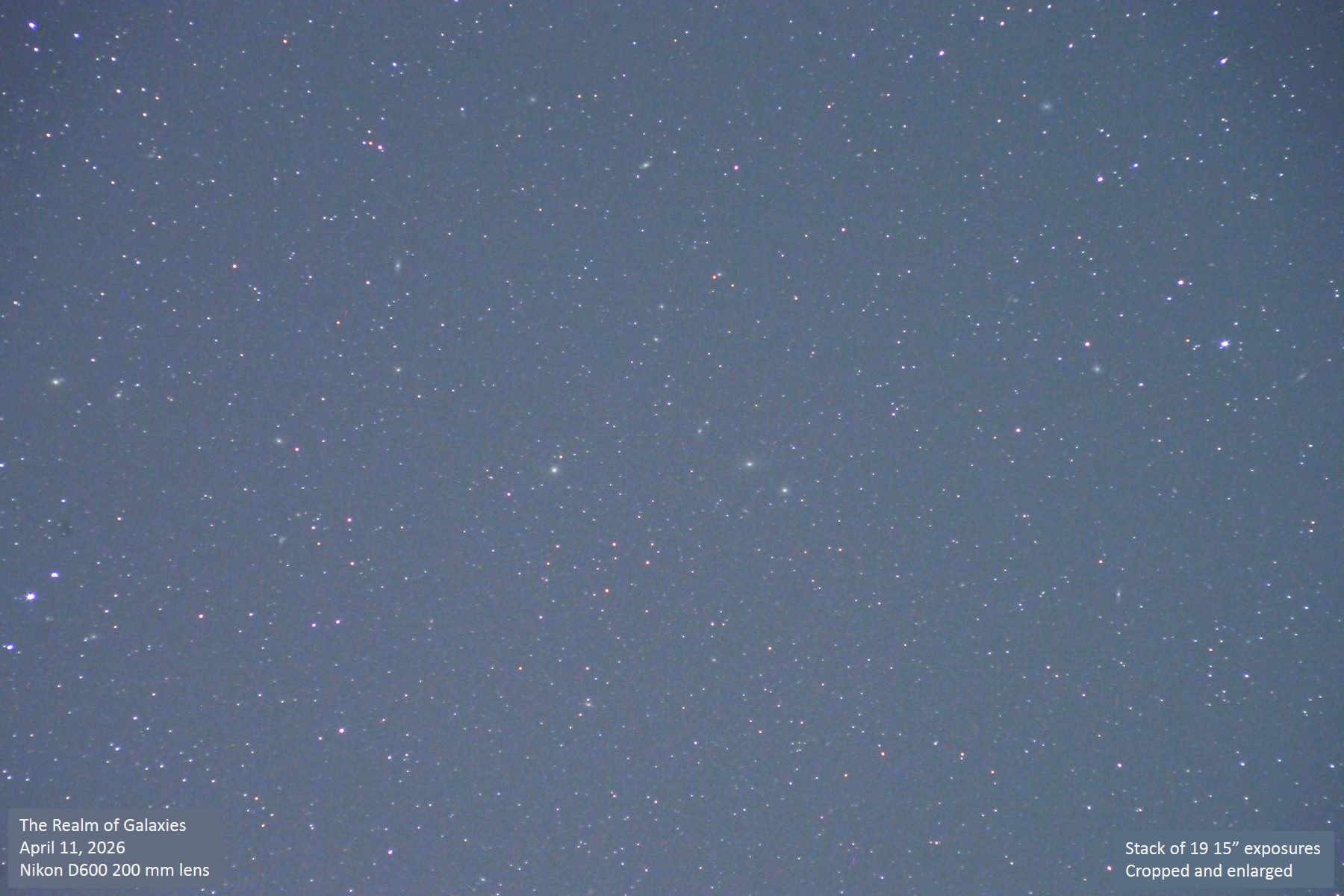 |
April 11, 2026: Virgo Cluster This image shows the area of Virgo and Coma Berenices known as the Realm of Galaxies, comprising the main group of Messier galaxies from the M98 - M99 - M100 group over to M59 - M60. The image scale is the same as if I had used a 240 mm lens with my Nikon D600 with its full frame sensor. |
||||
 |
 |
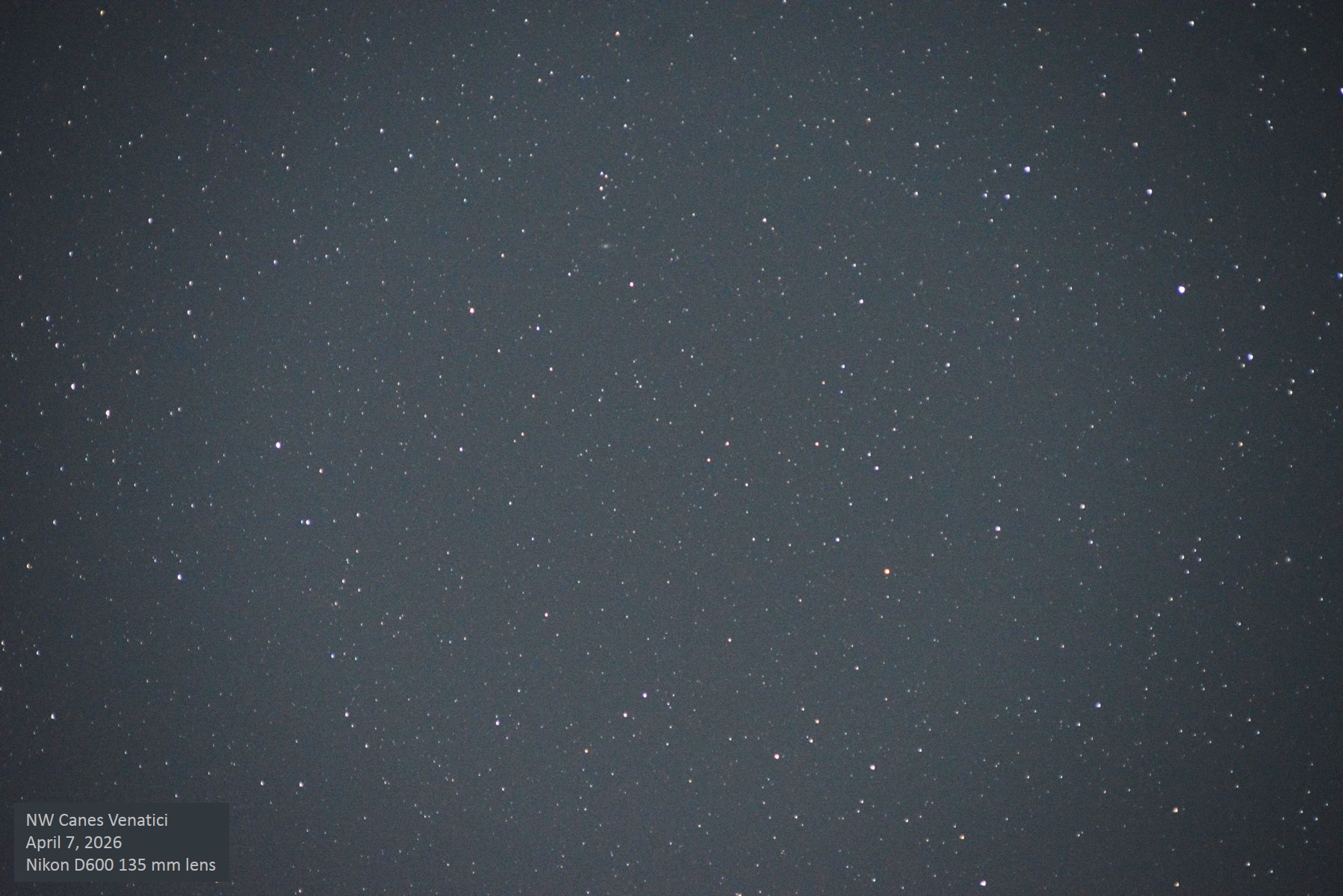 |
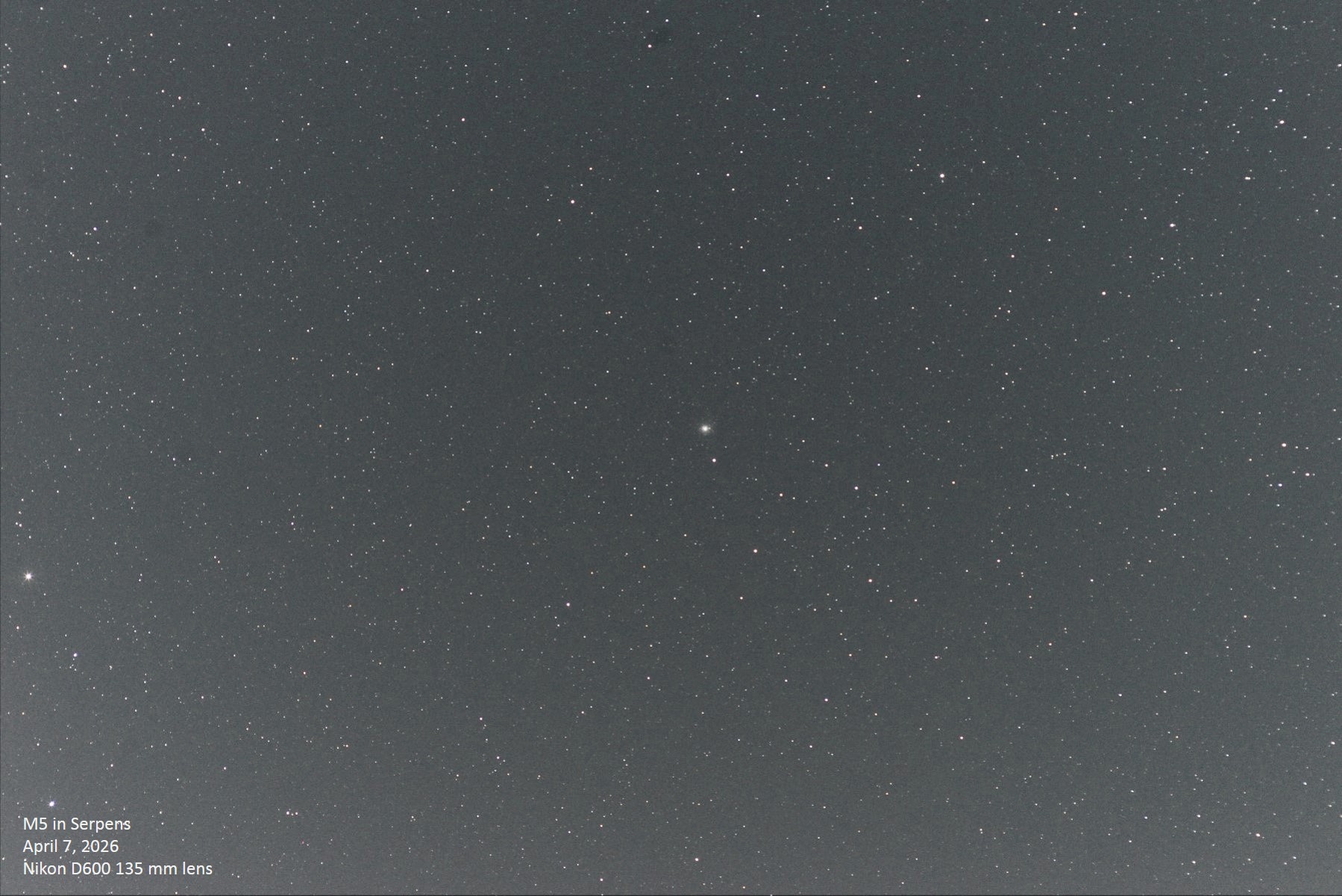
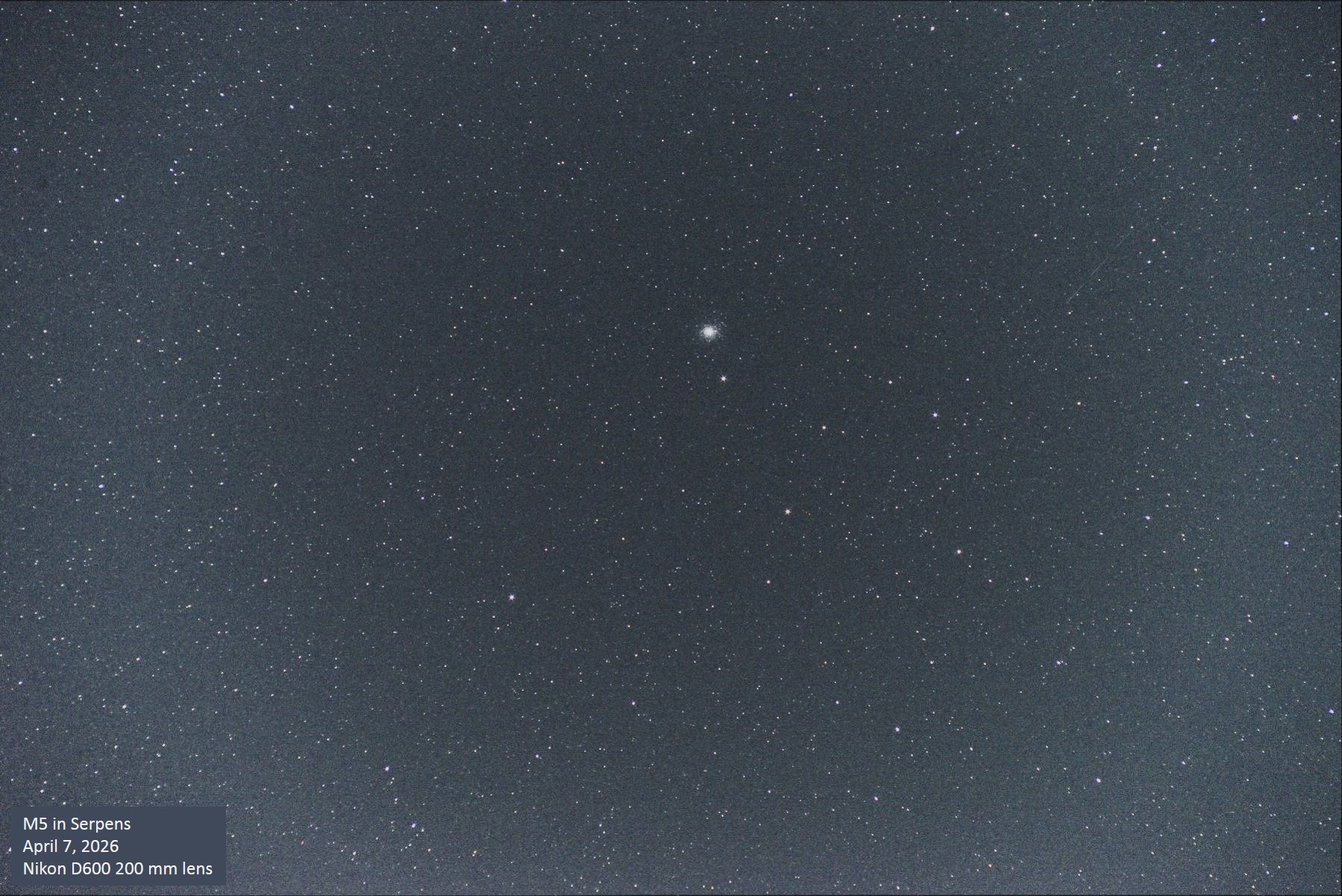
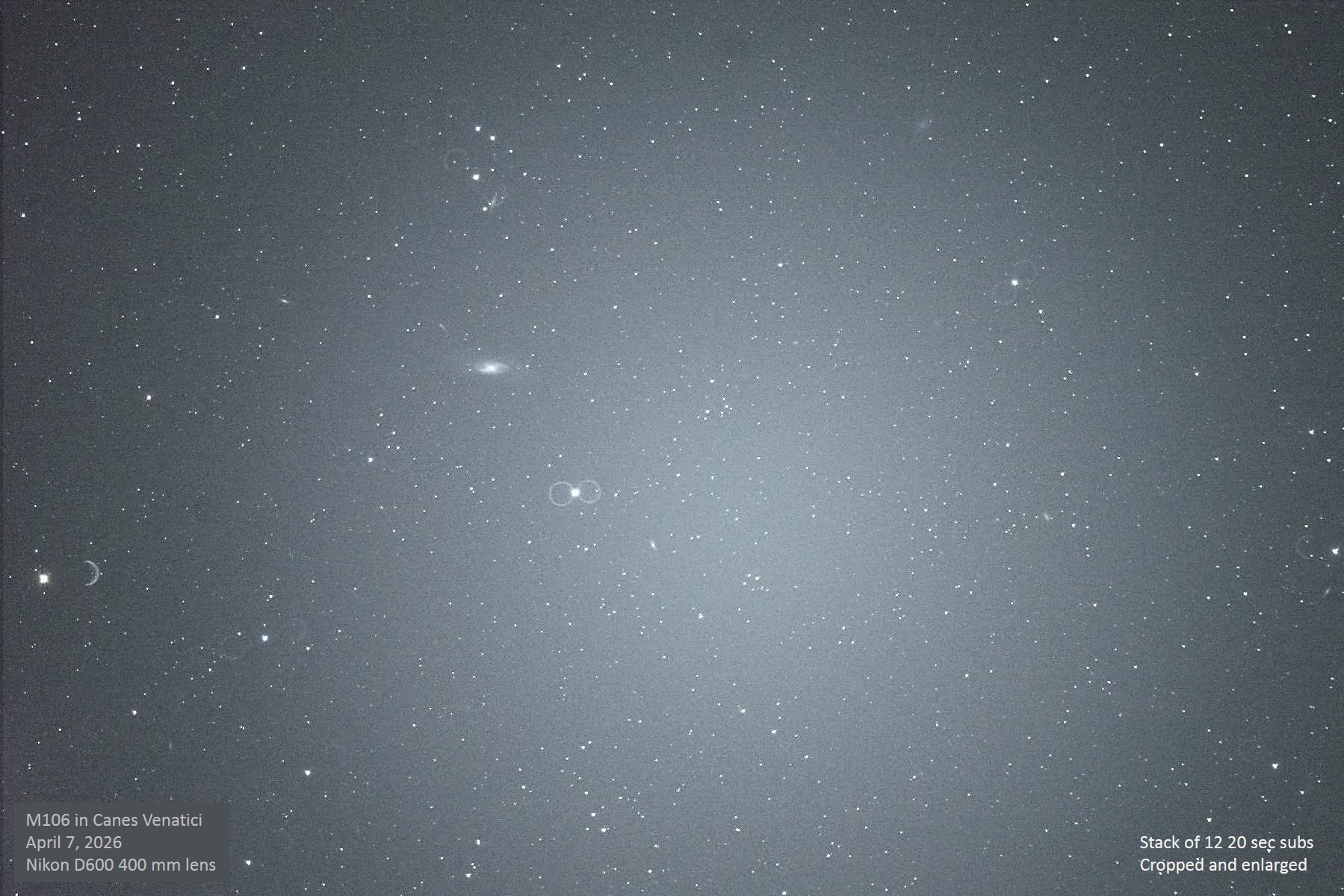
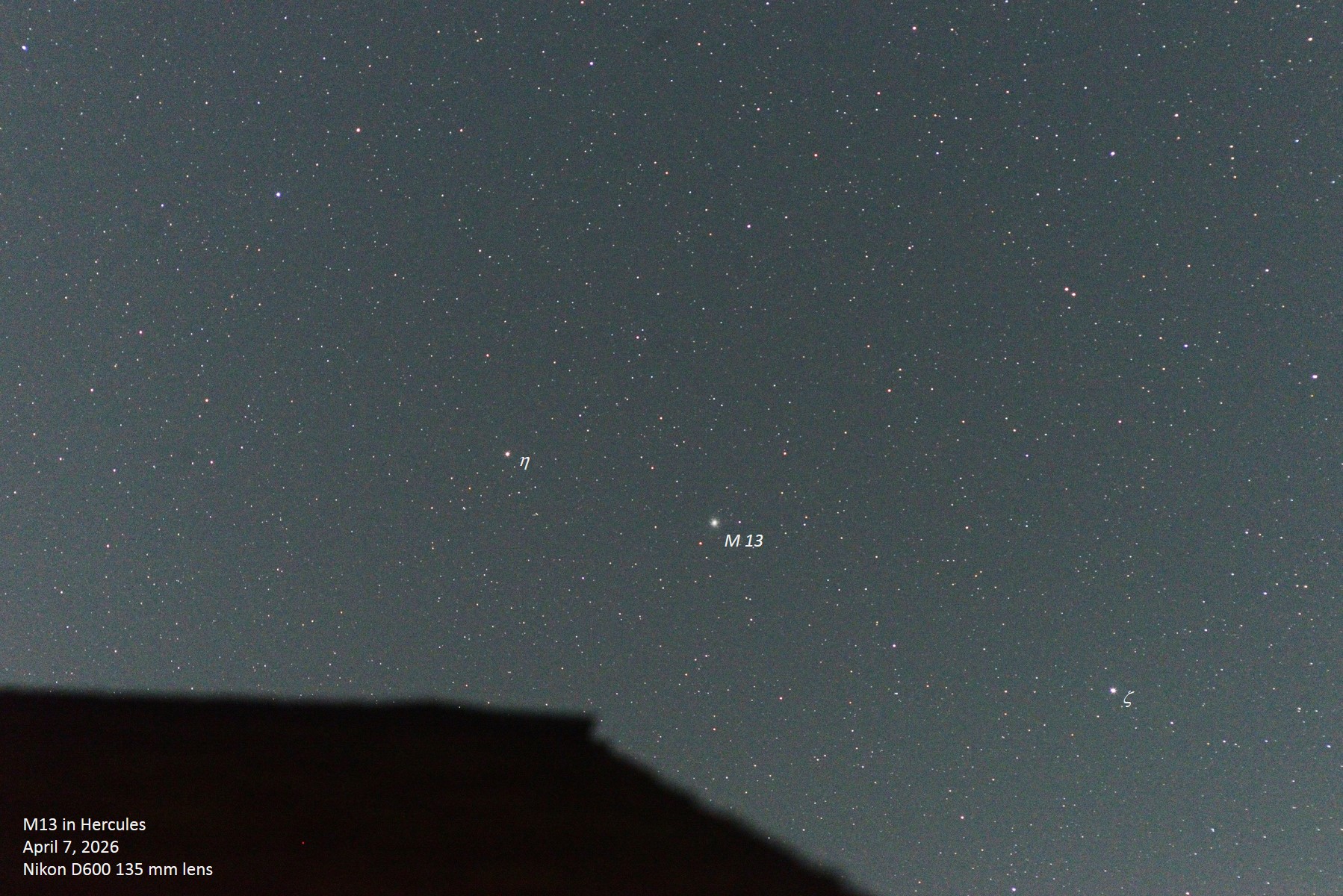
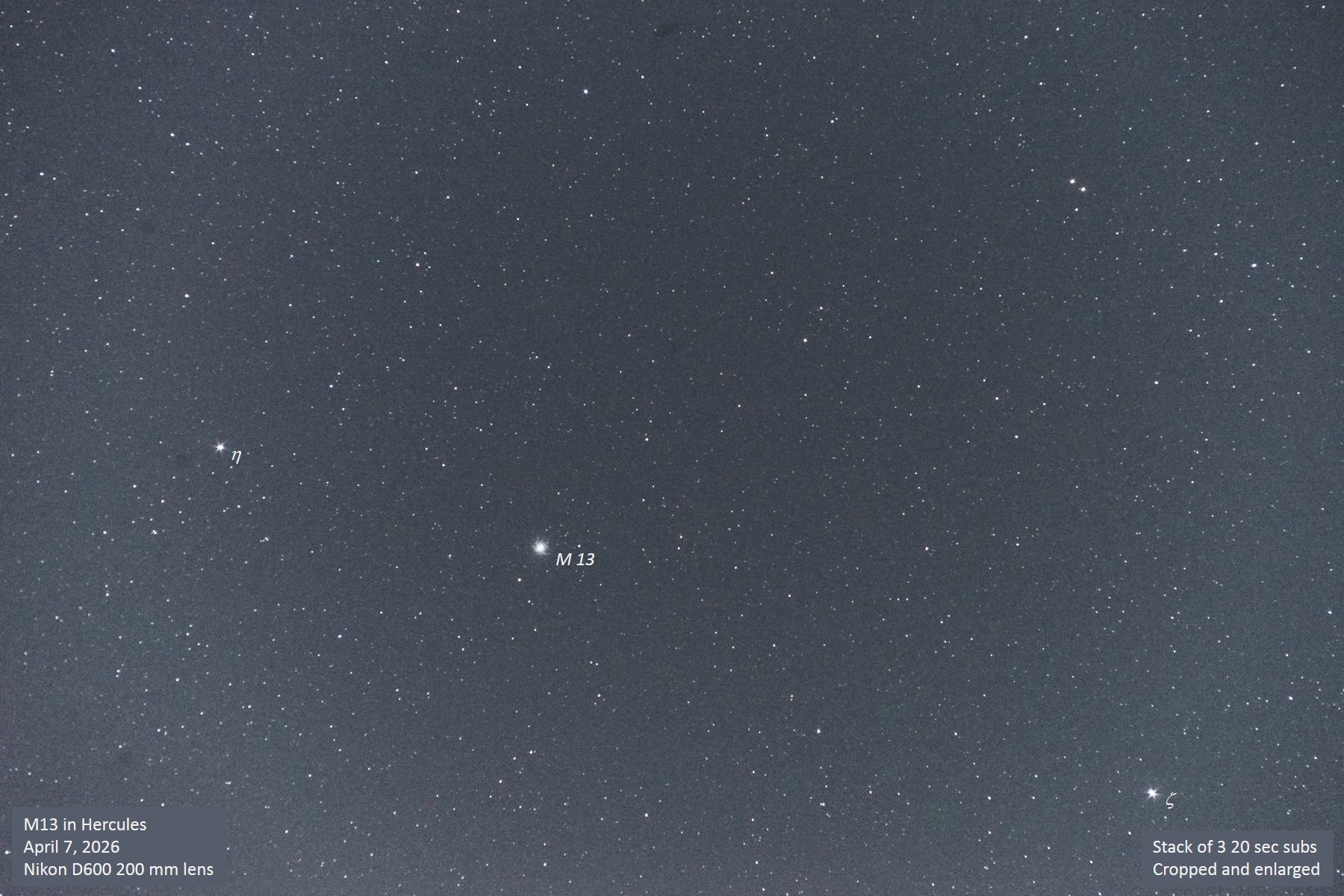
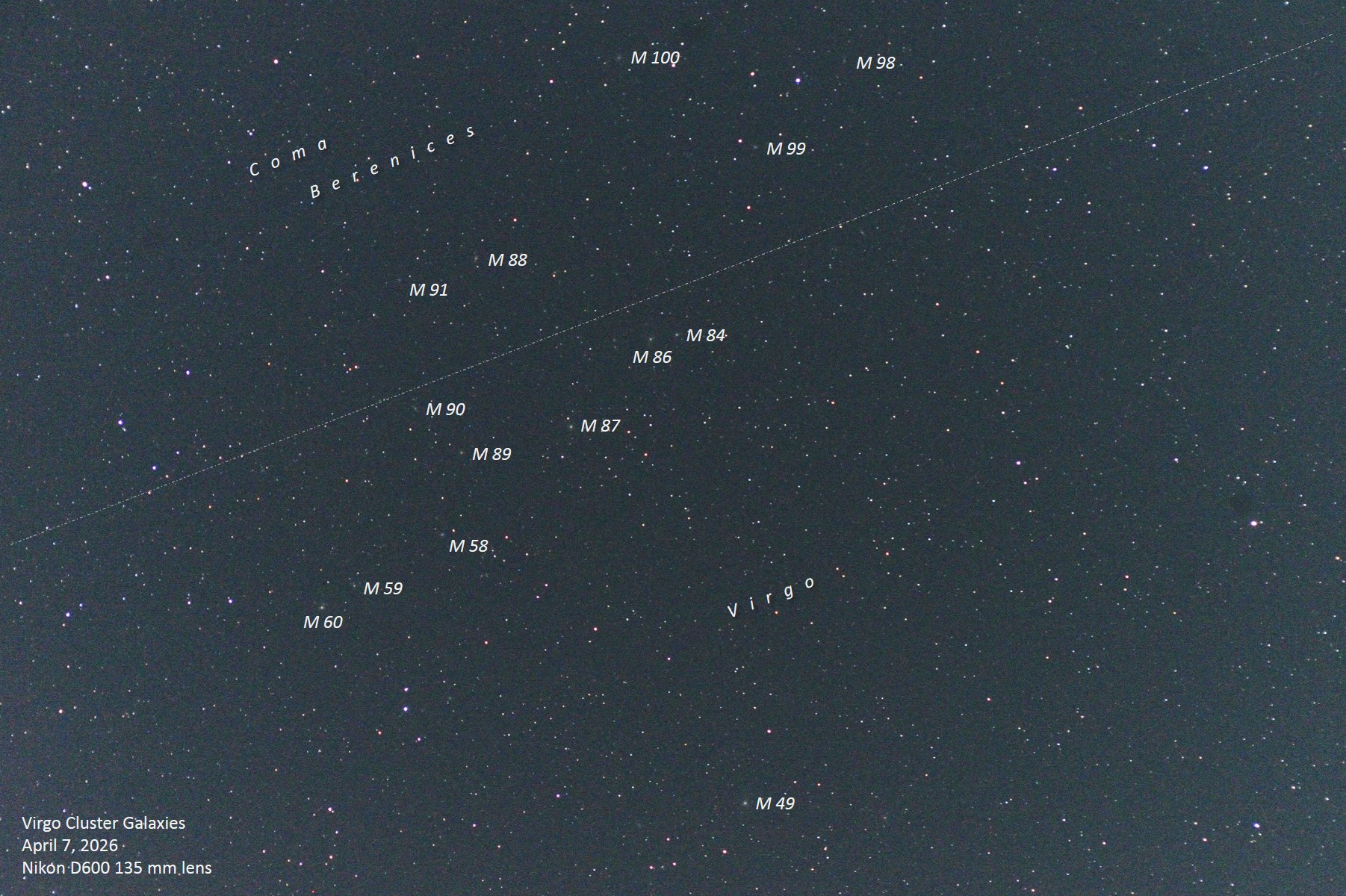
April 7, 2026: M5 and M13 and M106 and Virgo Cluster Yet another beautifully clear and mild evening, with no humidity, beckoned. This evening I recorded telephoto views of M106 in Canes Venatici, M5 in Serpens, M13 in Hercules, and the main part of the Virgo cluster of galaxies in northwestern Virgo. |
||
 |
 |
 |
 |
||
 |
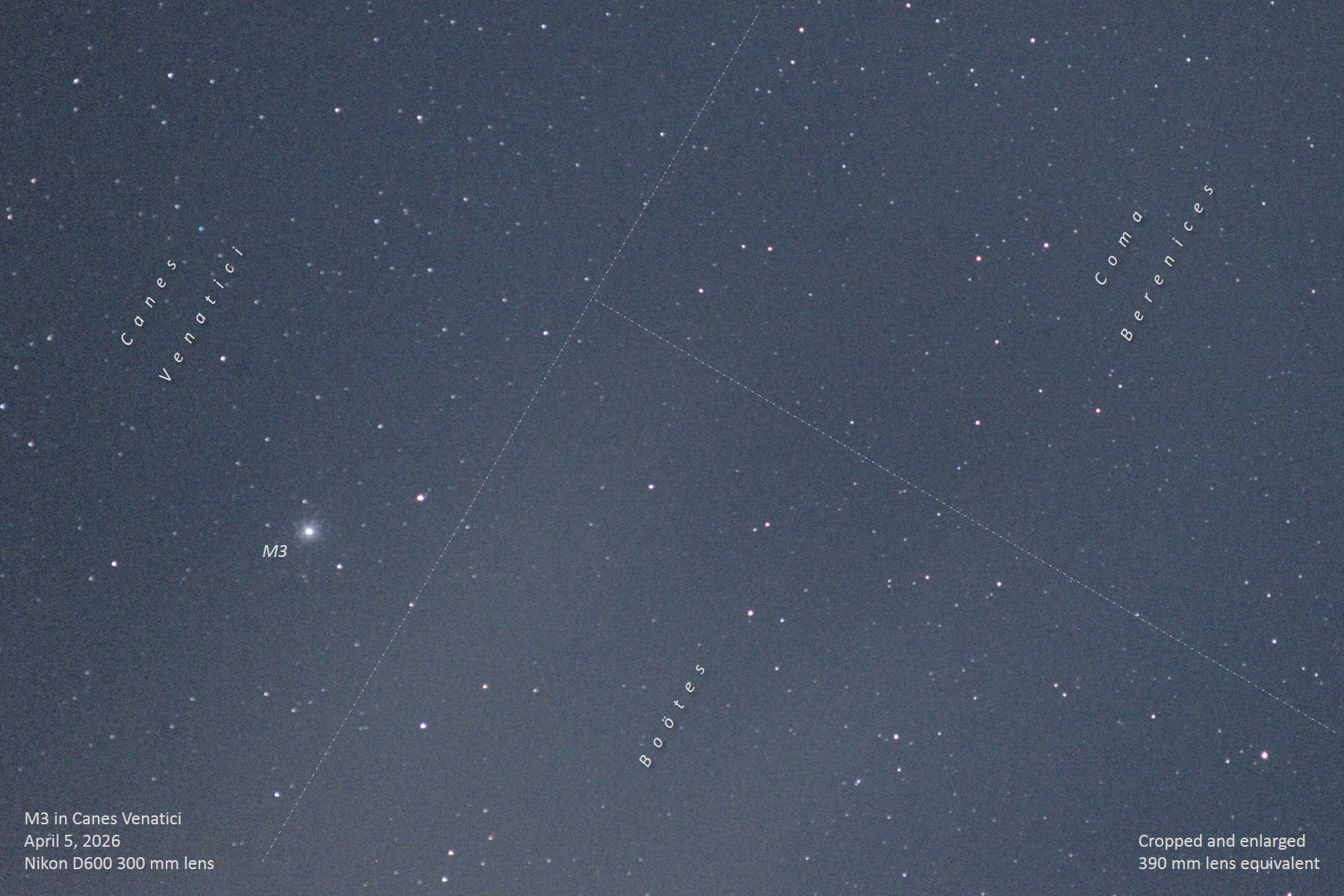 |
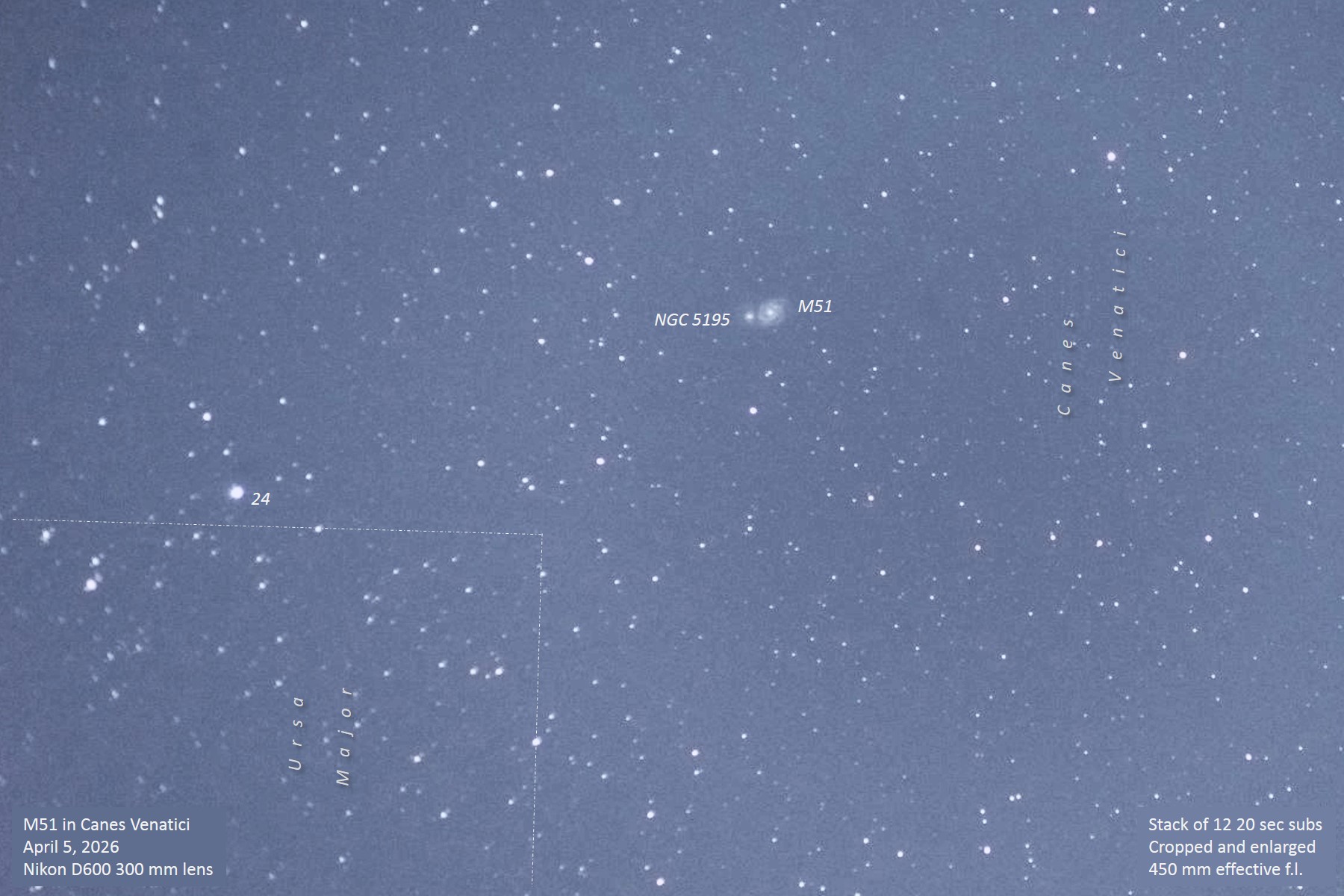
April 5, 2026: M3 & M51 Whirlpool Galaxy Another beautiful clear and mild evening, this time after a rainstorm, made for great conditions to get some pictures of additional Messier objects. In this case, we focused on opposite ends of Canes Venatici, the Hunting Dogs. |
|||
 |
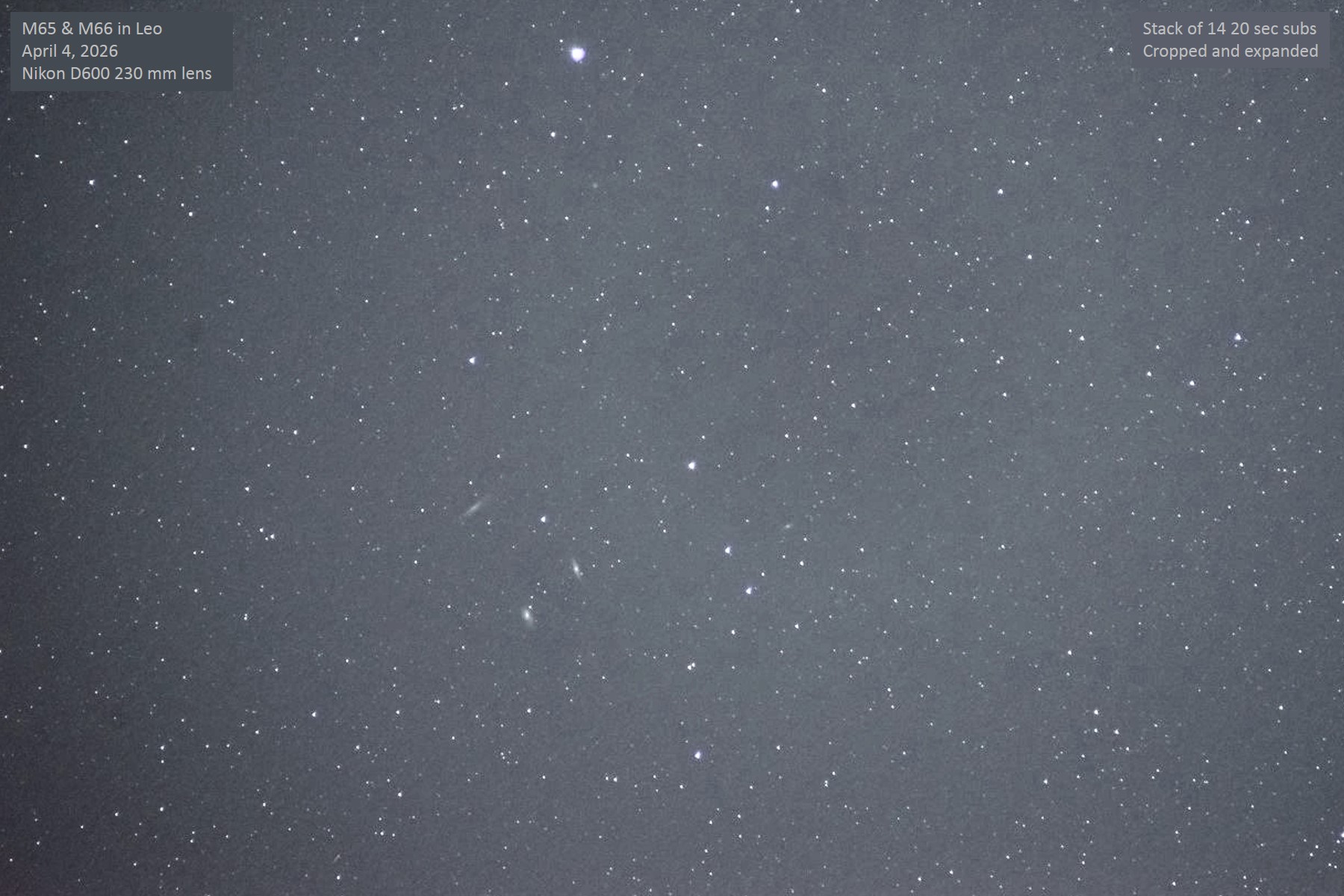 |
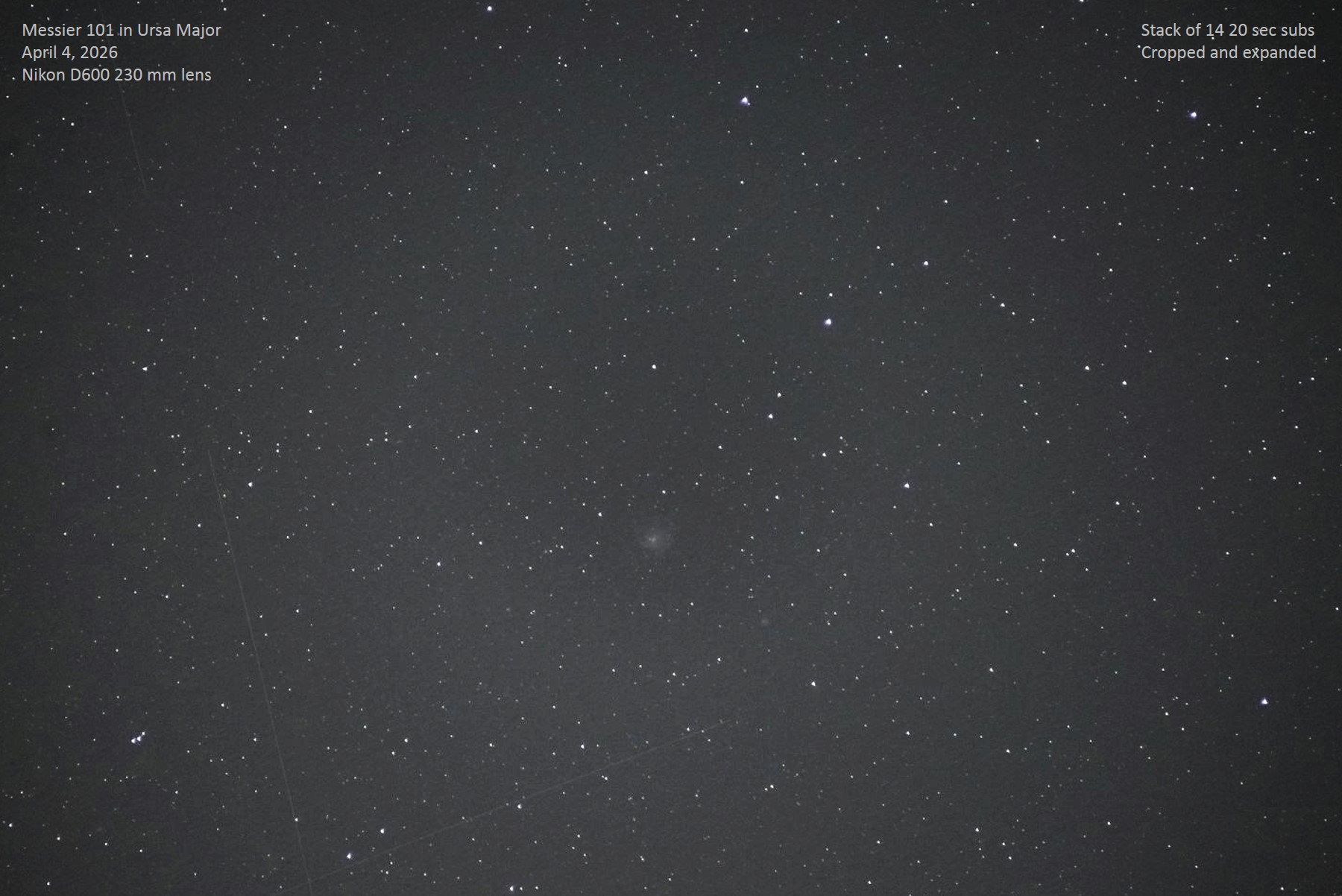
April 4, 2026: M101 & Eastern Leo Trio A beautifully clear and mild evening encouraged me to take some snapshots of M 101 in Ursa Major and the more compact Leo Trio (M65, M66, and NGC 3628) under the hindlegs of the Lion. |
|||
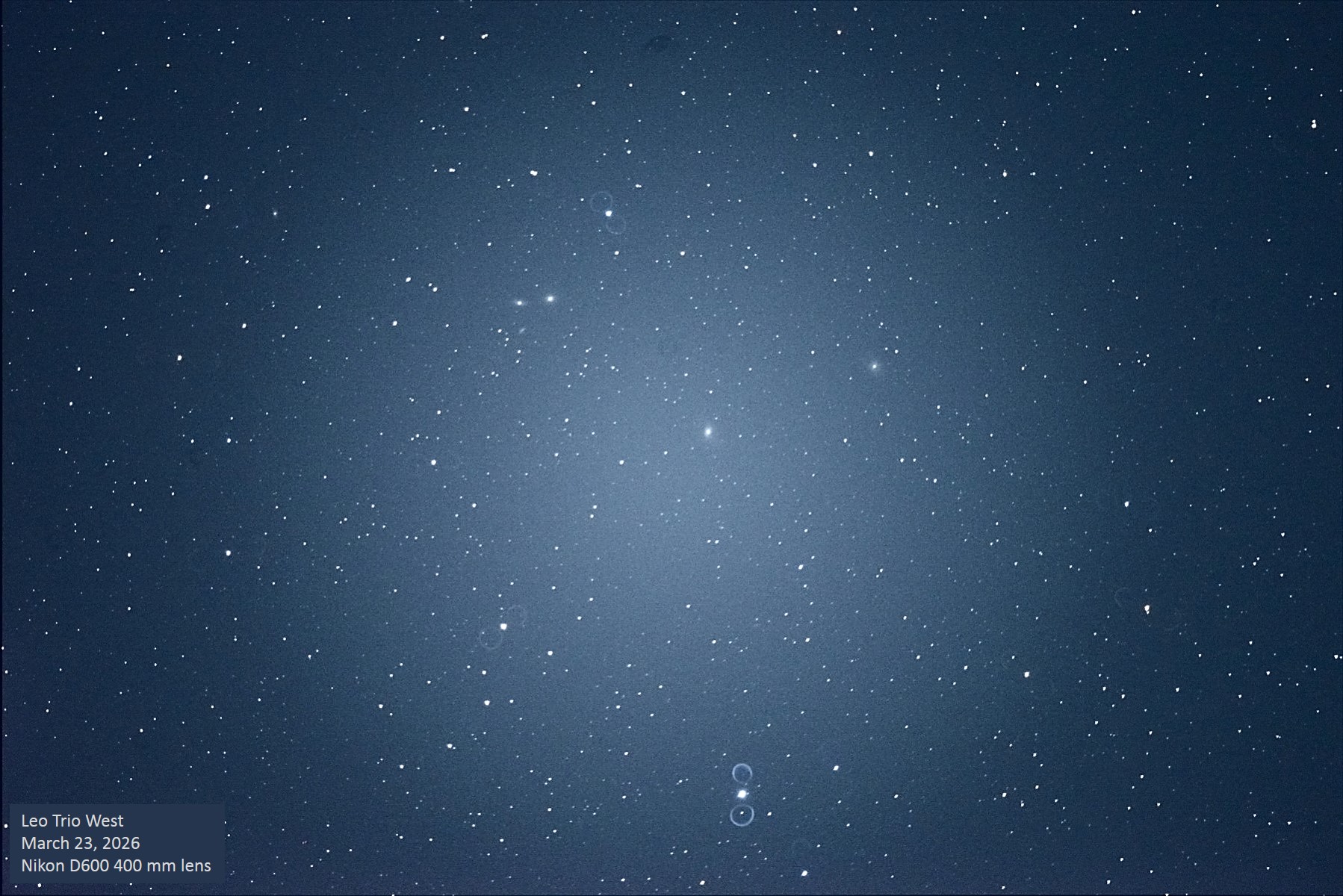 |
March 23, 2026: Western Leo Trio With a thick crescent Moon high in the western sky, we turn our attention to the lesser known of the Leo Trios, this being the one located southeast of Regulus. The field around the trio of M95, M96, and M105 is adorned with other galaxies besides the three Messier examples, all of which are accessible to a small or medium-sized telescope. |
||||
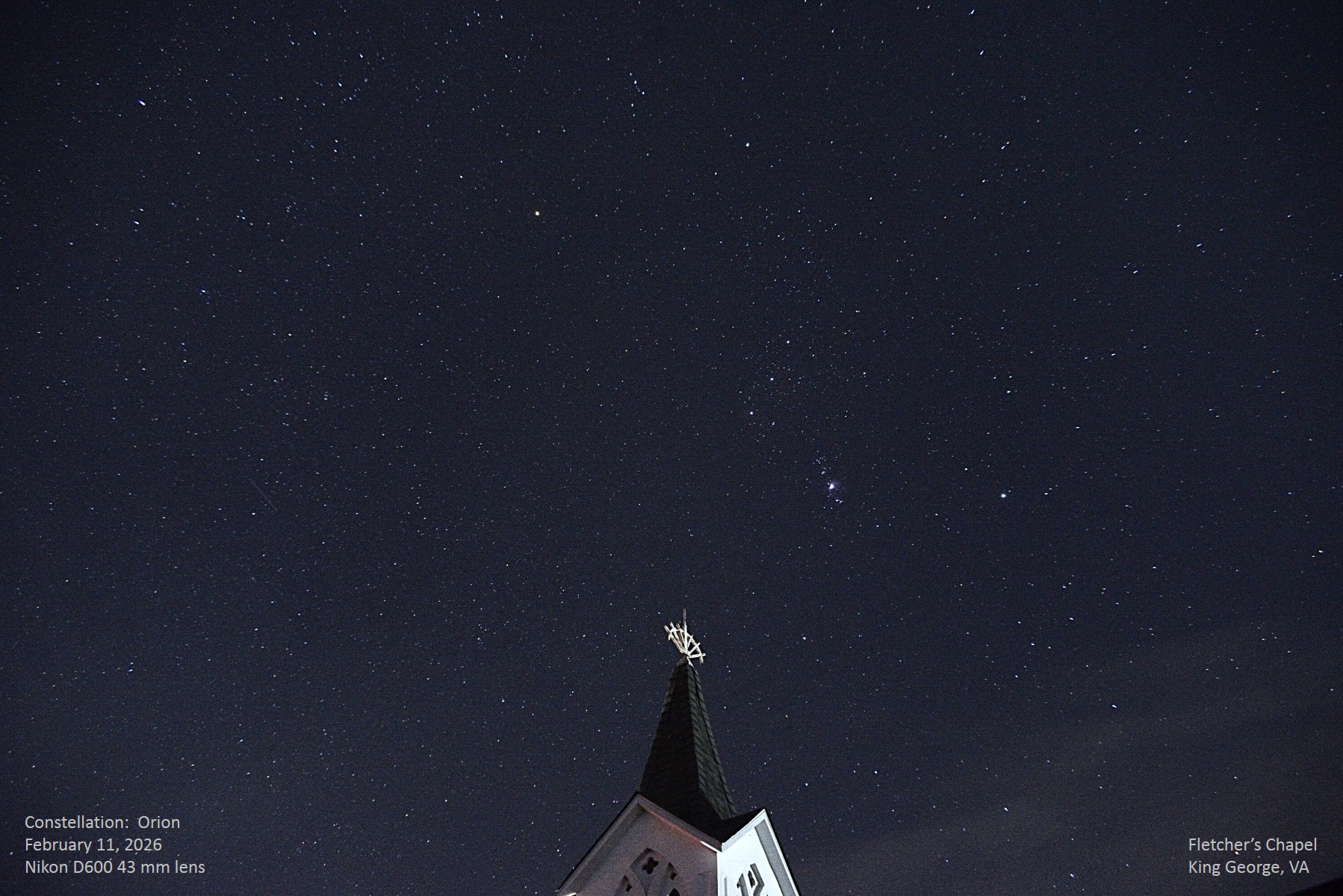 |
February 11, 2026: Orion over Fletcher's Chapel Orion and all his neighboring constellations are still rising in early evening, here seen over the top of the steeple of Fletcher's Chapel in northwestern King George County, Virginia. |
||||
 |
 |
 |
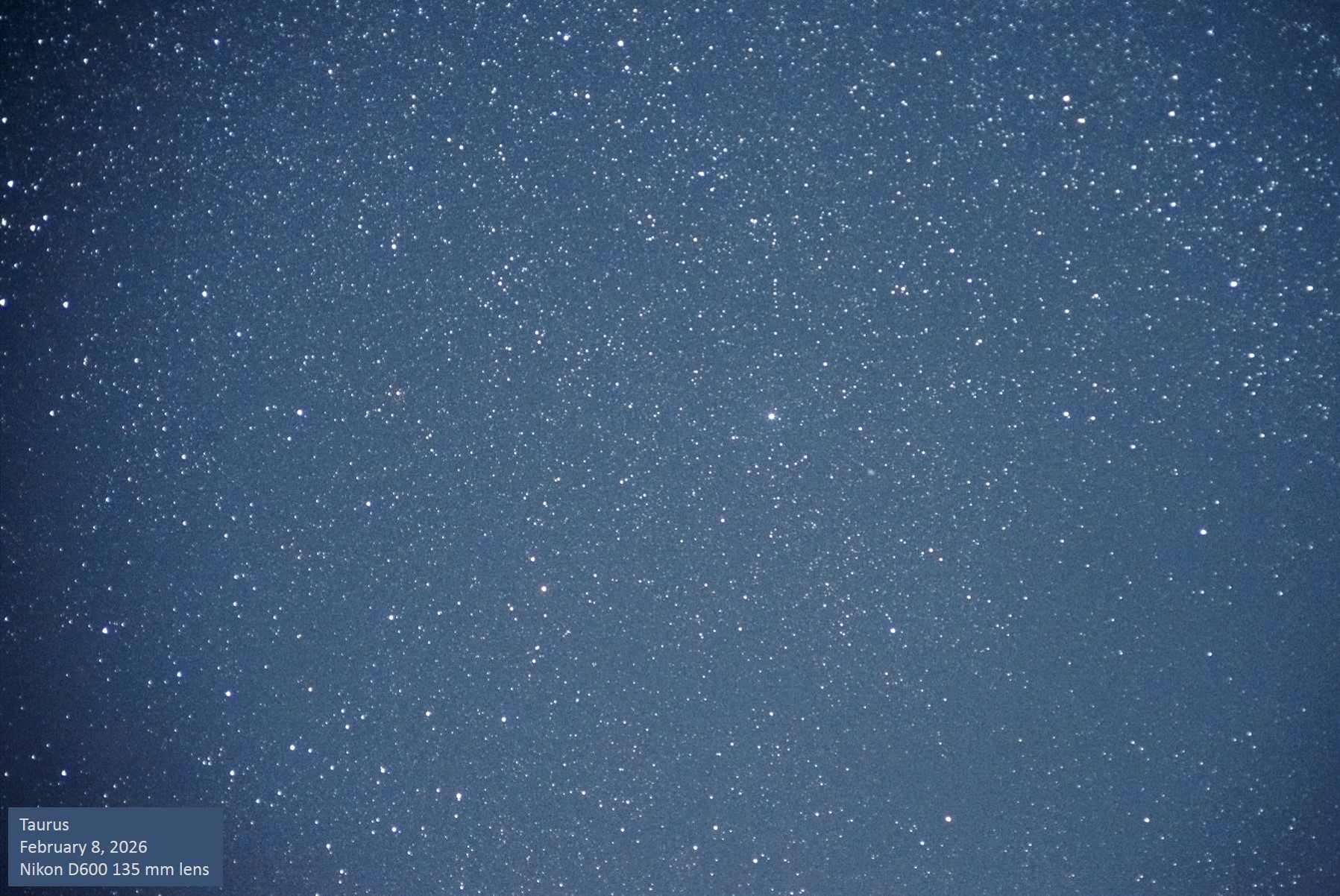 |
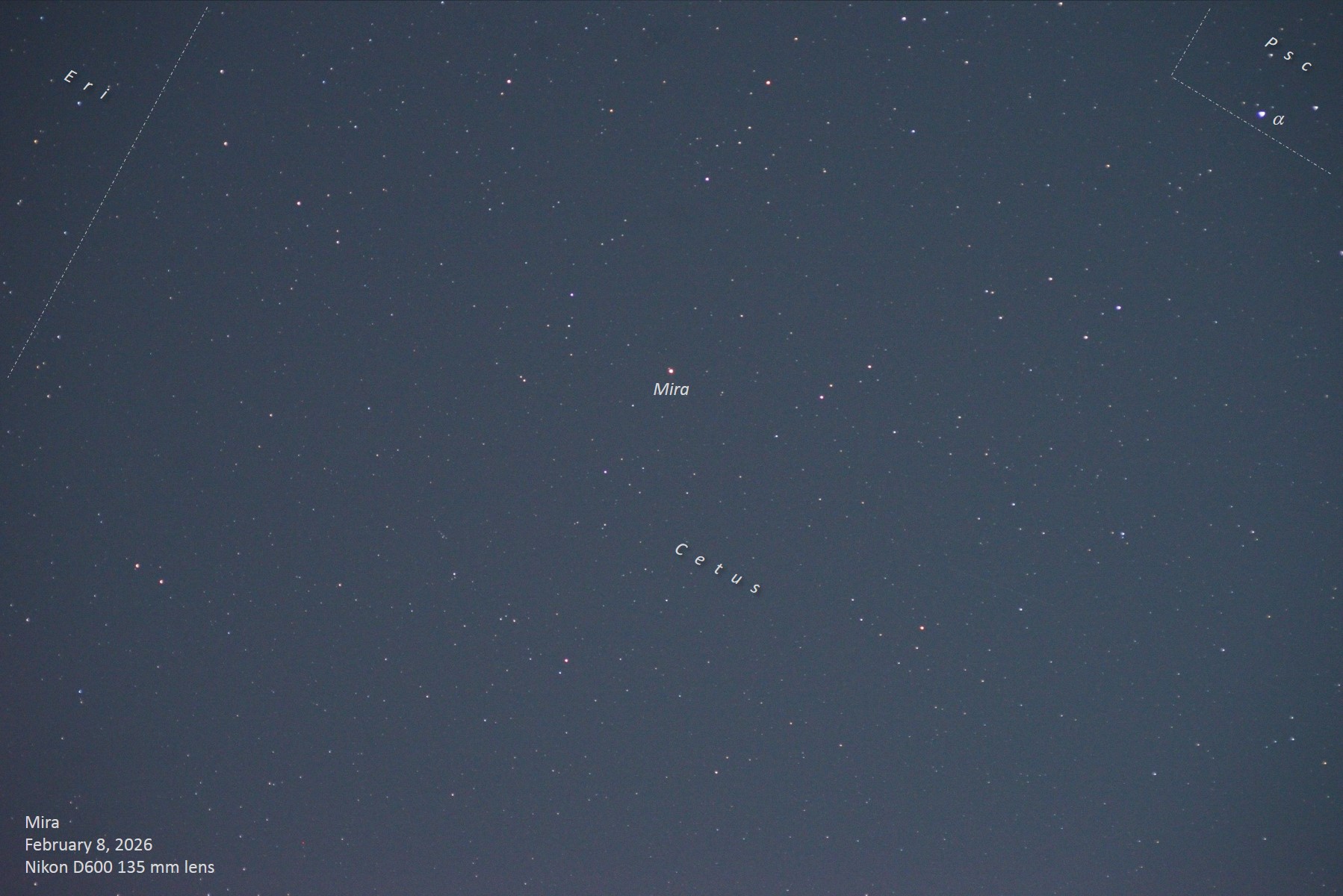
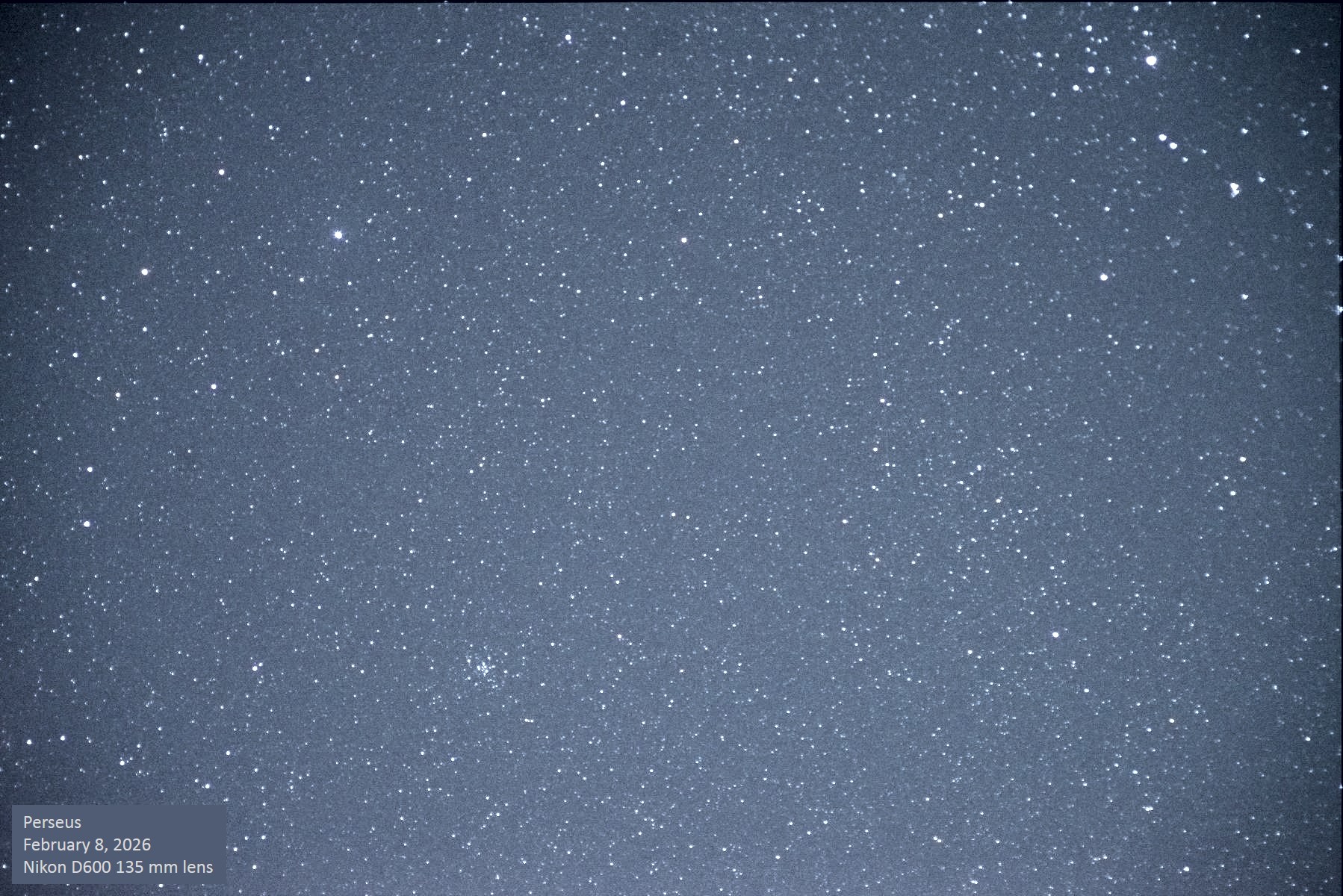
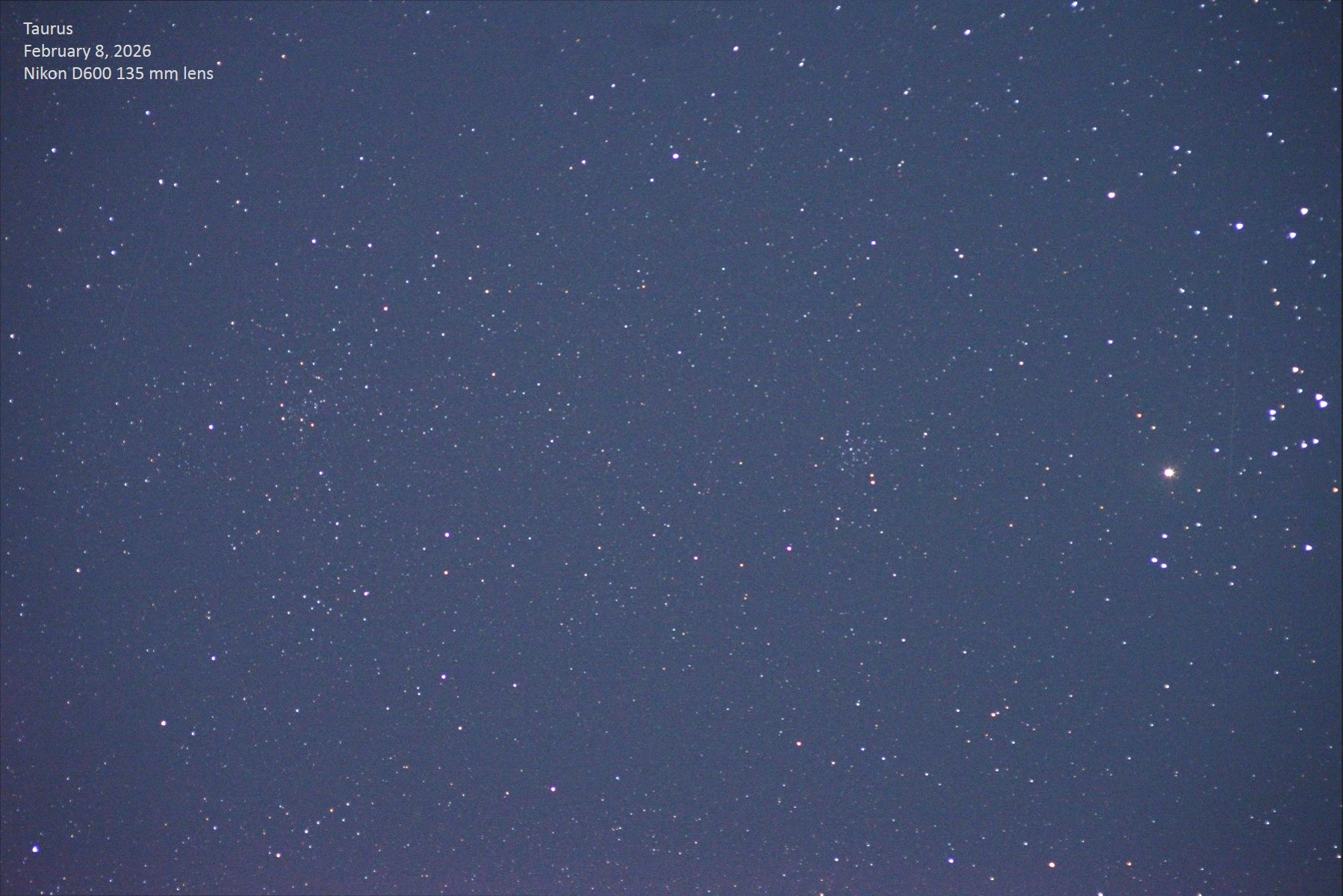
February 8, 2026: Mira, Perseus and Taurus These images show the great long period variable star Mira, highlighting its deep red-orange color, the open cluster M34 in Perseus, and two different views of Taurus. |
|
 |
 |
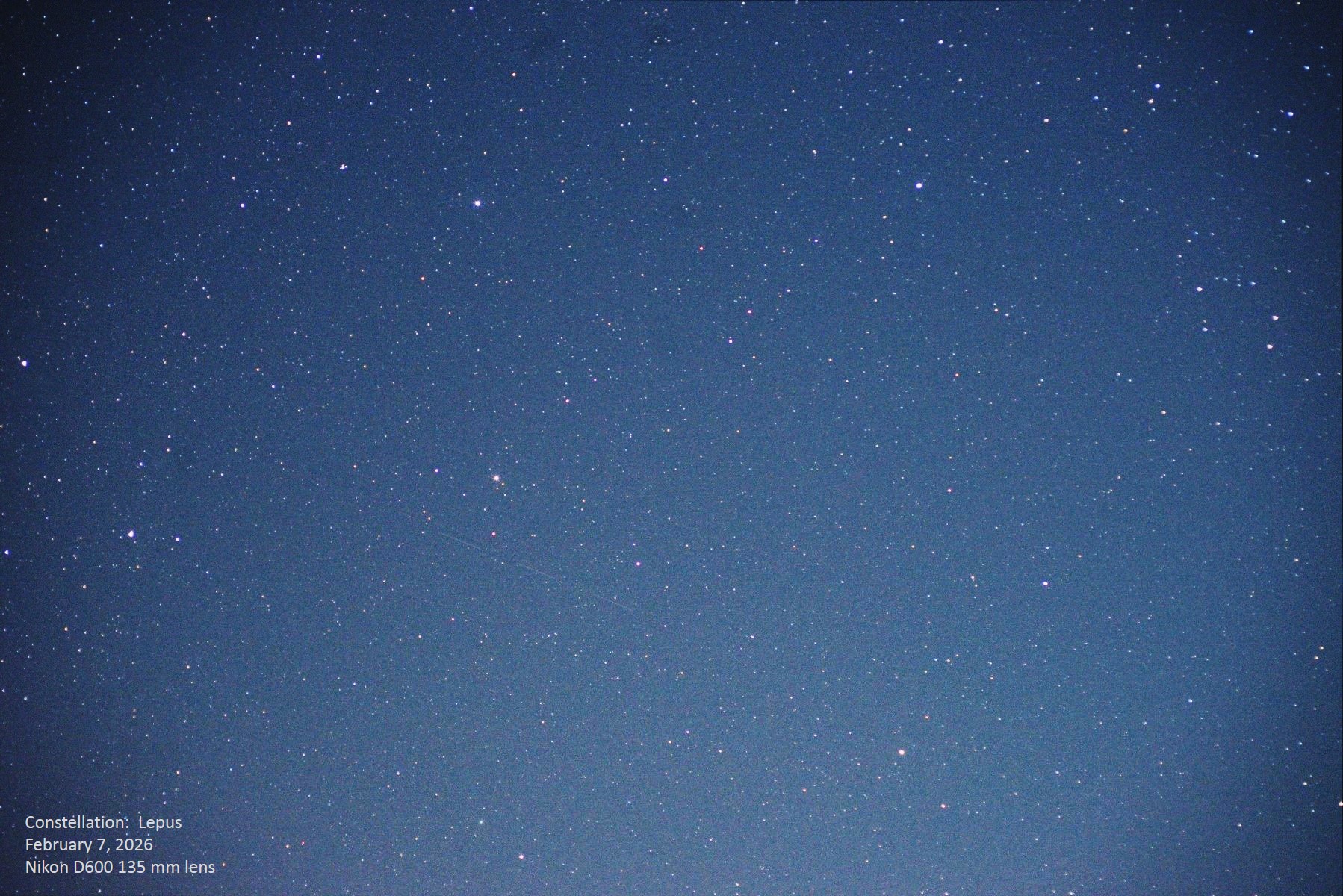 |
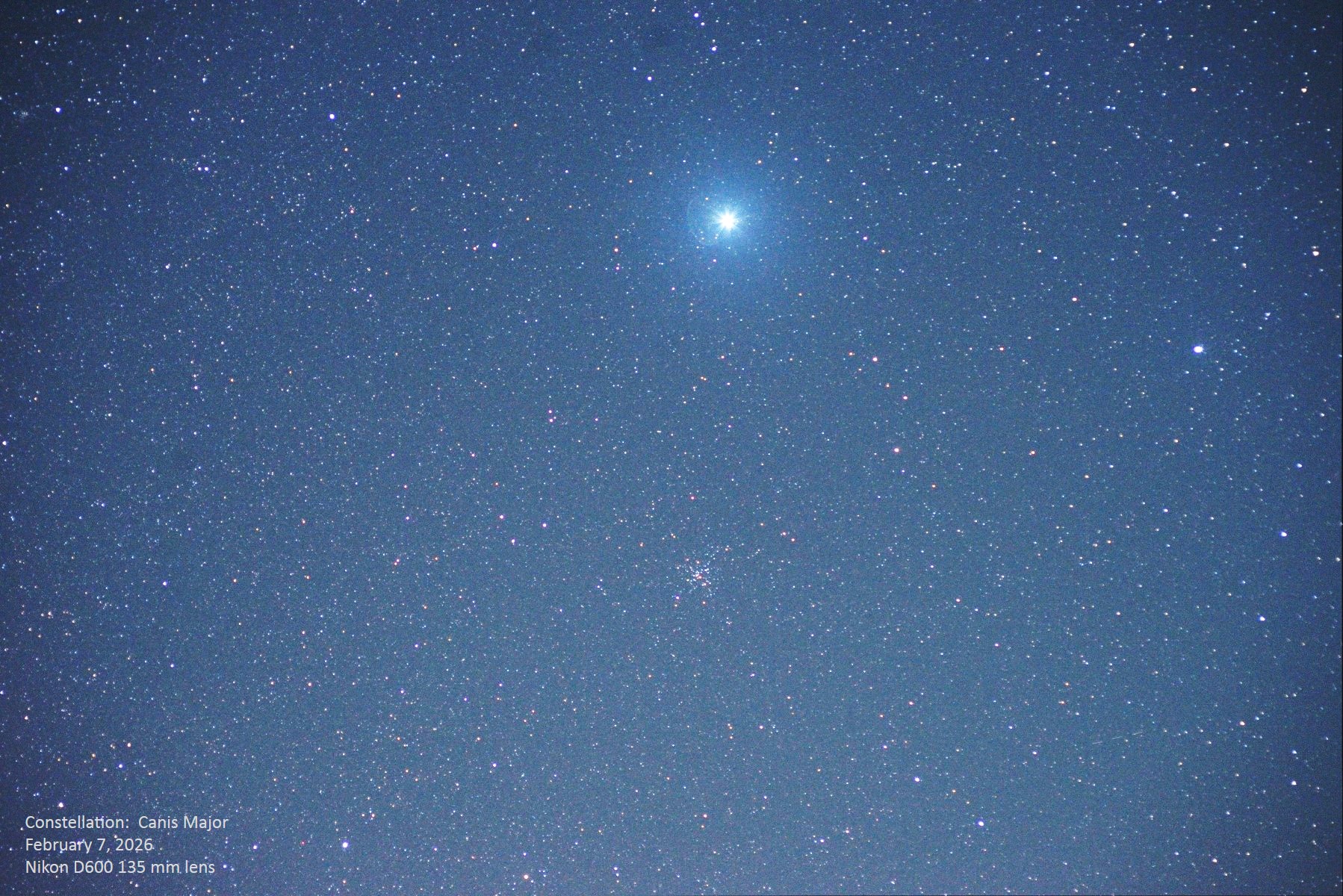
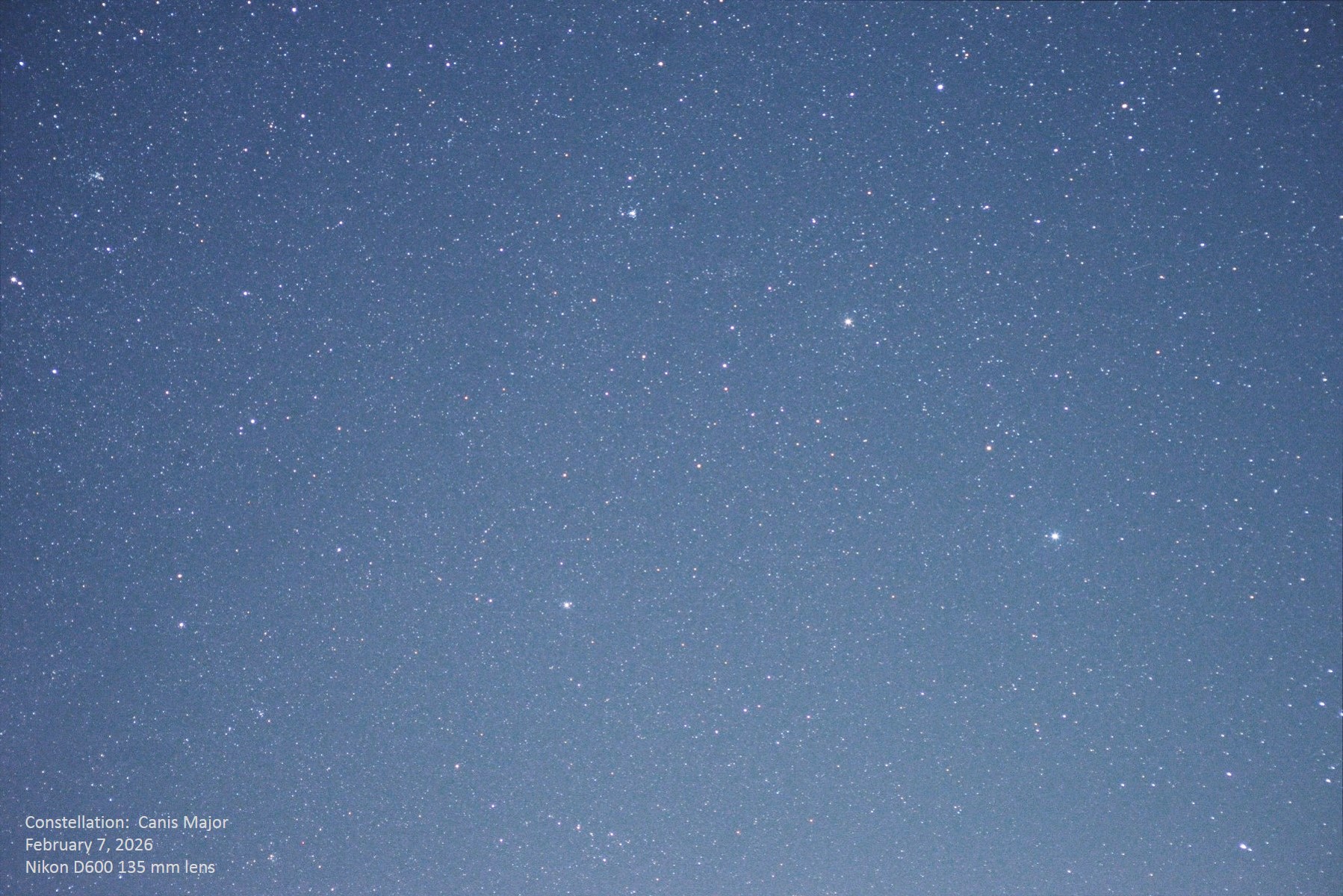
February 7, 2026: Canis Major and Lepus Here we are looking at Canis Major and Lepus; the first image is centered on M41. The second image shows the southern portion of Canis Major, centered on the three stars Adhara, Aludra, and Wezn that make up the hindquarters of the great dog. The third image shows the constellation Lepus the Hare, highlighting the globular cluster M79. |
||
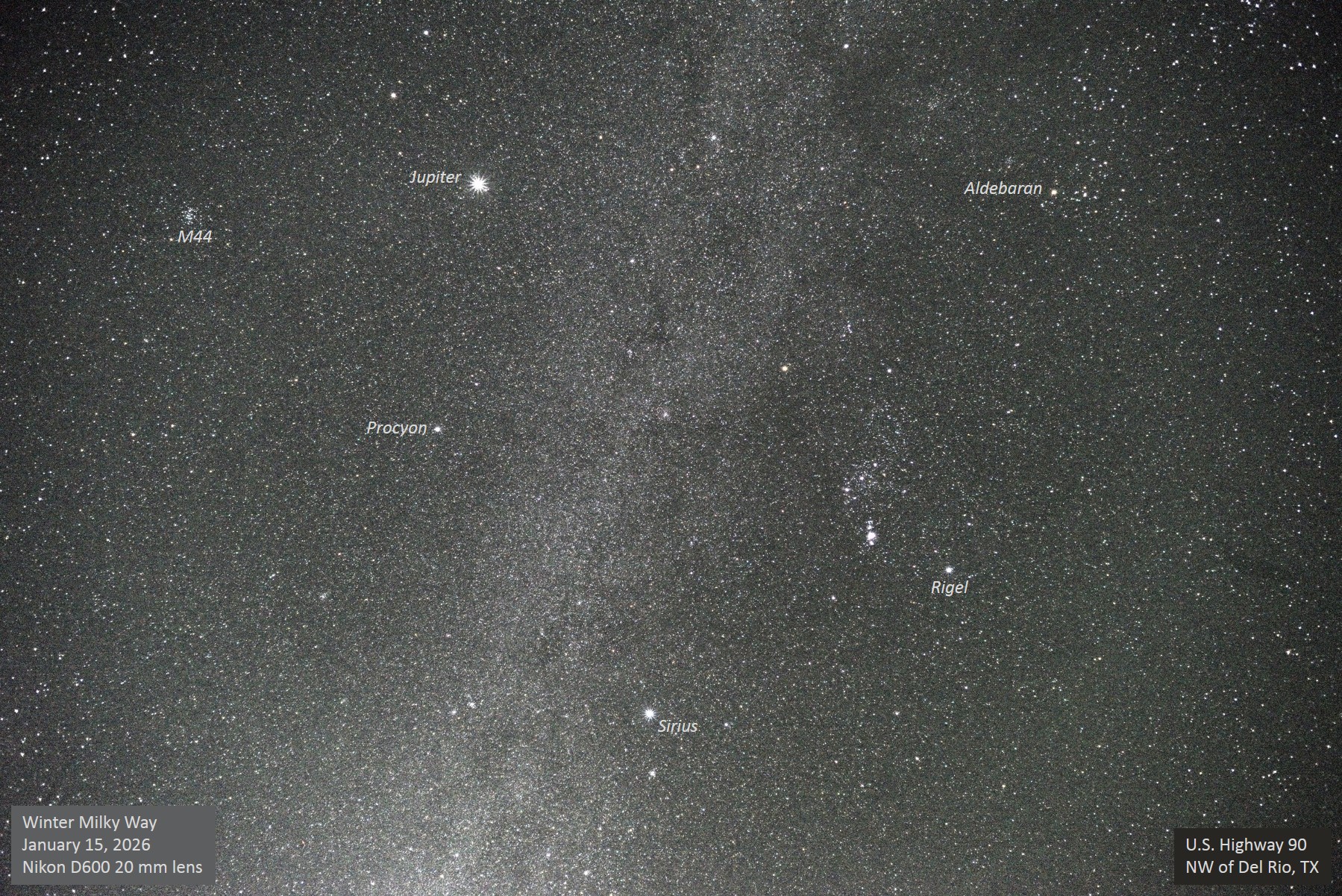 |
January 14 - 16, 2026: Astronomy from Texas From three dark sky locations in Texas, I took some pictures of the night sky with my Nikon D600 unmodified camera and my modified Canon 5D. With my Nikon, I used 20 mm, 55 mm, and 135 mm lenses. The lenses I used with my Canon were a 105 mm lens the first night, a zoom lens set to 150 mm the second night, and then a zoom lens set to 210 mm the third night. |
||||
 |
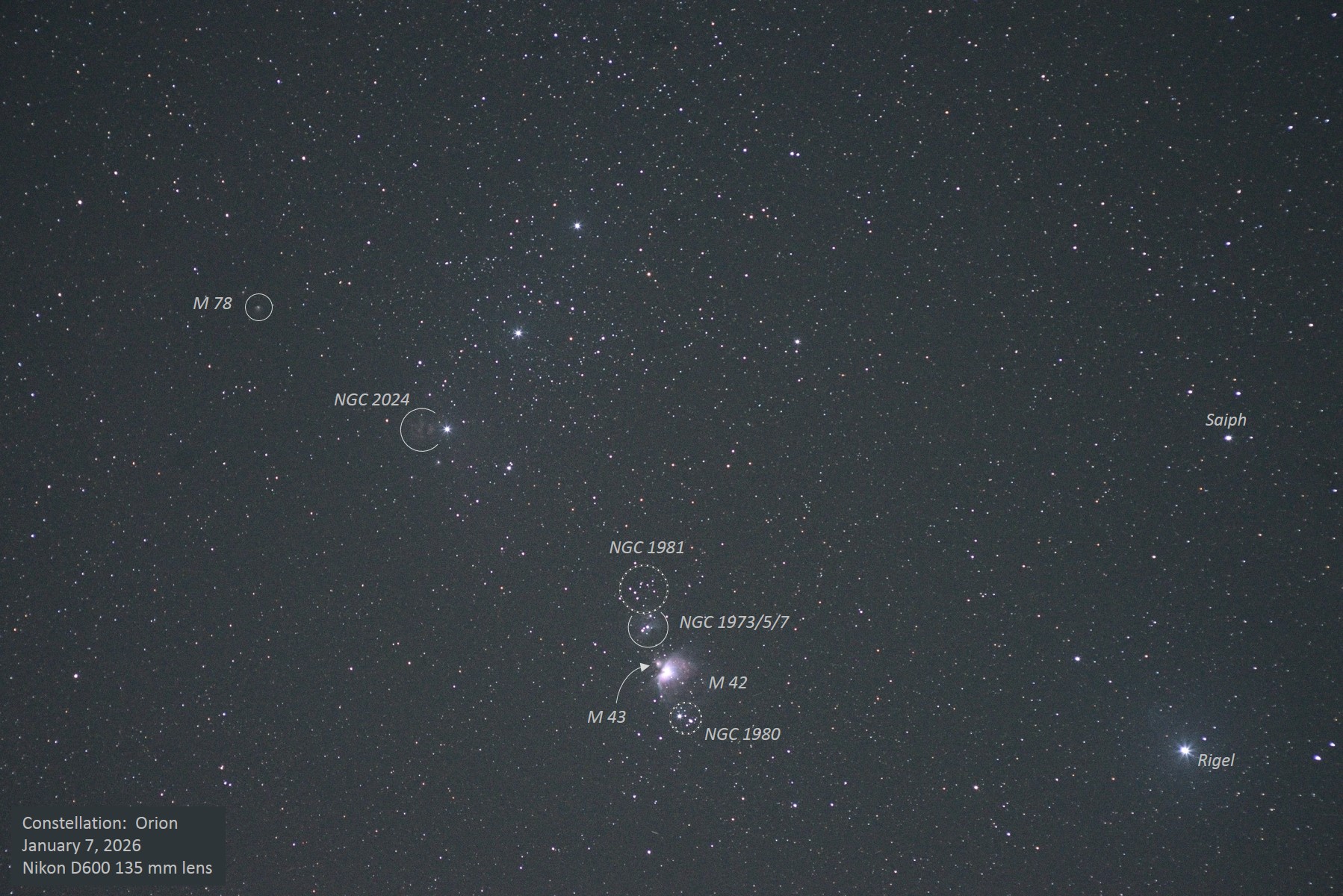 |
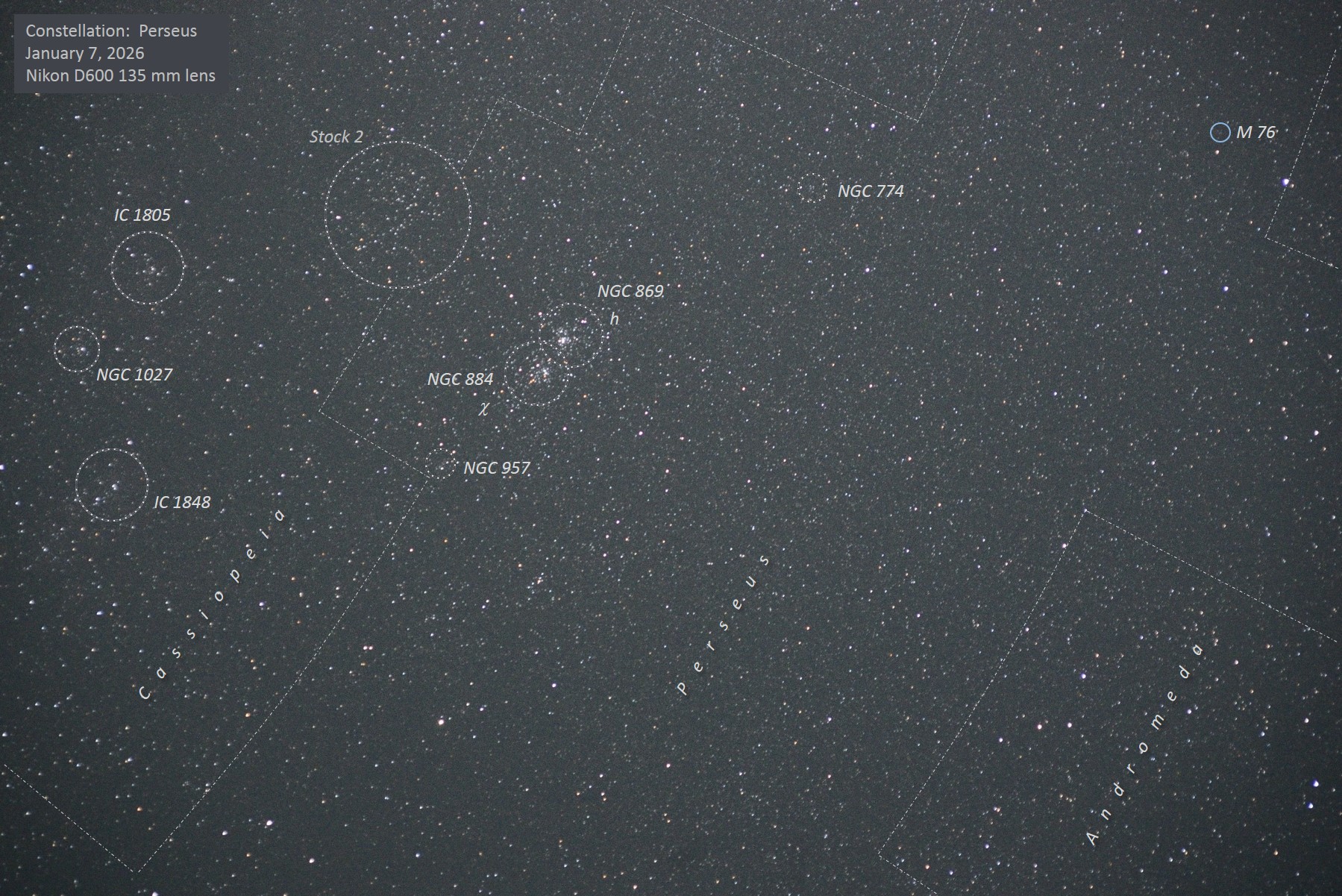
January 7, 2026: Focus on Perseus, also Orion The evening was clear and dry but also unseasonably warm, so I decided to get some mildly telephoto views of the constellation Perseus along with one shot of the southern part of Orion. These images were all obtained with my Nikon D600, which has not been modified for enhanced sensitivity in the red end of the spectrum, so we cannot expect any rendition of bright red HII regions! |
|||