Planet Scenes January 2026
|
|
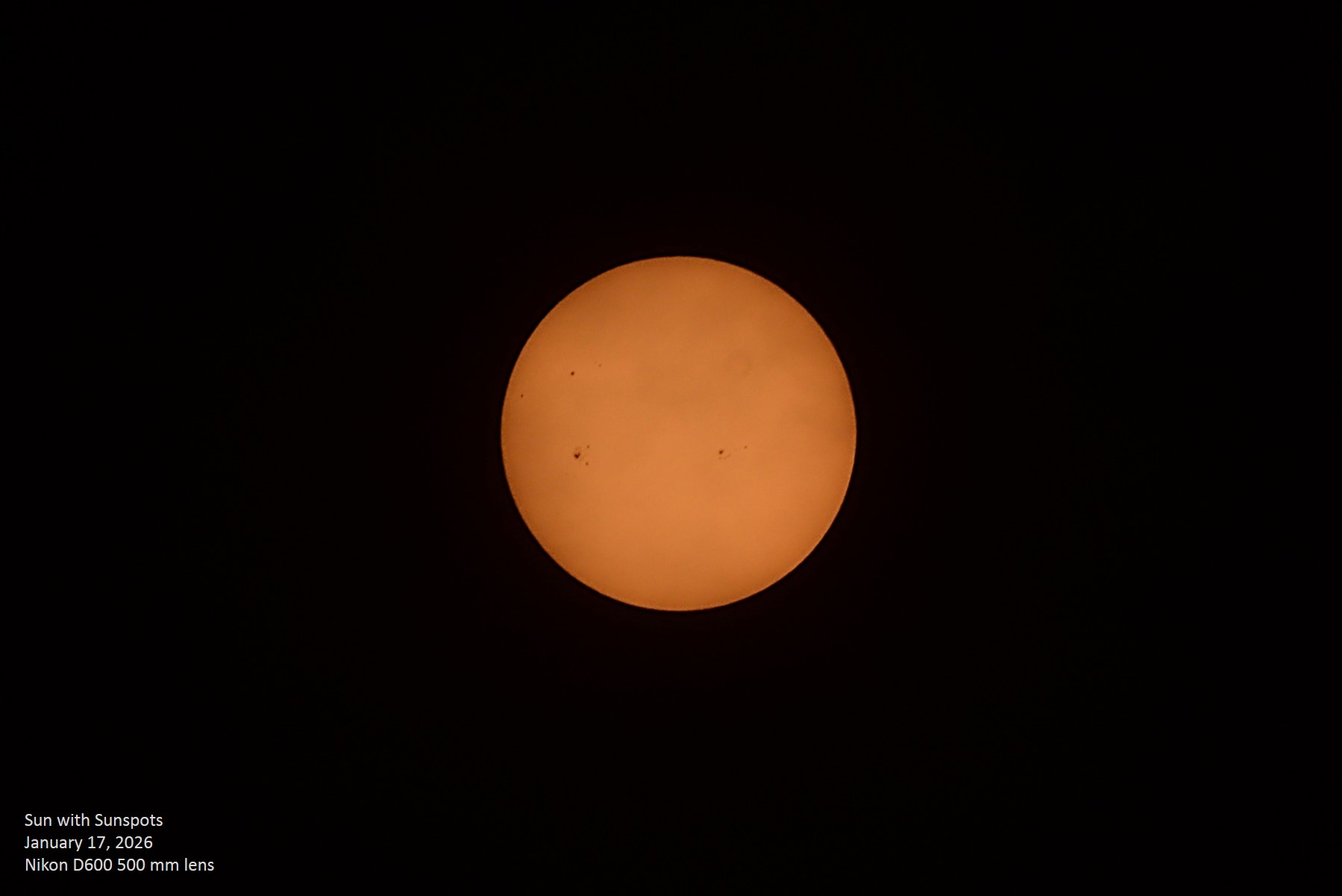
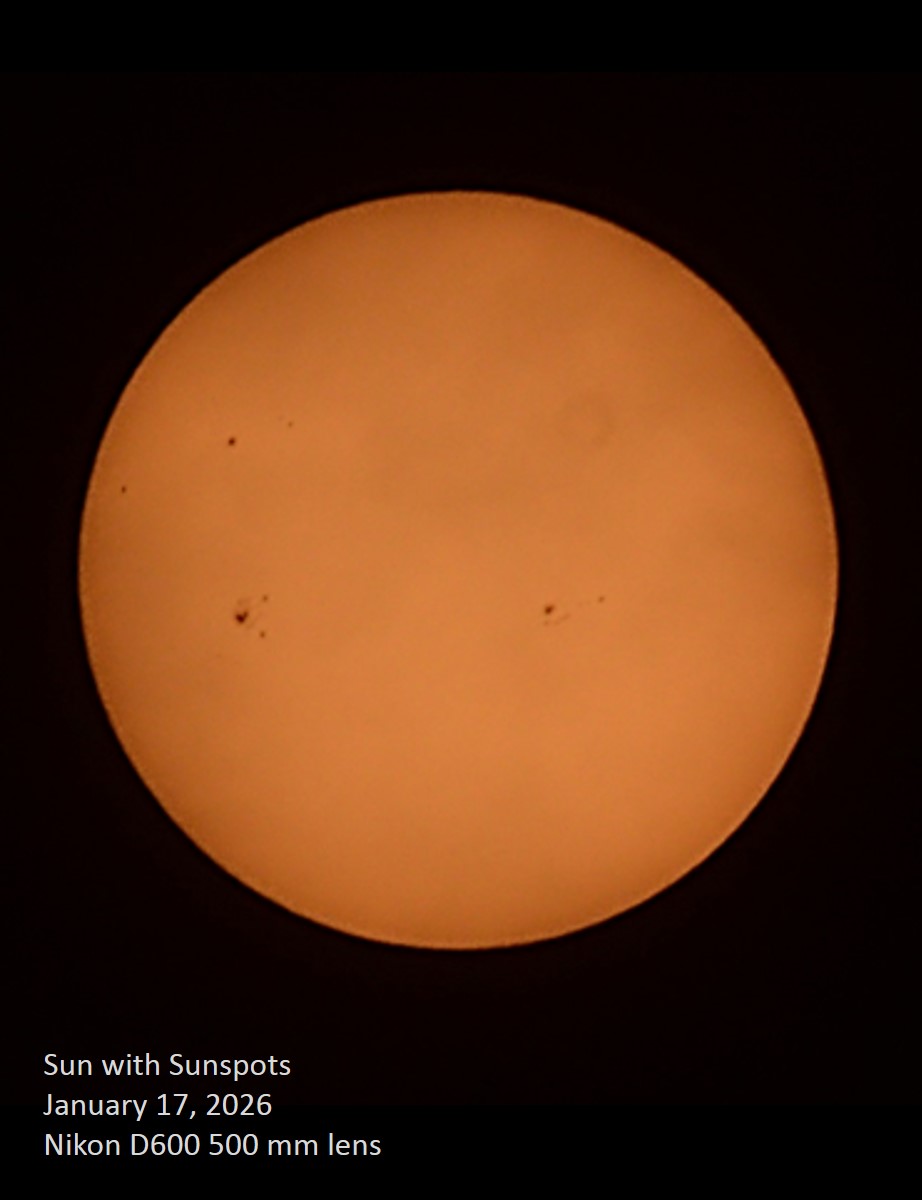
January 17: Sun Sporting Spots The Sun has exhibited several excellent sunspot groups in the last few days, and will continue to show them well over the next week. These images were obtained at a rest area on Interstate 10 in west-central Texas, in the middle of nowhere LOL. |
|
|
|
|
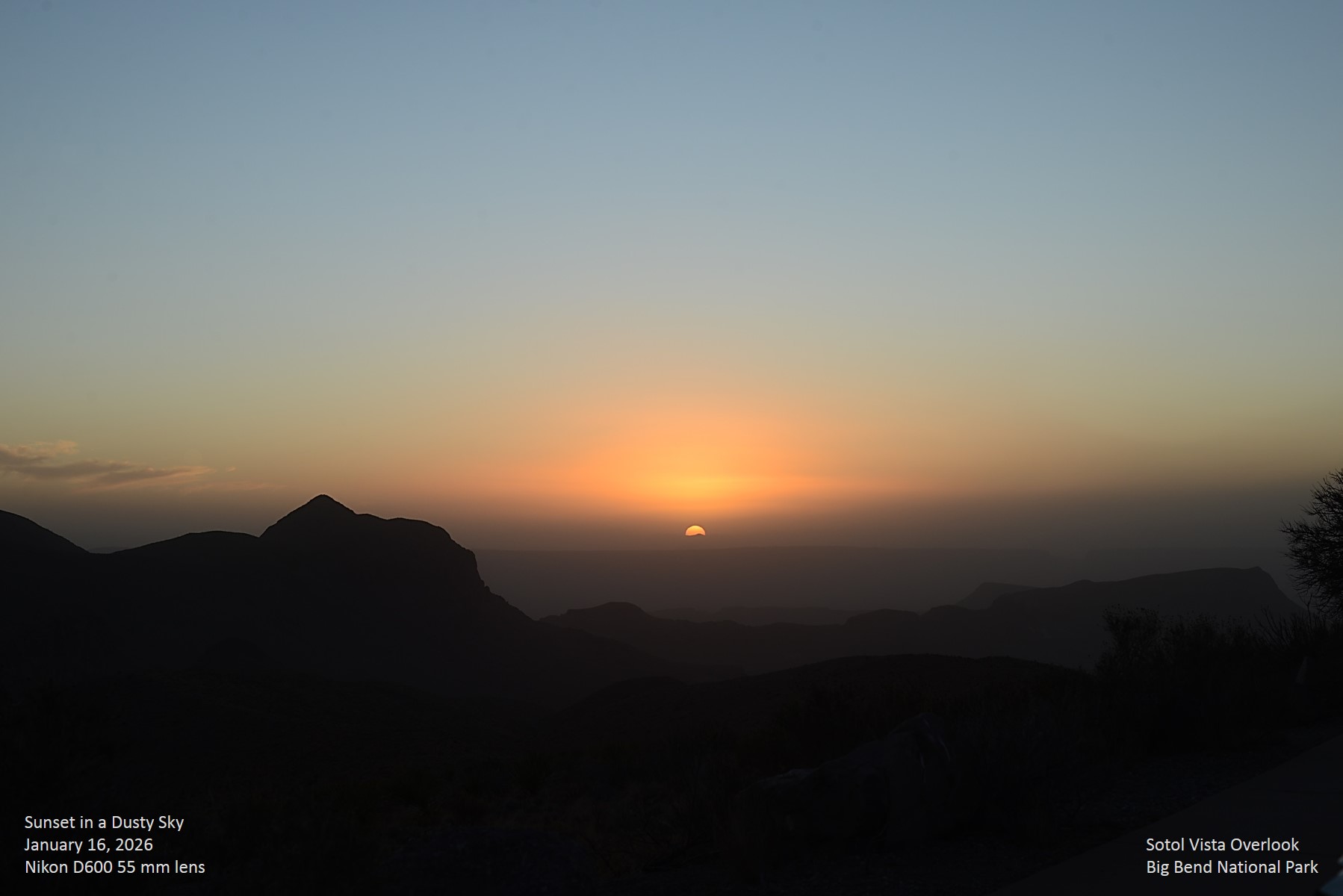
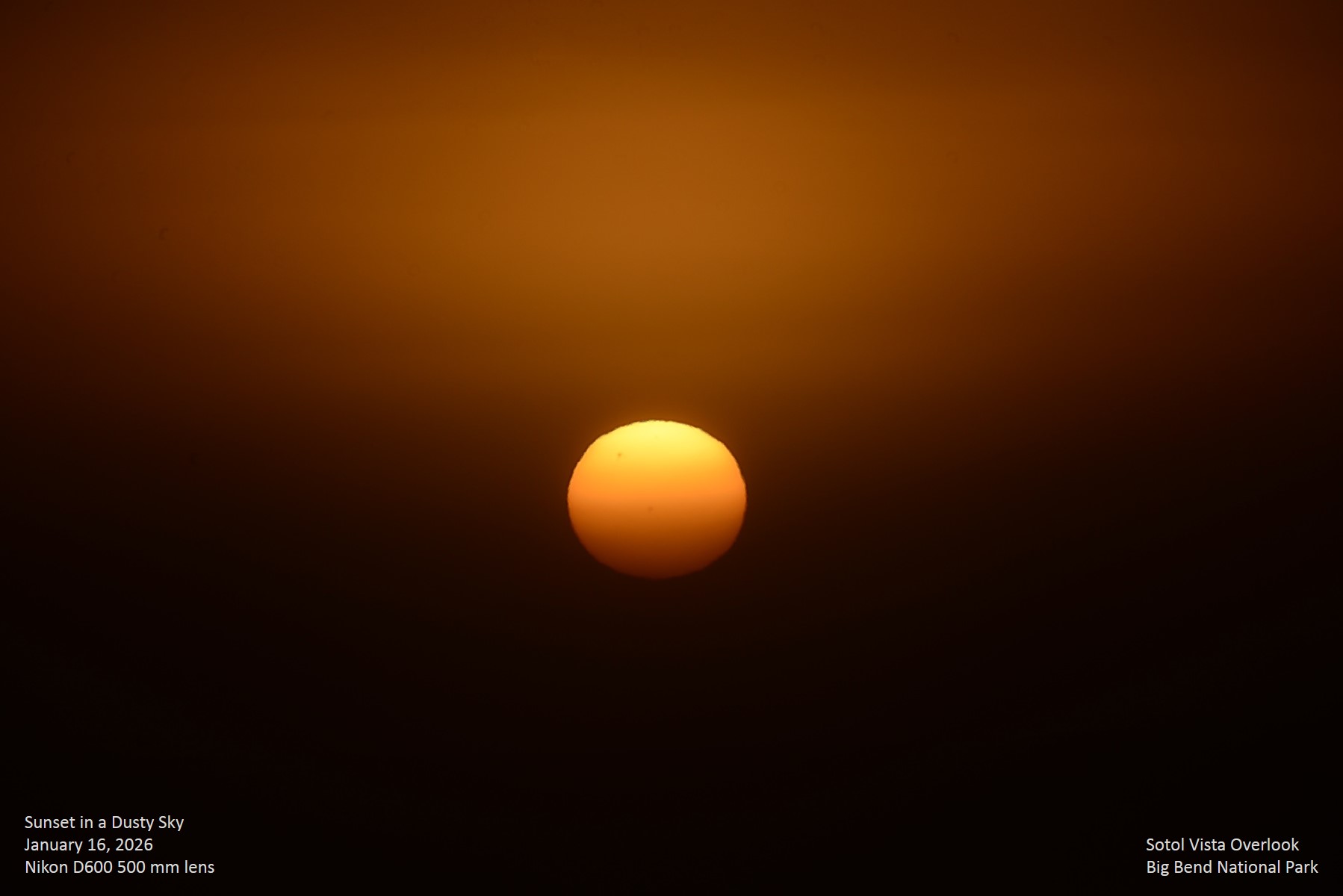
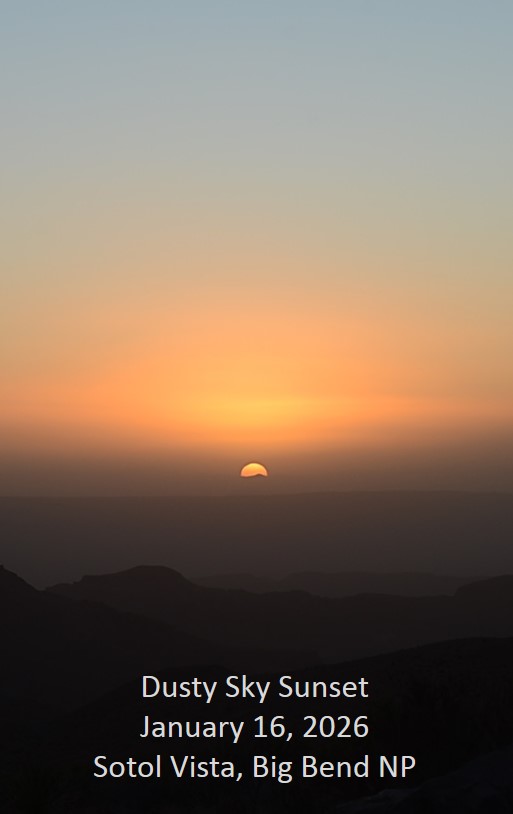
January 16: Sunset in Big Bend National Park I set up my equipment at the Sotol Vista overlook on the Ross Maxwell Scenic Drive in Big Bend National Park in the late afternoon and awaited nightfall. These pictures show that even with no filter, the sunspots were clearly visible owing to the huge amount of dust in the air that day. Note also the flattening of the Sun in the telephoto view from refraction in the thick atmosphere along the horizon. |
|
|
|
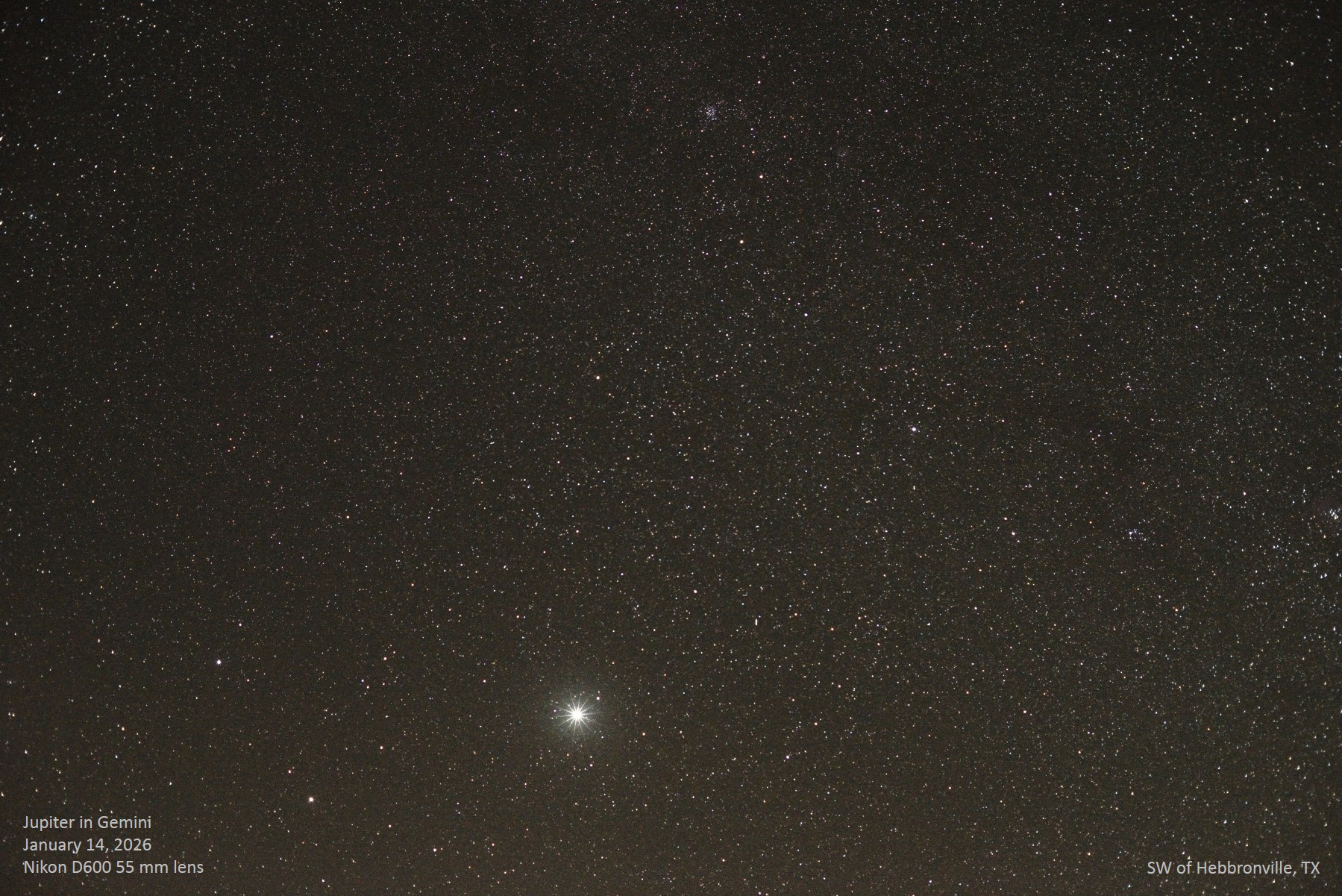
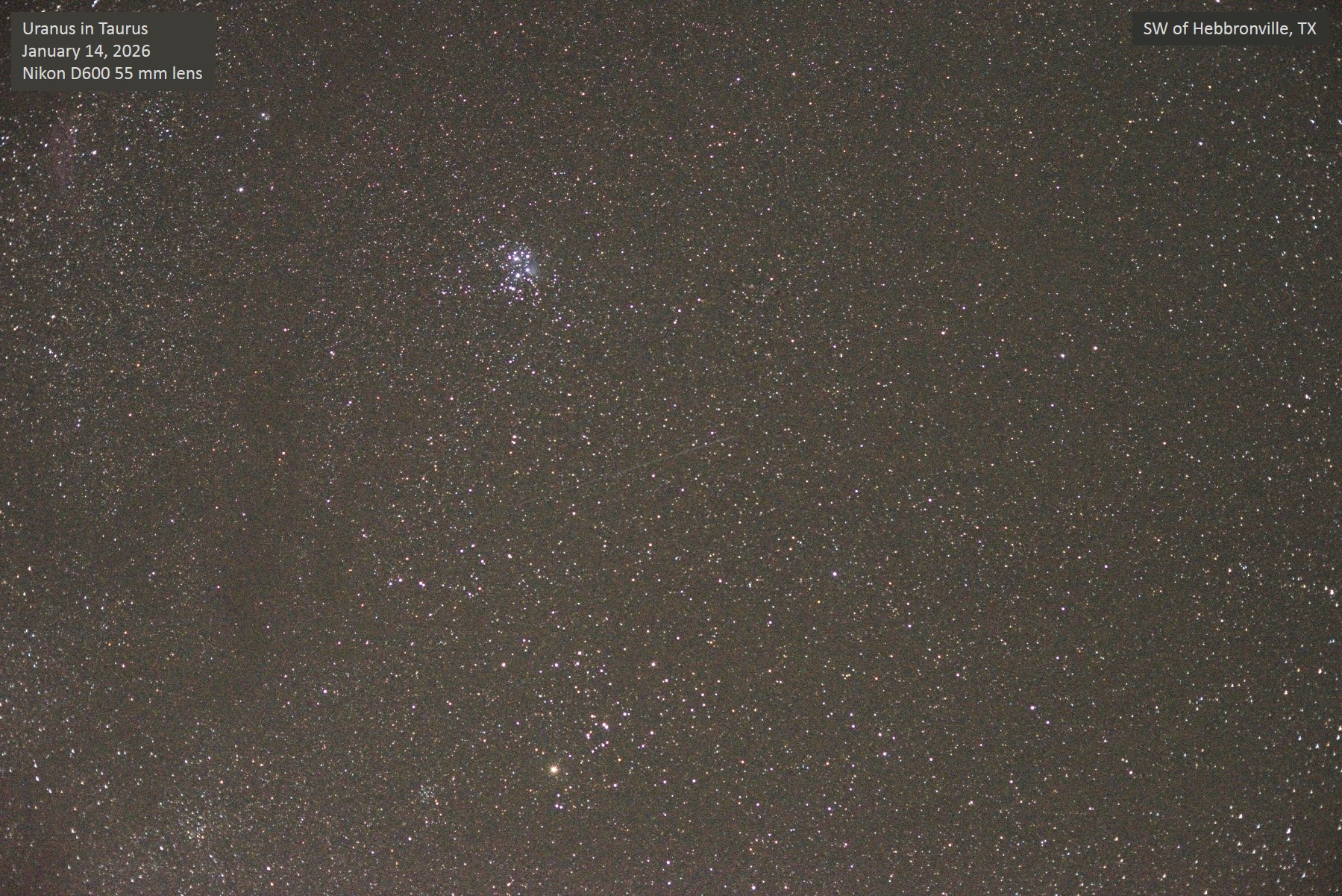
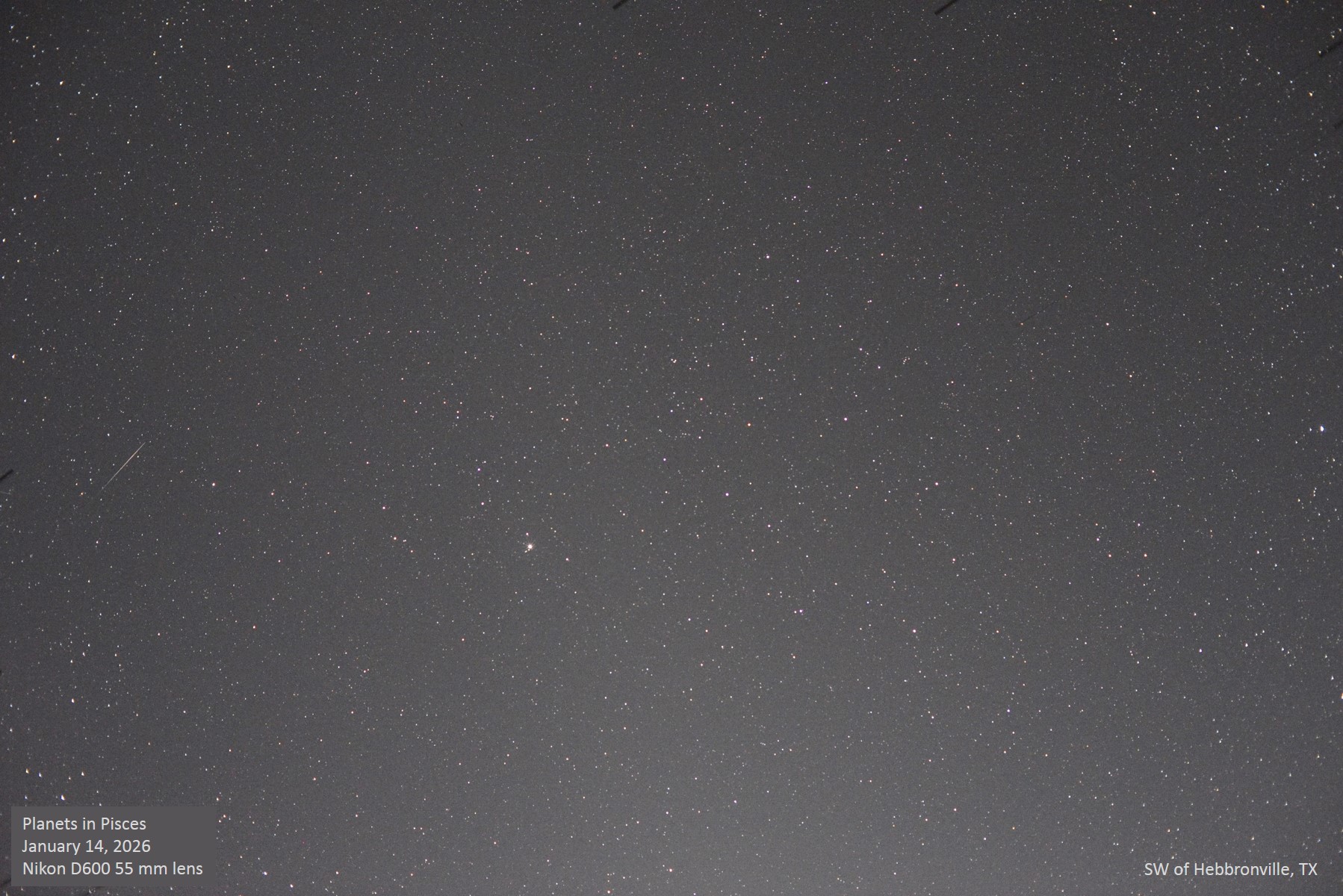
January 14: Gas Giants from southern Texas From the side of "Farm to Market Road 649" in southern Texas, I captured images of the outer planets in the very dark skies one experiences in that remote part of the Lone Star State. |
|
|
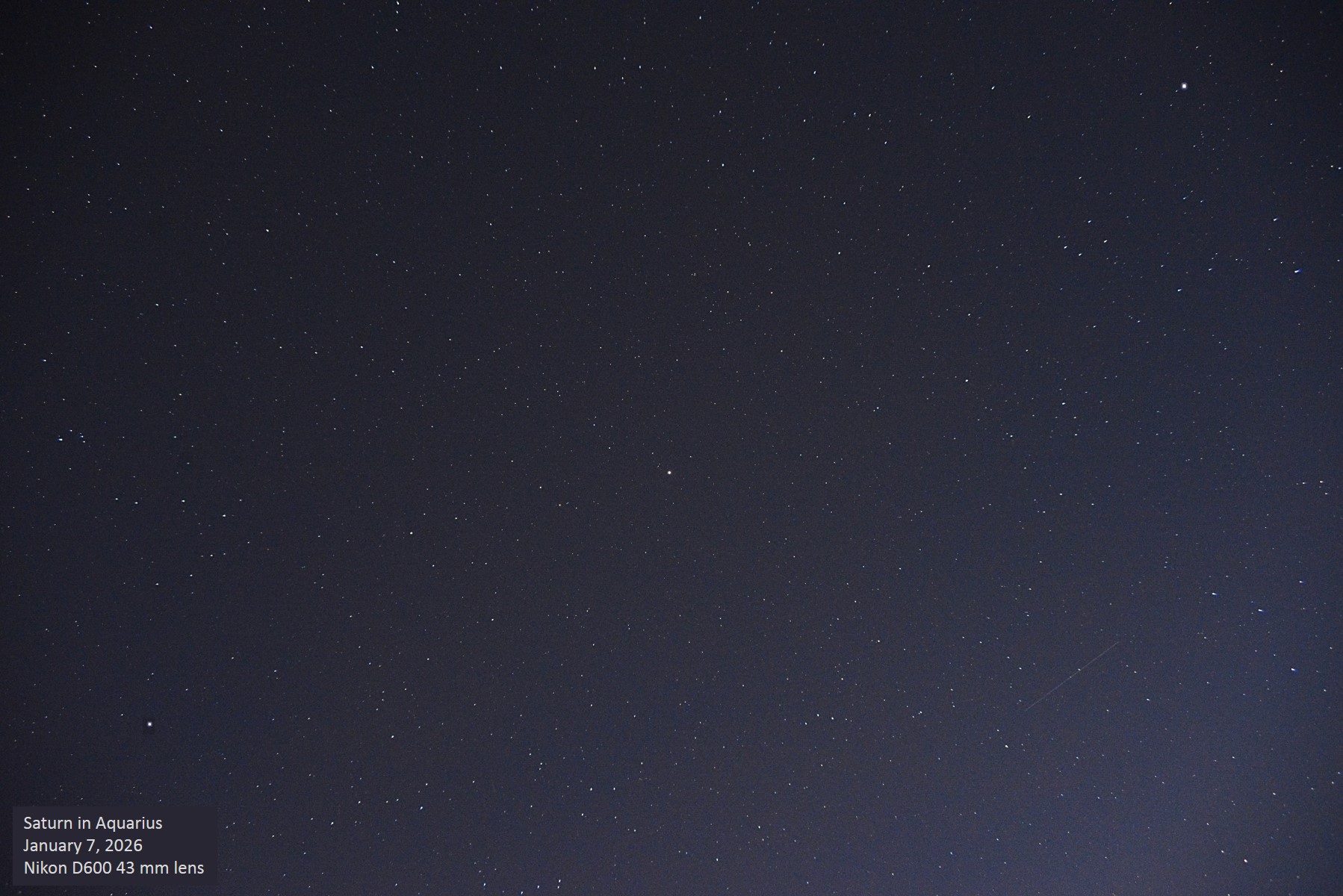
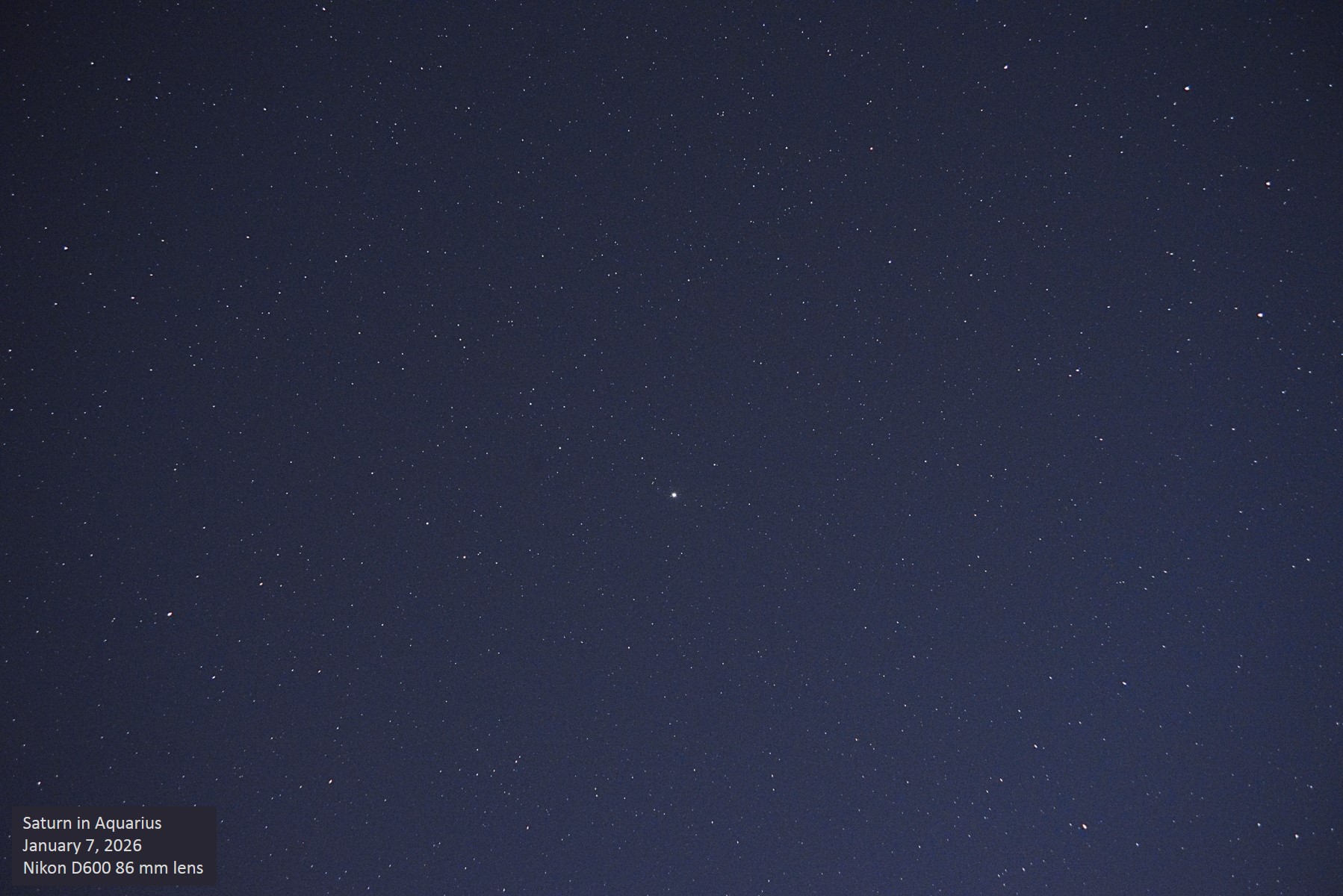
January 7: Saturn and Neptune Saturn and Neptune continue to creep eastward against the stars, which is also known as prograde motion, in the two main water constellations of the autumn sky, Aquarius and Pisces, respectively. |
|
|
|
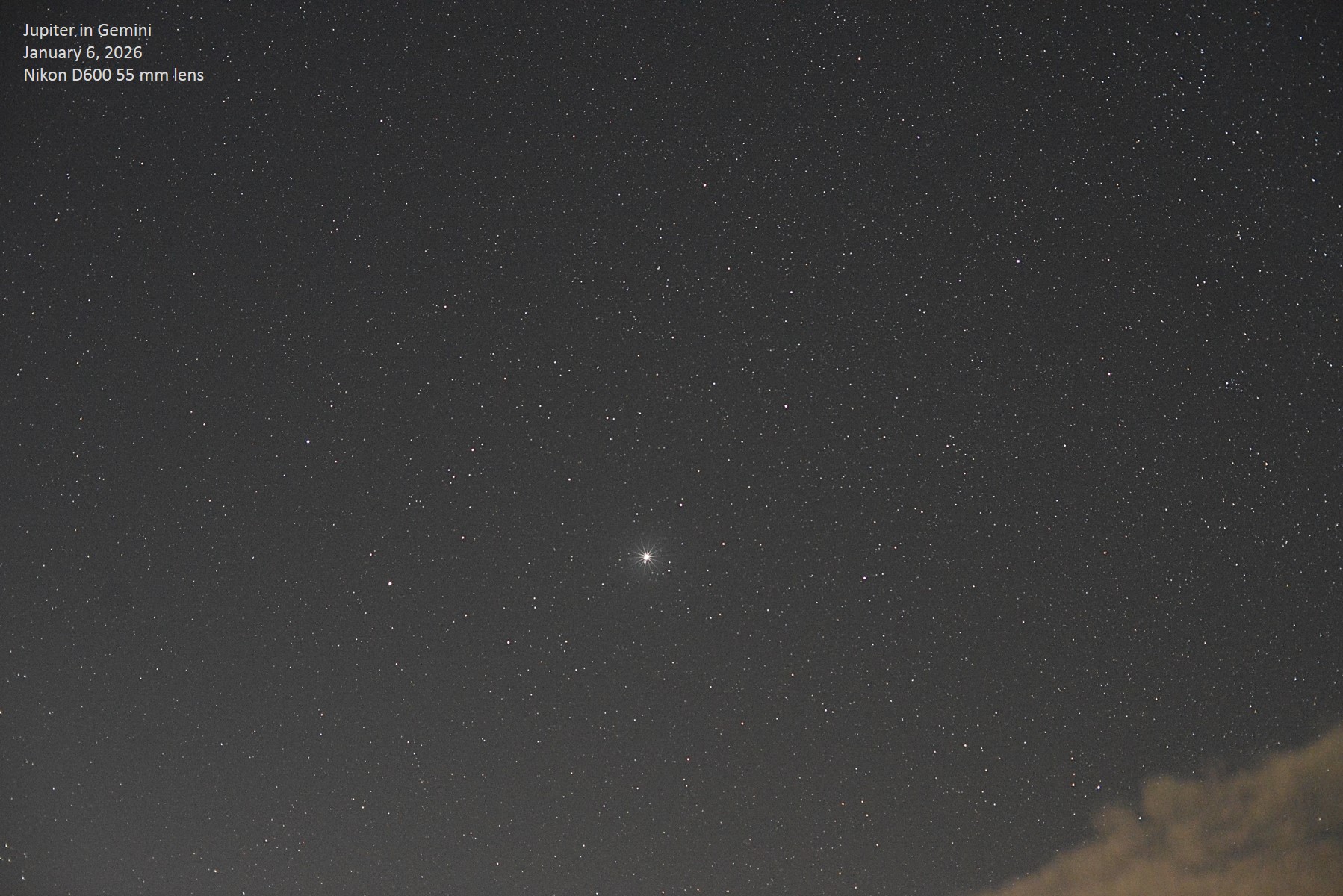
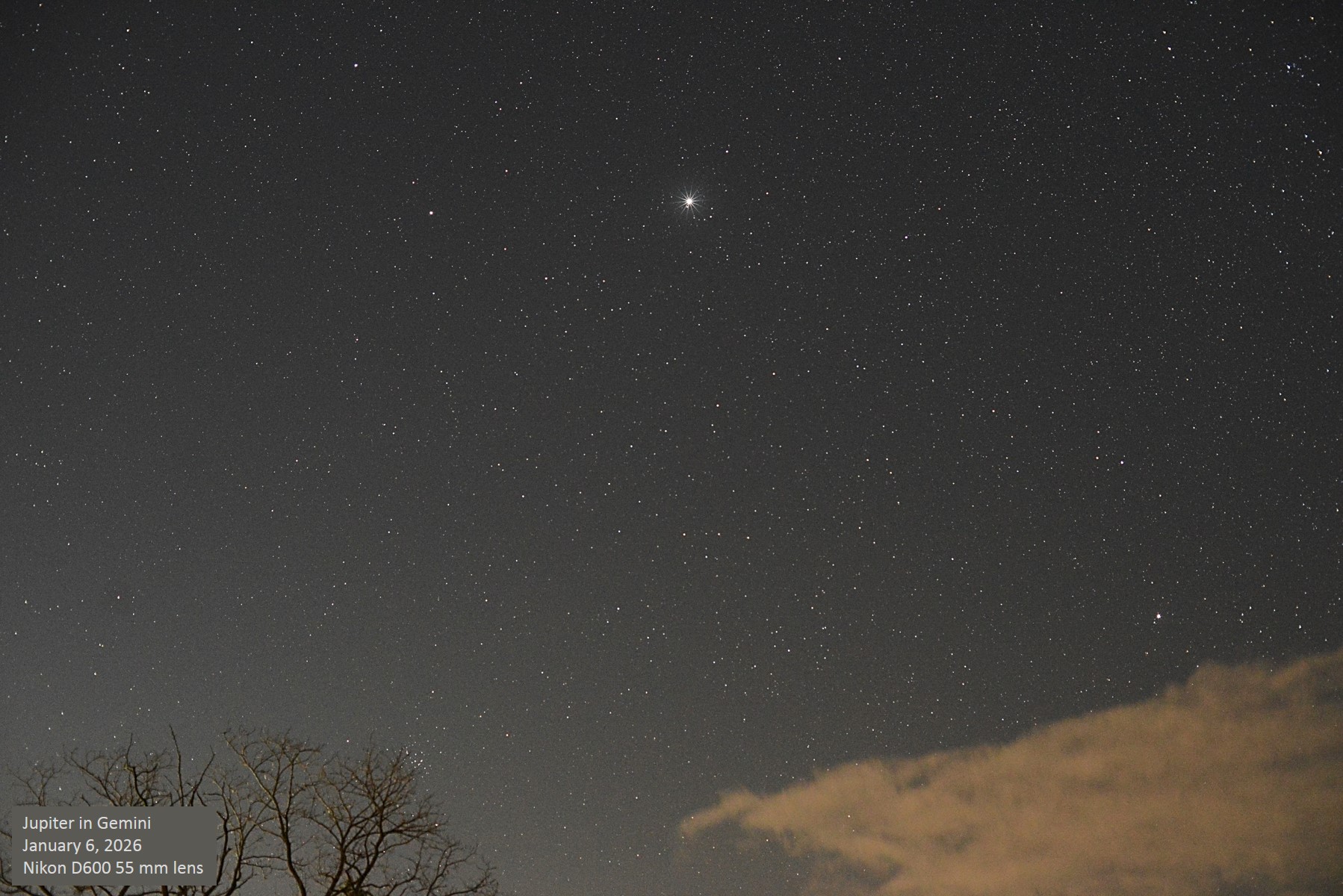
January 6: Two Views of Jupiter near Opposition Jupiter is only four days away from opposition in Gemini, the point at which it is exactly opposite the Sun in our sky, which means it will be highest in the sky at midnight. It is at this time that it shines brightest and subtends the largest surface area. The speed at which it retrogrades is also the fastest during this time. Opposition will occur on January 10, 2026. |
|
|
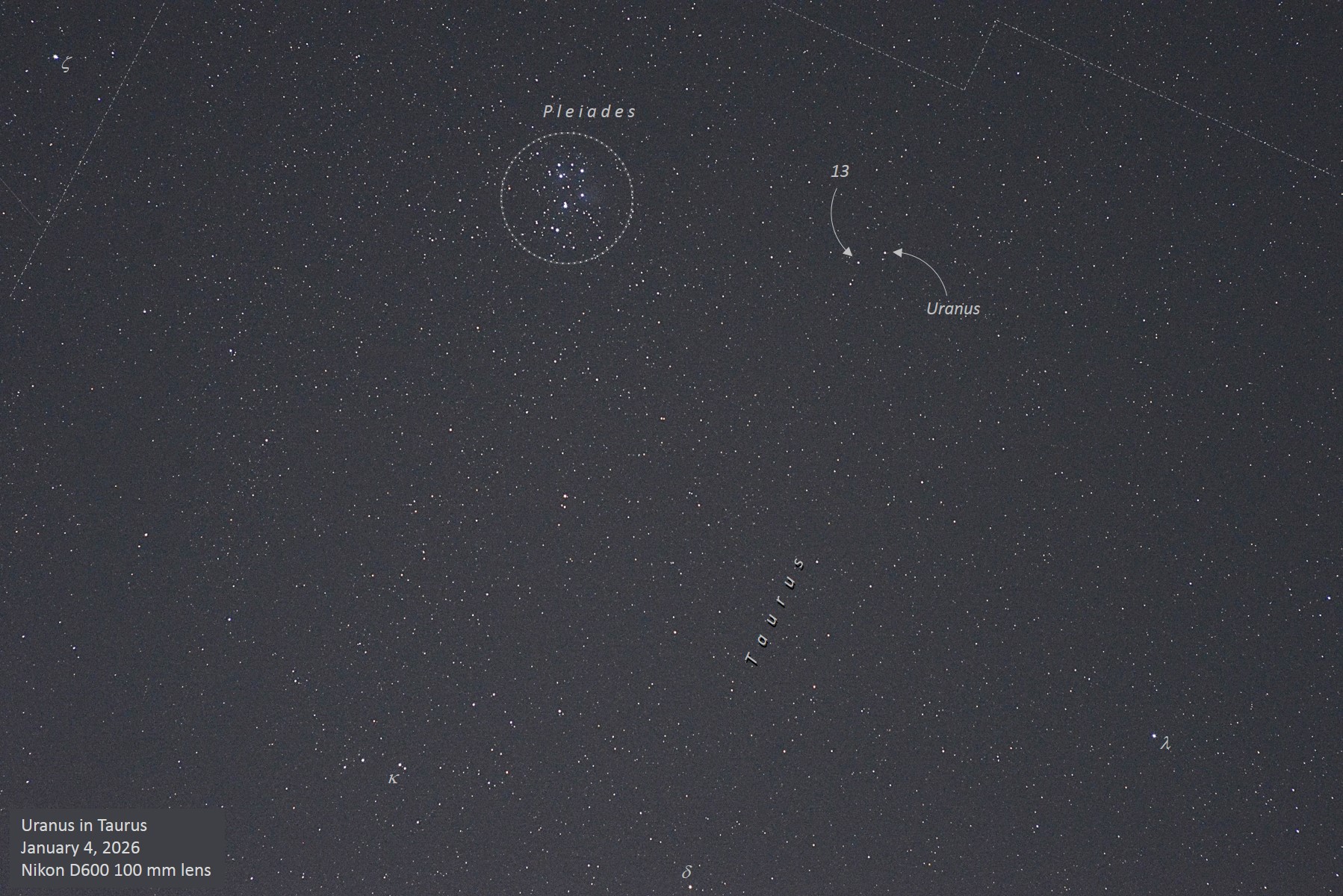
January 4: Uranus Uranus is still situated in western Taurus, south of the Pleiades star cluster, and readily visible to the unaided eye from a dark location, assuming that your vision is 20/20. |
||
|
|
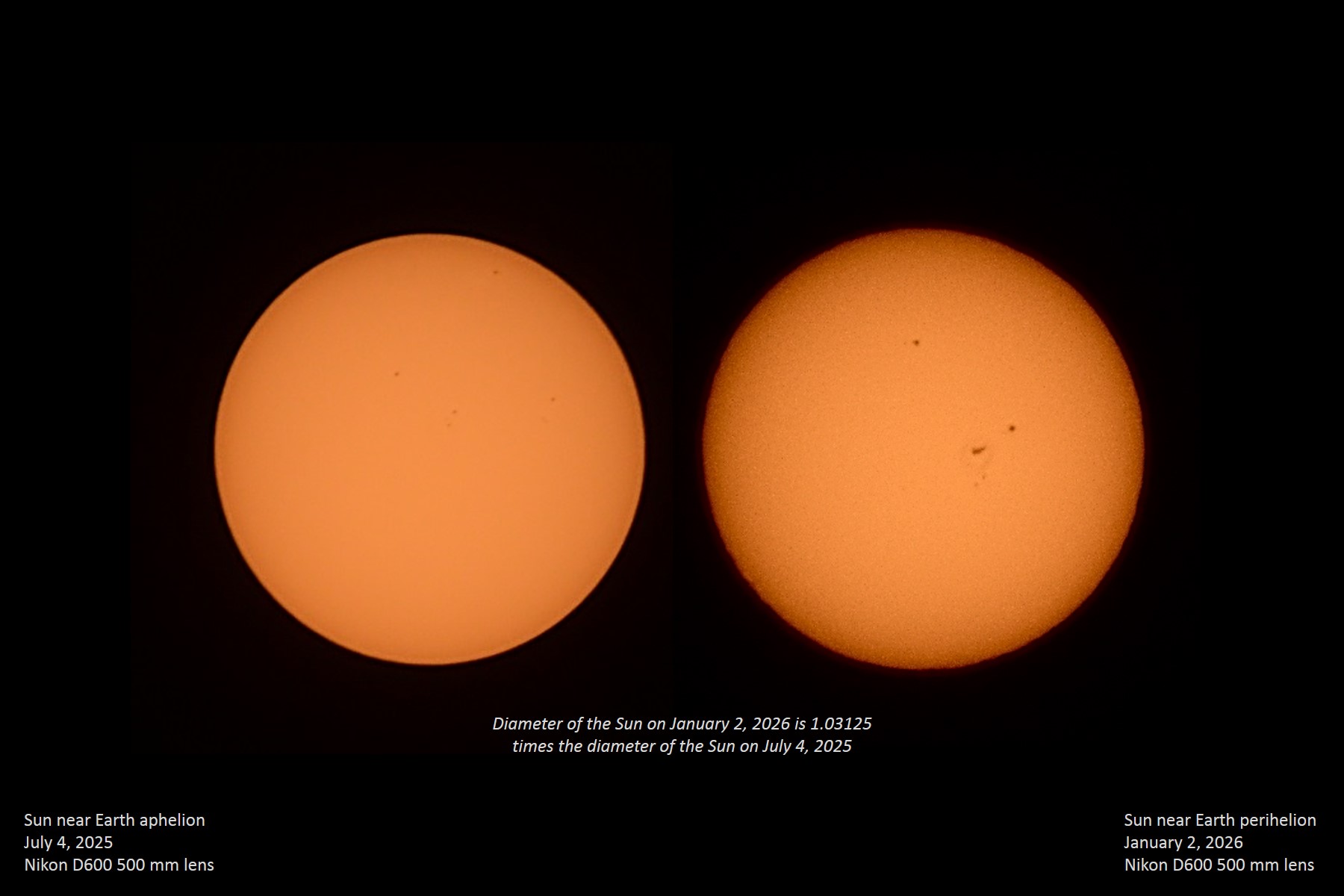
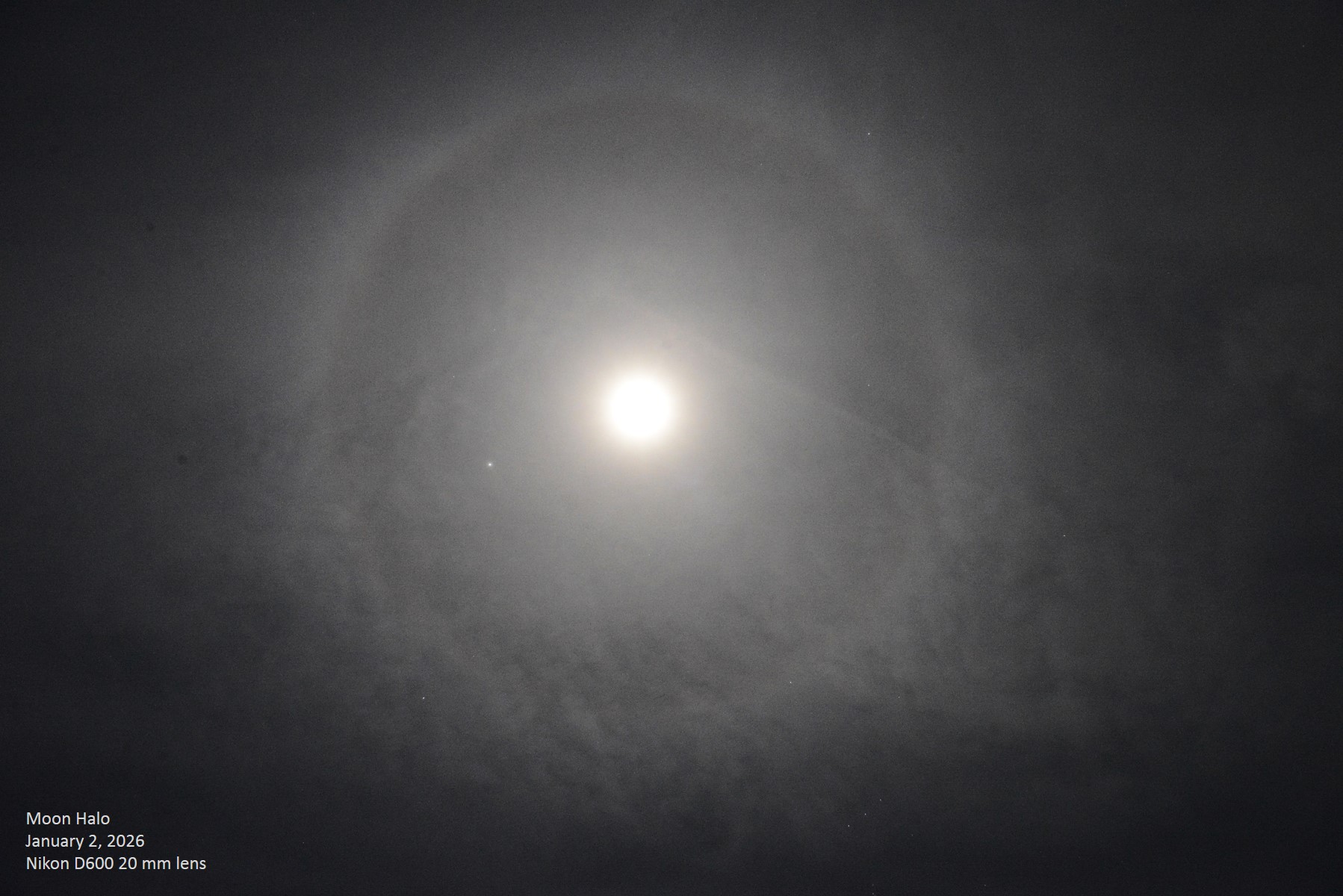
January 2: Fun with the Sun and a Moon Halo The Sun is one day prior to being closest to Earth for the year 2026, which means the Earth will be at perihelion tomorrow. Also, even though they are invisible, we can plot the location of the inner planets Mars and Venus on either side of the solar disk on the unmagnified view. What we need today is a total solar eclipse!! Just before midnight, the nearly full Moon illuminated a complete 22° halo which encompassed Jupiter and other stars. |
|