Planet Scenes June 2025
|
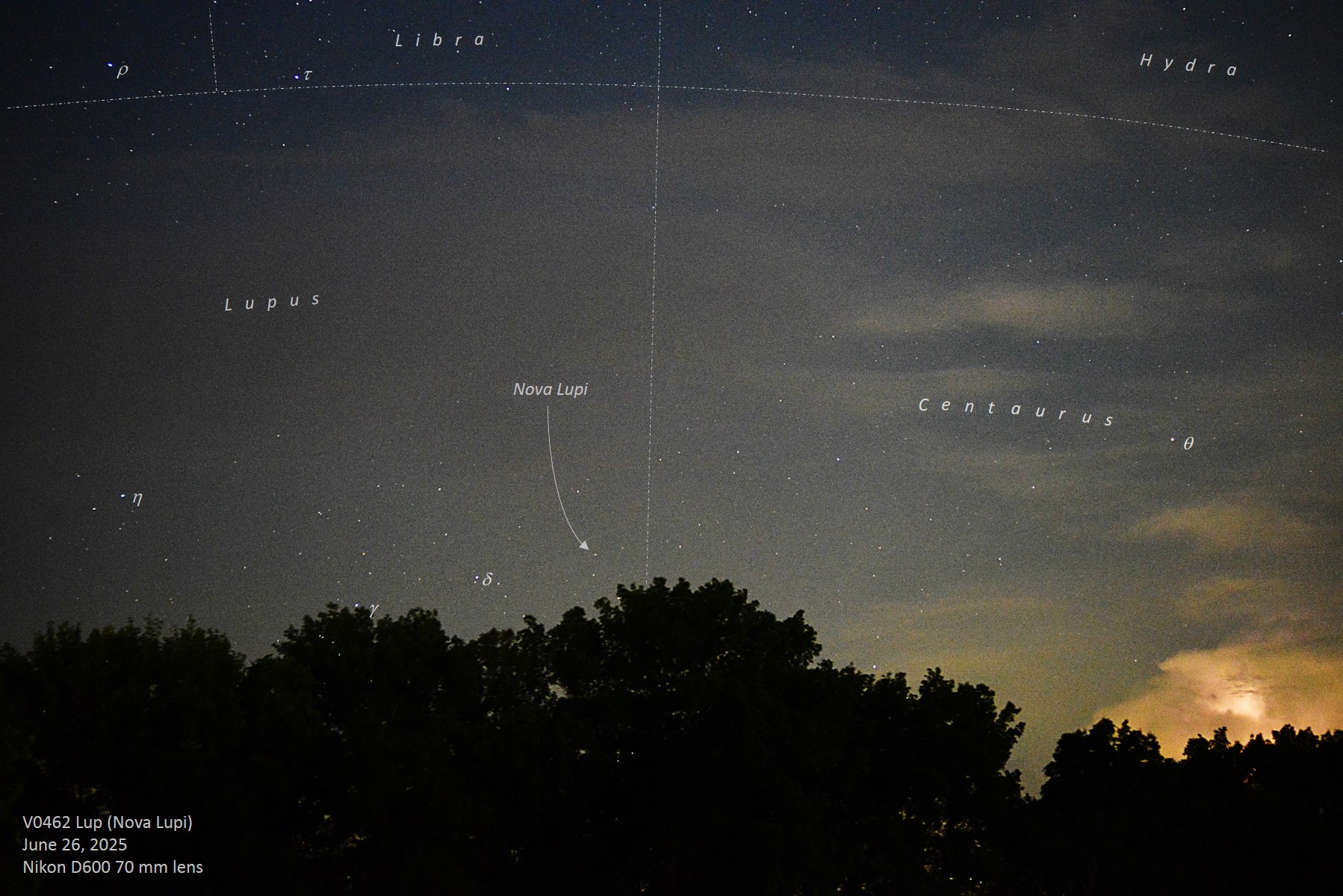
June 26: Nova Lupi (V0462 Lup) and Lightning In mid June, a new nova in the constellation Lupus surged to naked eye visibility, shining at magnitude +5.6 on June 21. On June 26, amid thunderstorms occuring all around the horizon, we see that the nova appears basically the same brightness as the previous day. The AAVSO Search (American Association of Variable Star Observers) page will give you a list of the latest brightness estimates by typing "V462 Lup" into the search box. |
||
|
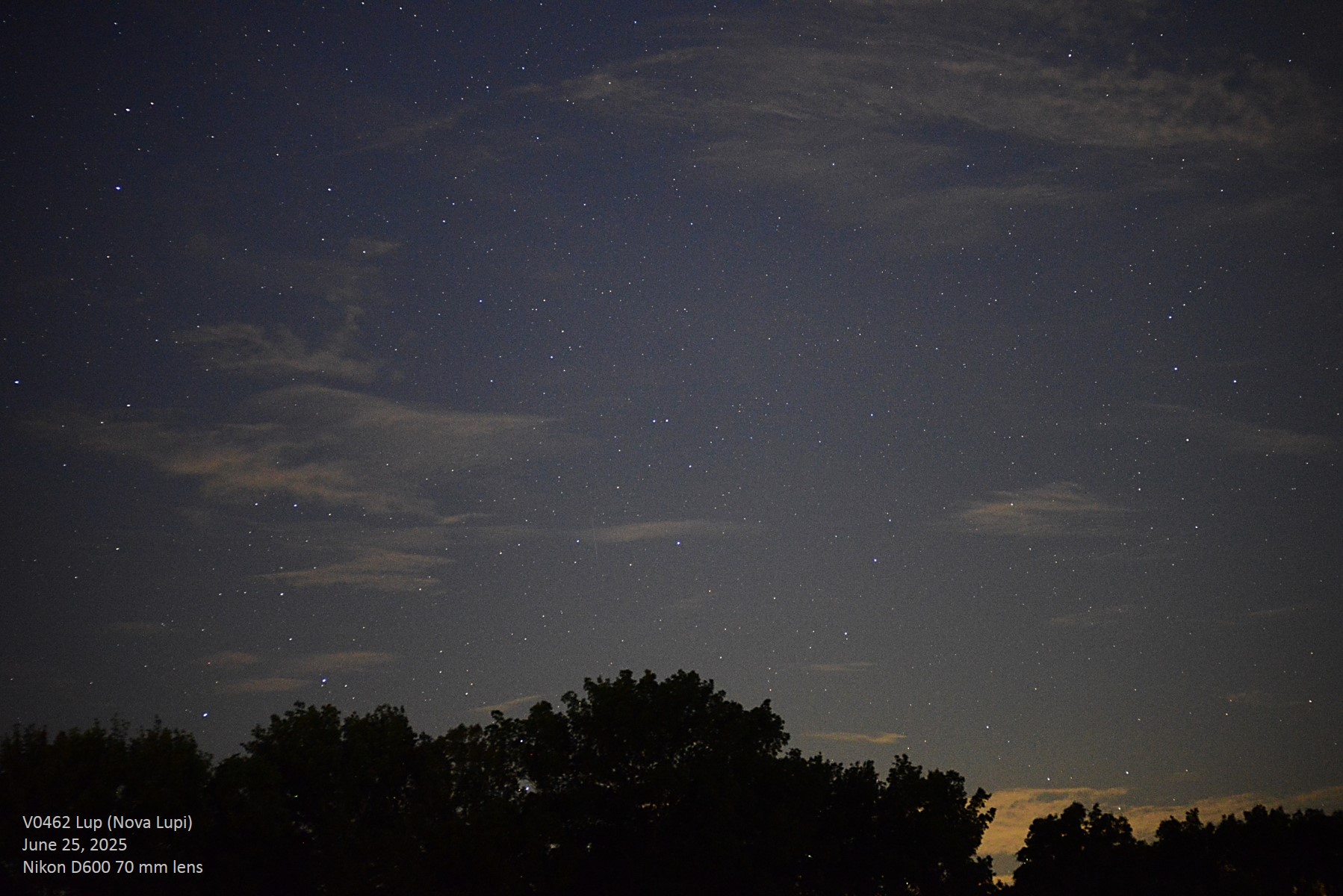
June 25: Nova Lupi (V0462 Lup) In mid June, a new nova in the constellation Lupus surged to naked eye visibility, shining at magnitude +5.6 on June 21. |
||
|
|
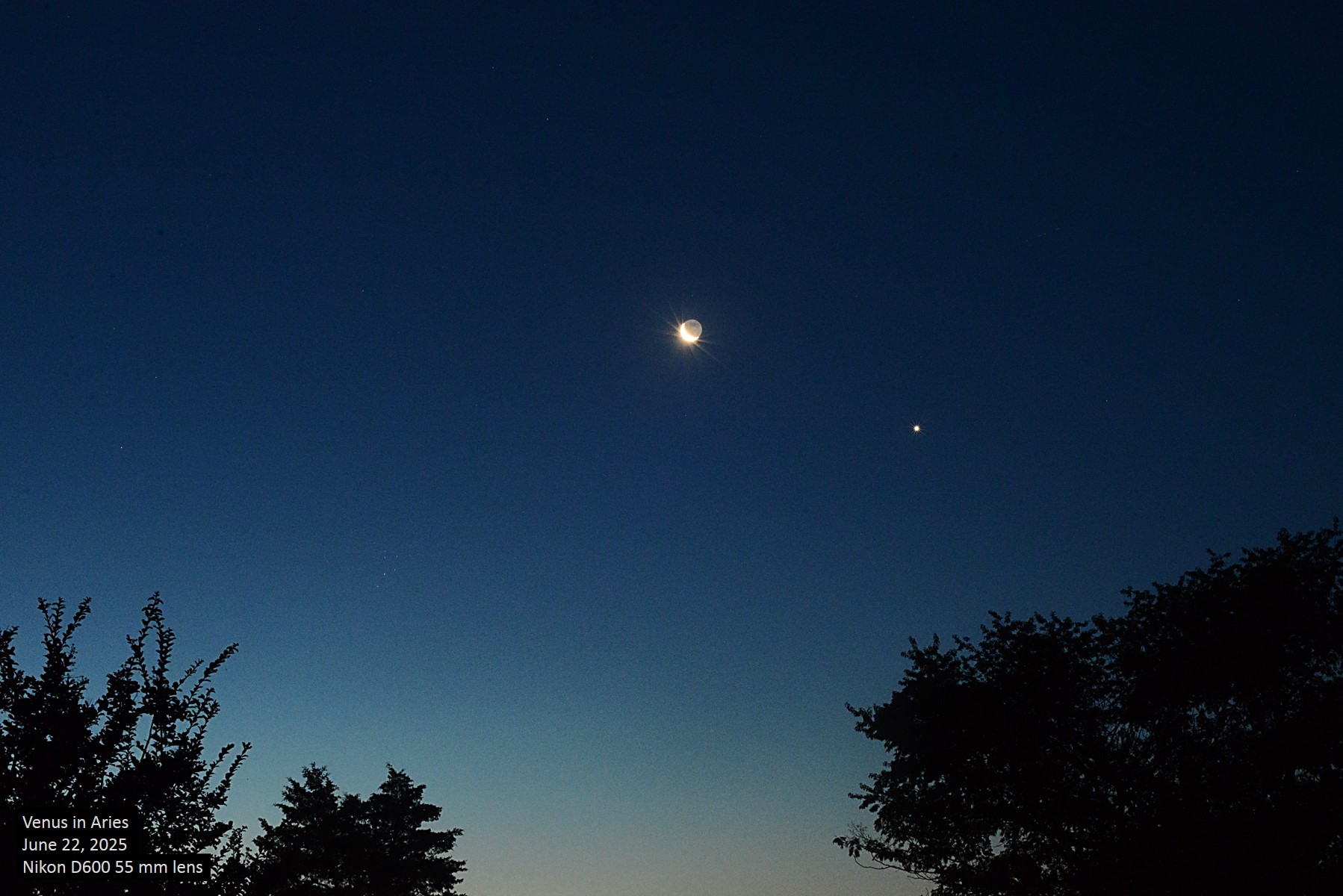
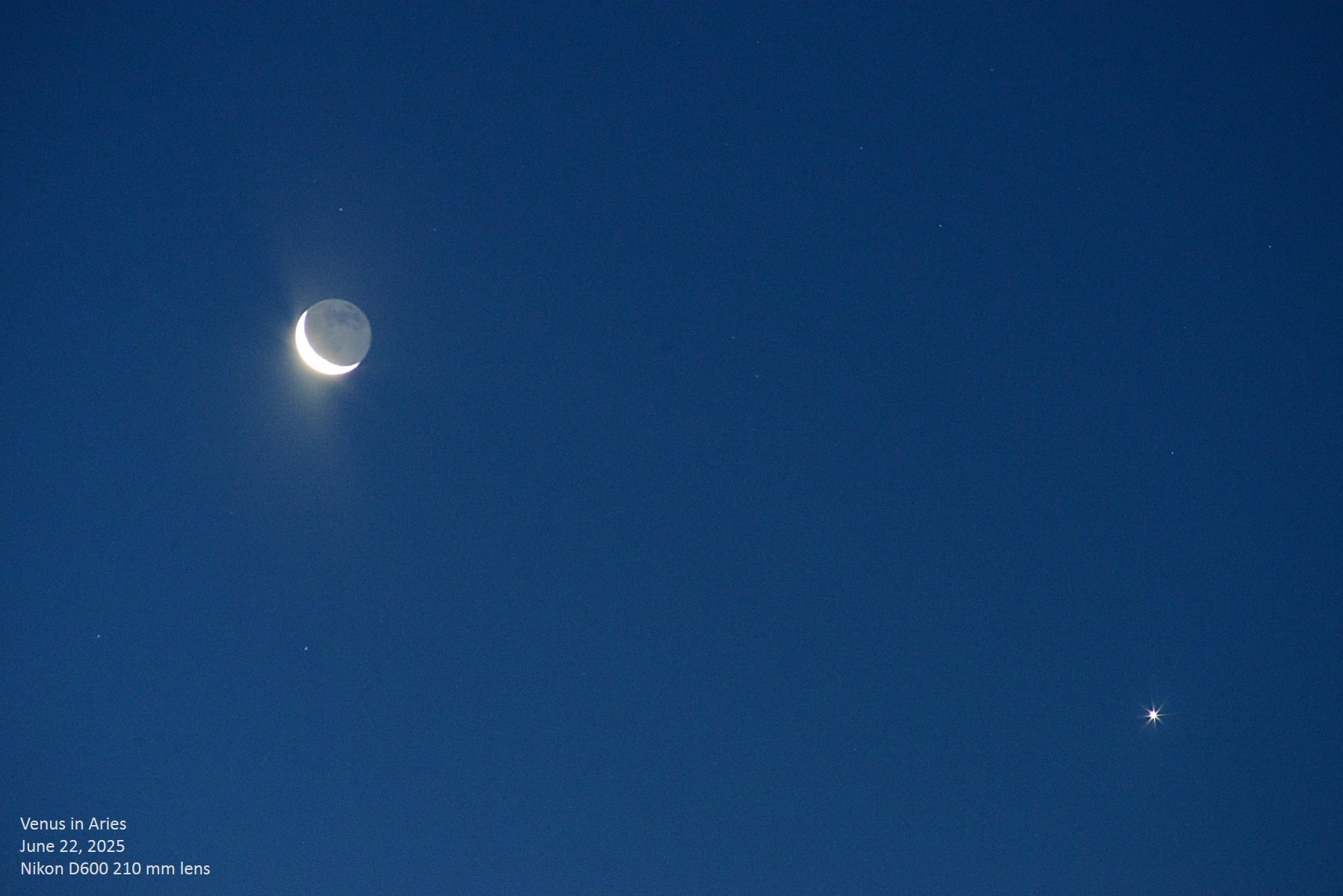
June 22: Venus and Moon Right around the time of the summer solstice, the crescent Moon slides down the morning sky well north of the ecliptic and positions itself far to the upper left of Venus in Aries. |
|
|
|
|
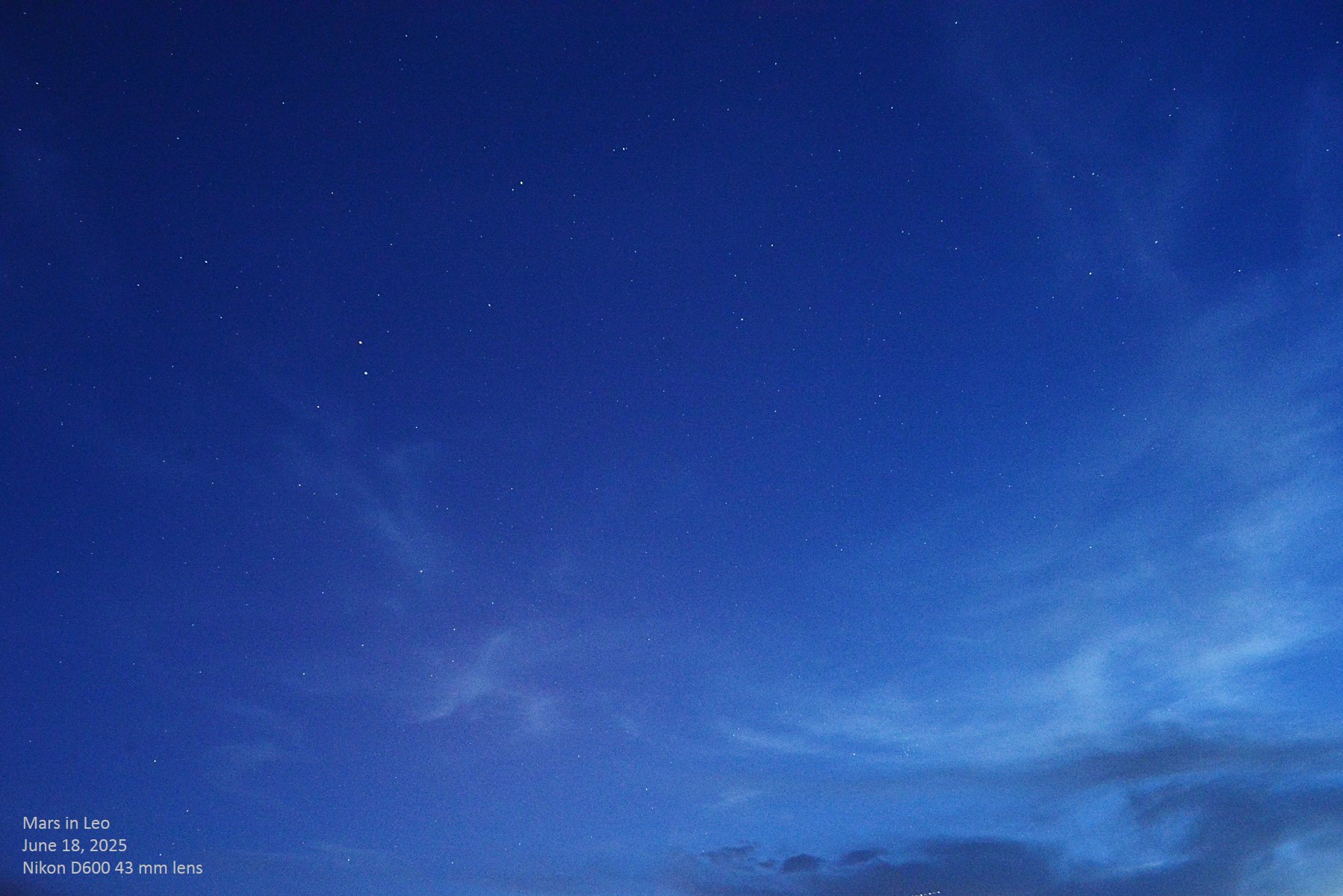
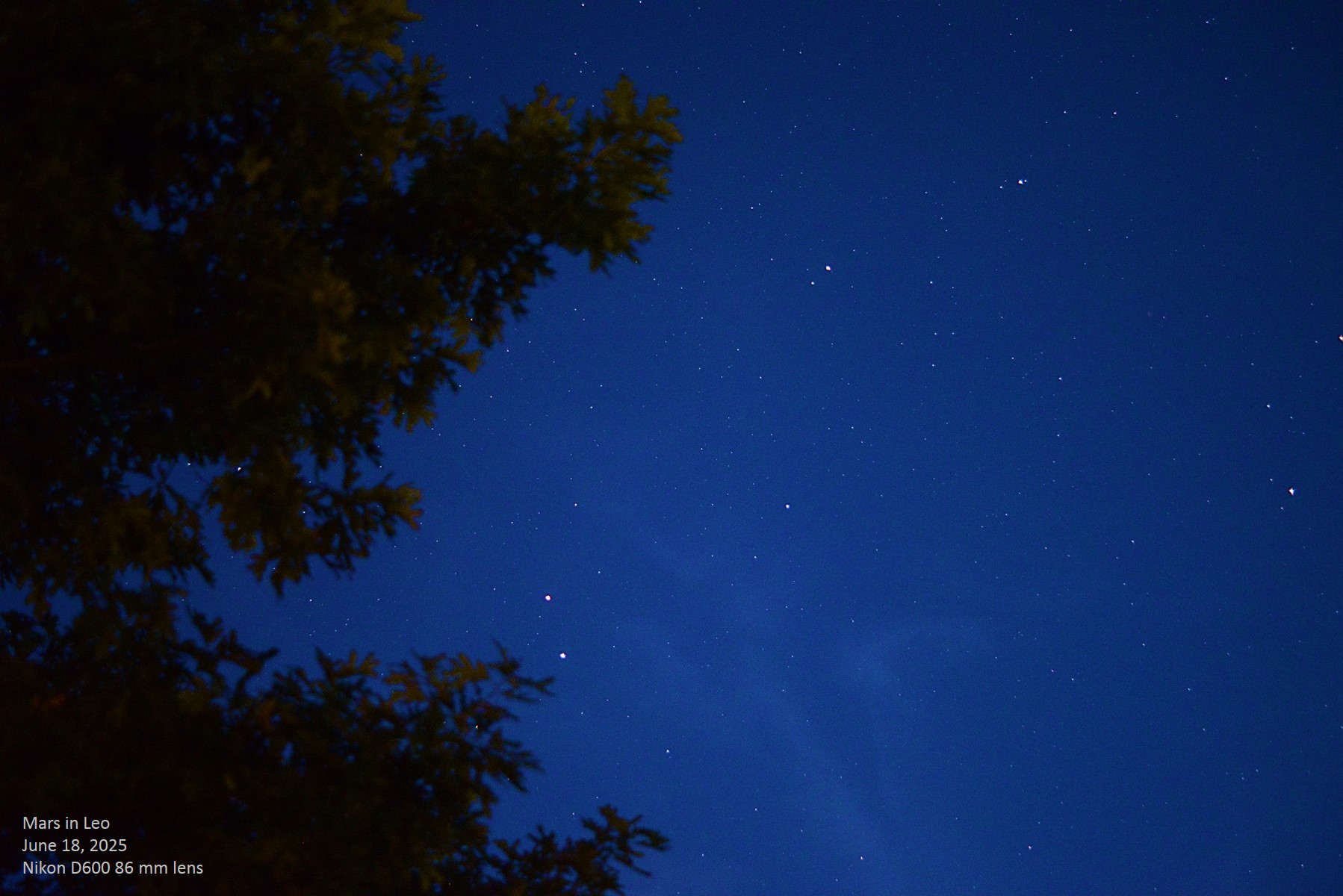
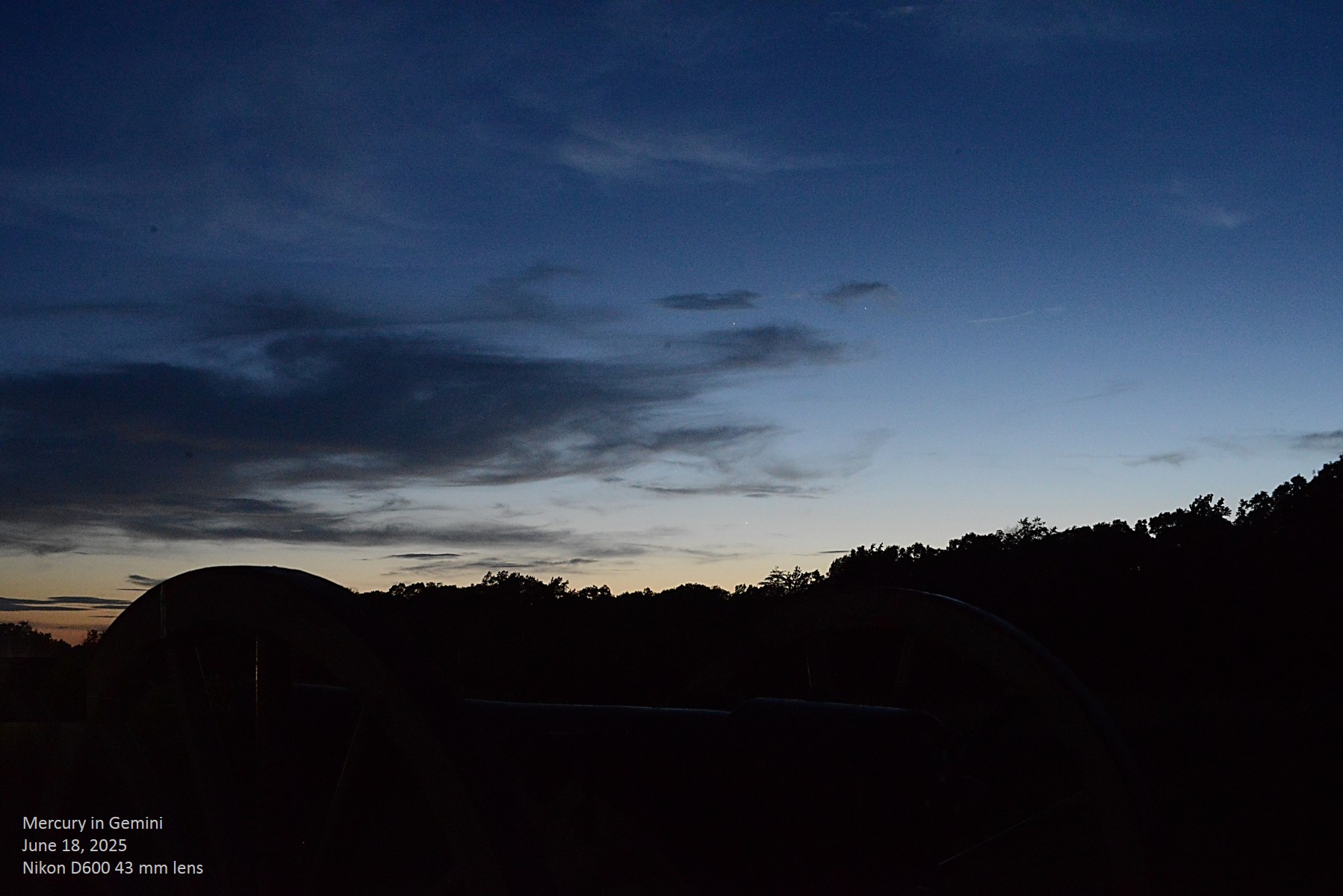
June 18: Mars and Mercury After more than a week of clouds and rain, we finally had clear weather and this gives us a chance to see Mars and Mercury in the evening. Mercury is low in the west below Castor and Pollux, while Mars is high in the southwest just above Regulus. |
|
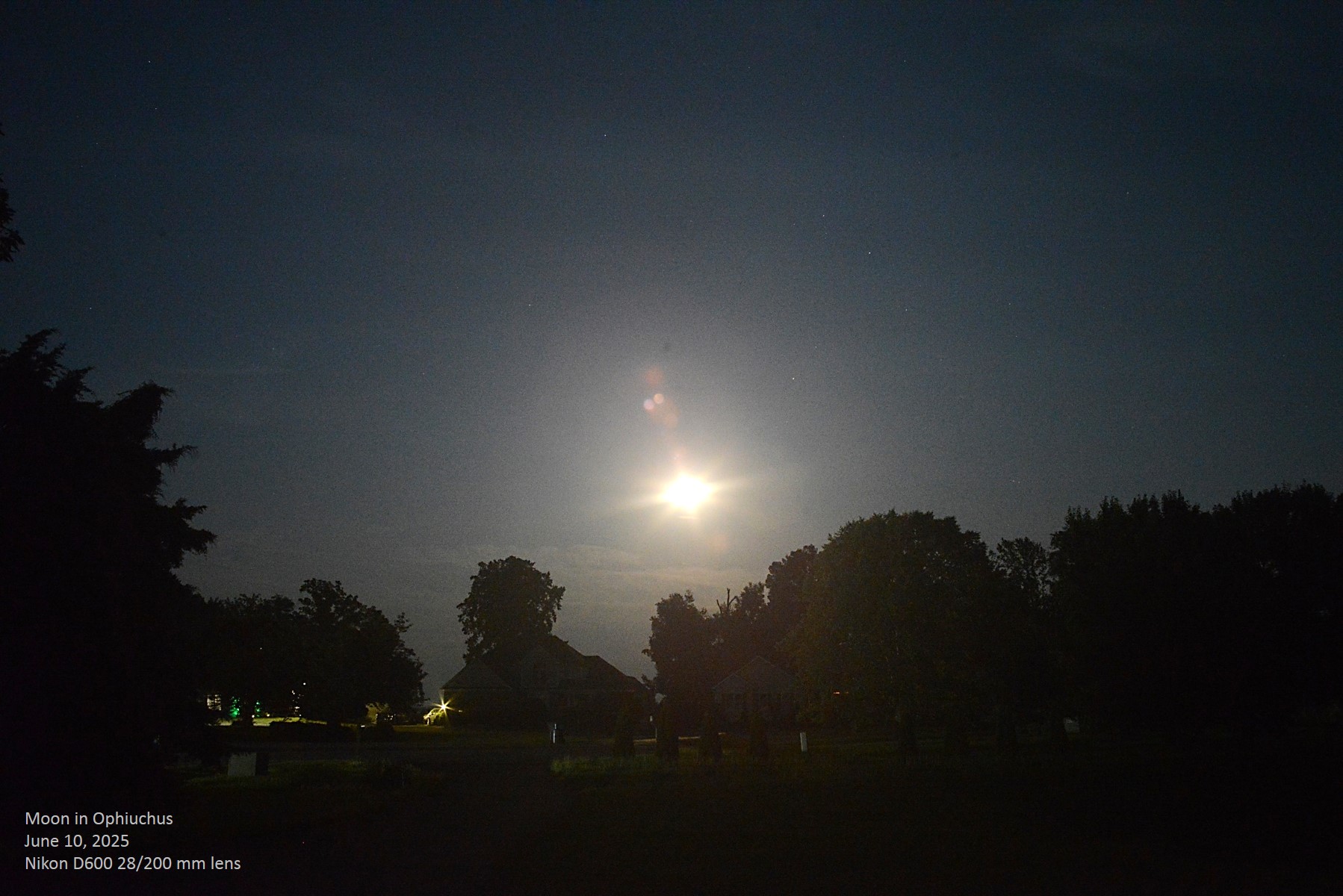
June 10: Rising Moon The almost full Moon rose in a hazy late spring / early summer sky over southeastern Stafford County, Virginia in the evening of June 10. This year the Moon is just about at its "major lunistice", which means that it is at or near the point in its orbit at which it reaches maximum and minimum possible declinations because its ascending and descending nodes are near the equinox points (March 21 and Sept 21, approximately). |
||

|
June 4: Setting Sun A large group of active sunspots has graced the solar disk for almost two weeks, but they're moving out of view, so we don't see any in this unfiltered (well, filtered by clouds and haze of course) view of the Sun captured in the evening of June 4, 2025. |
||