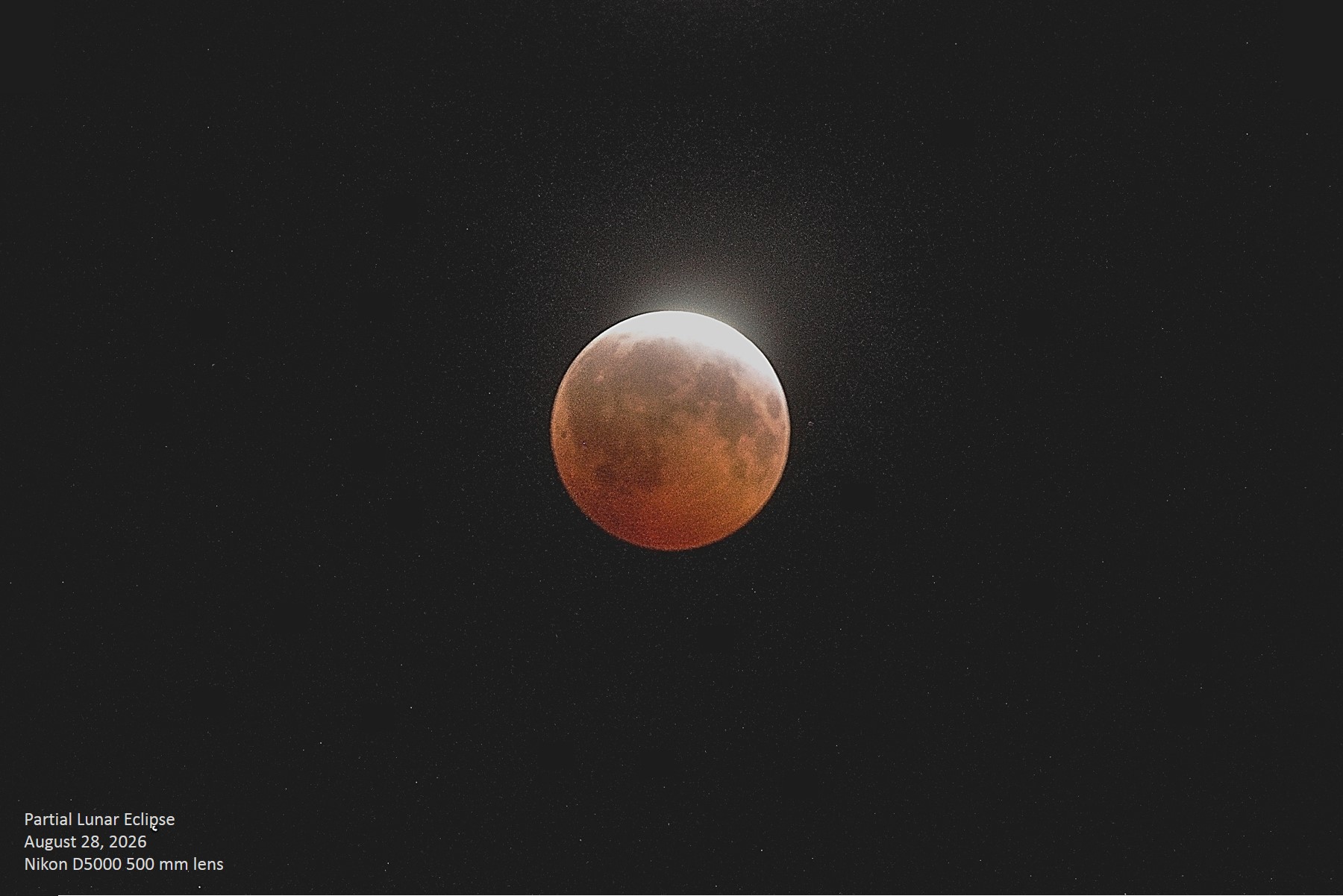
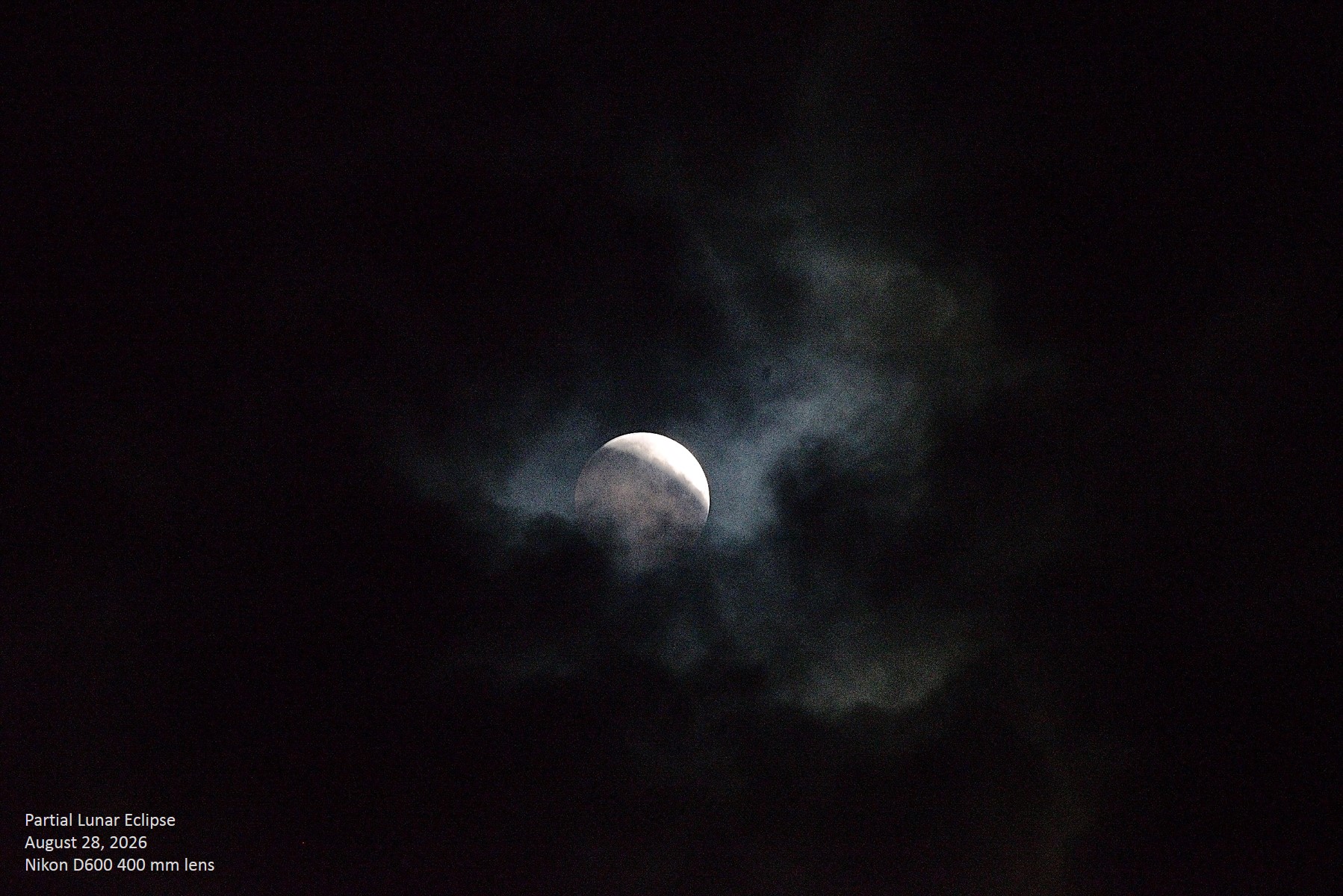
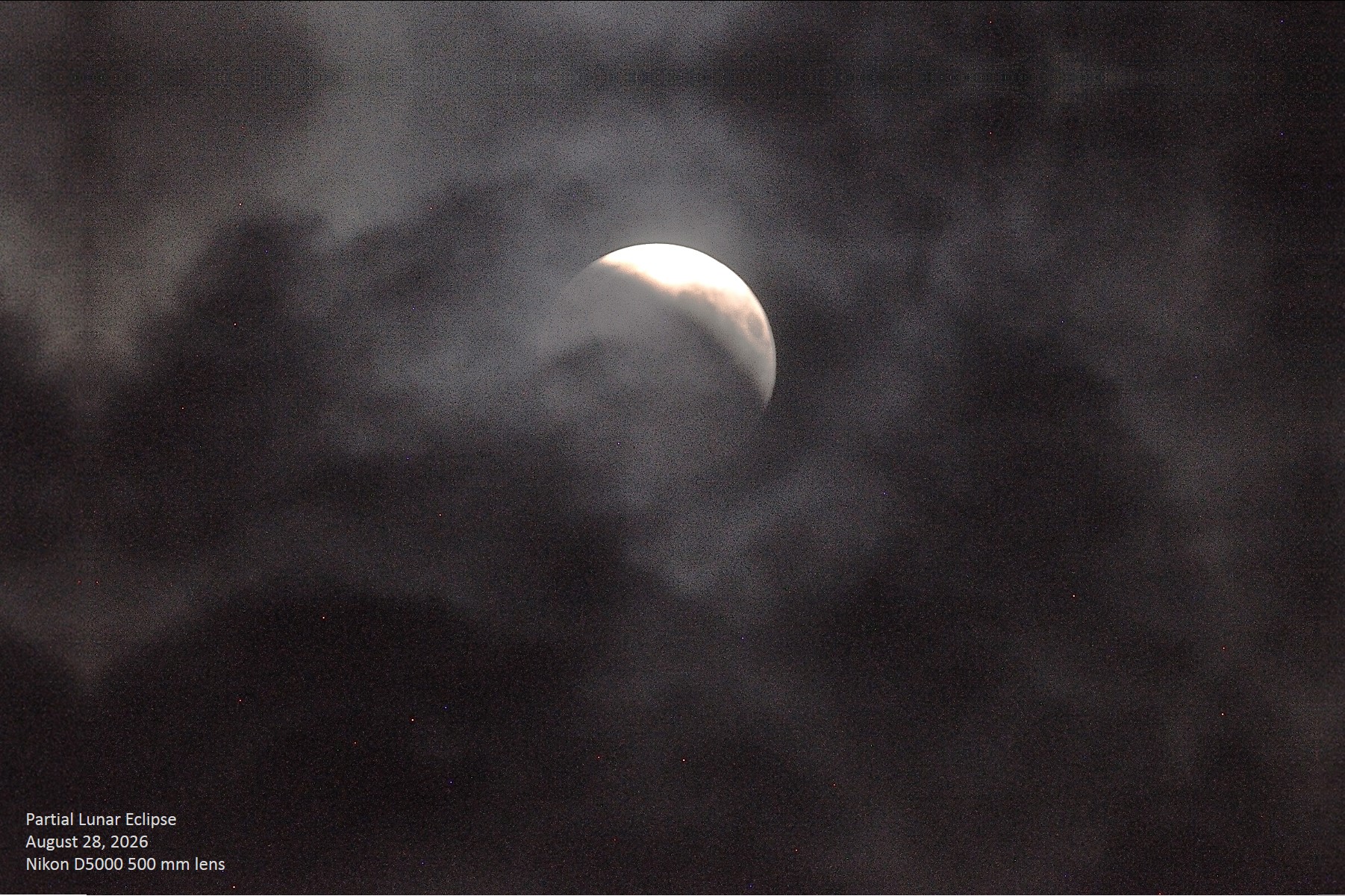
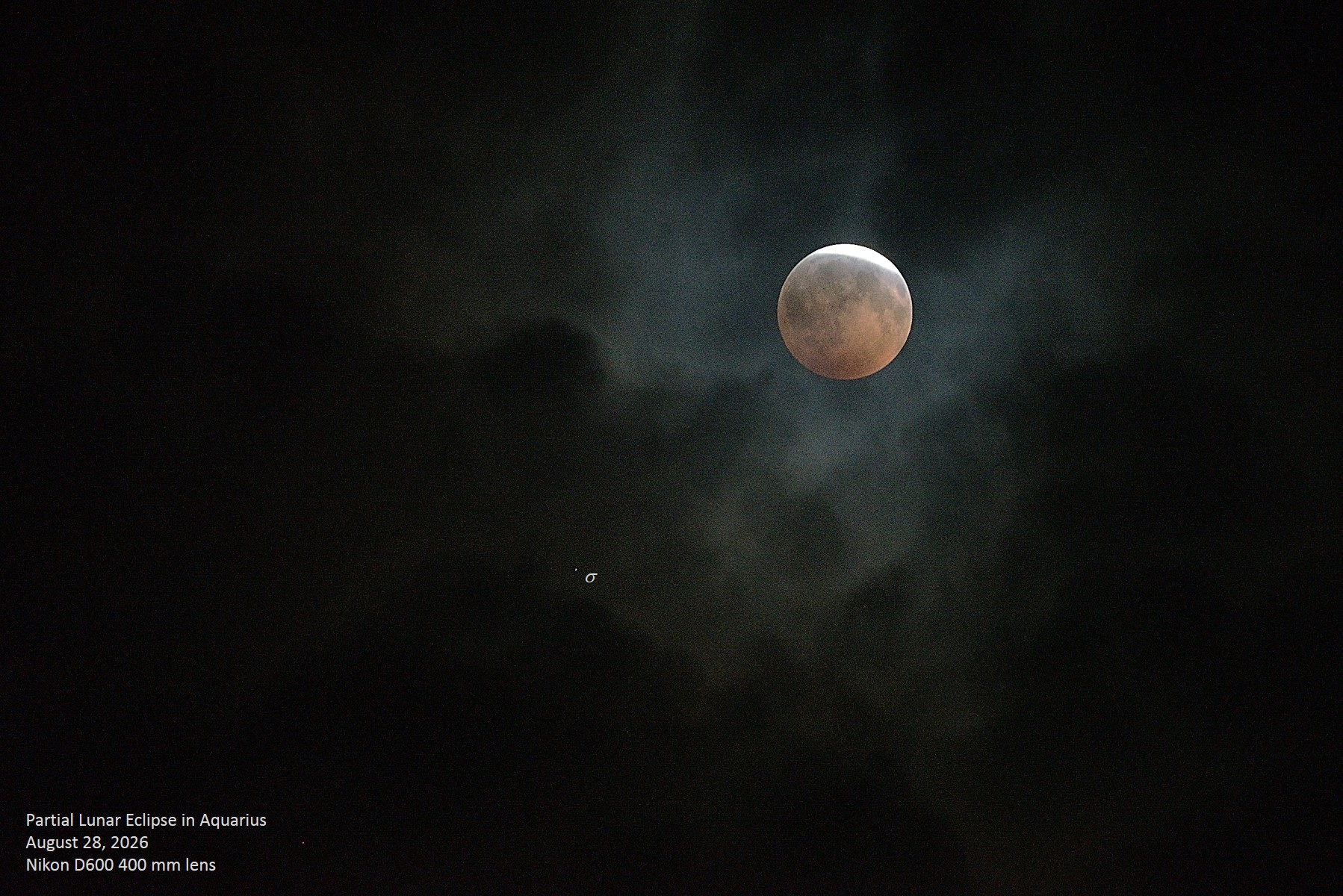
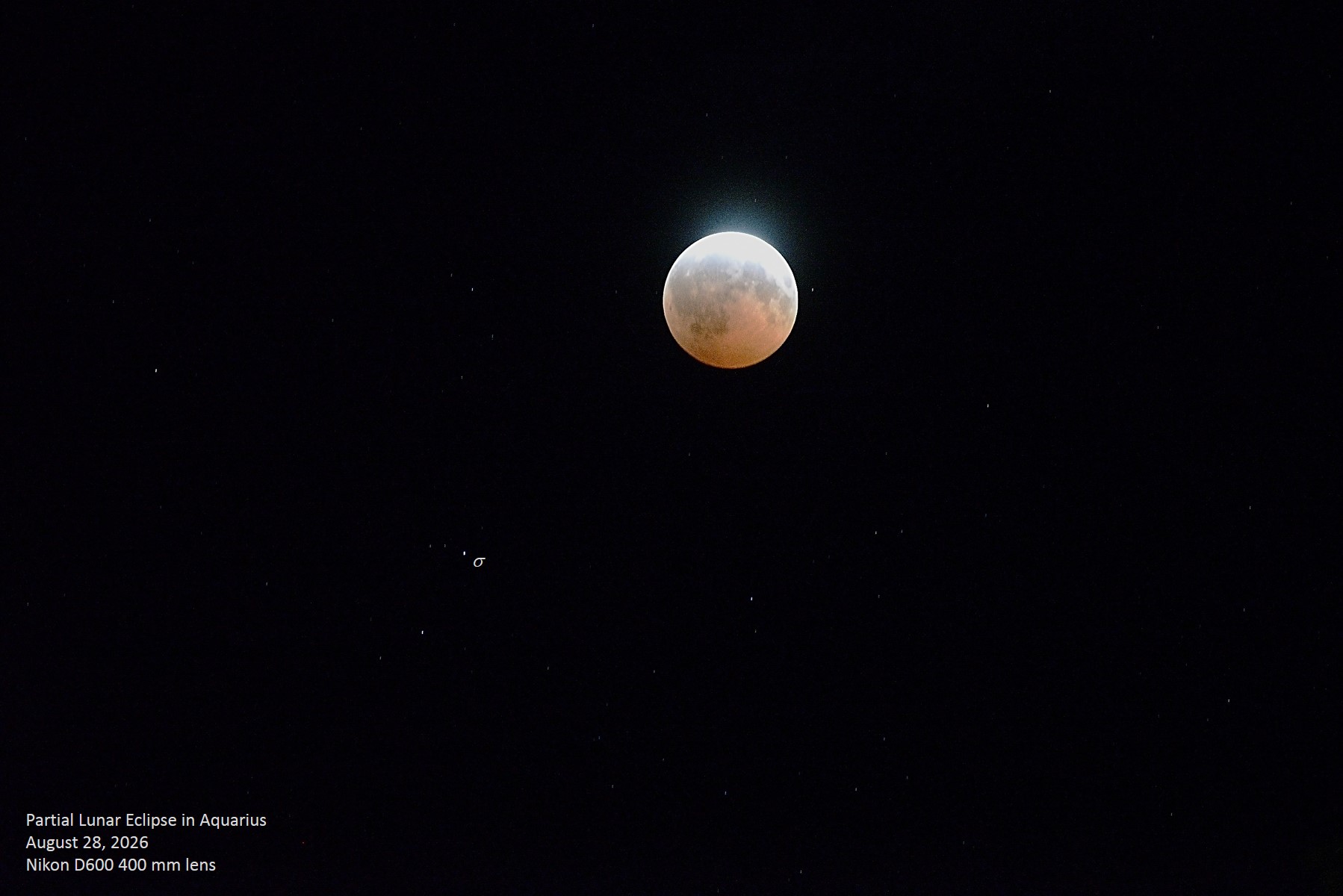
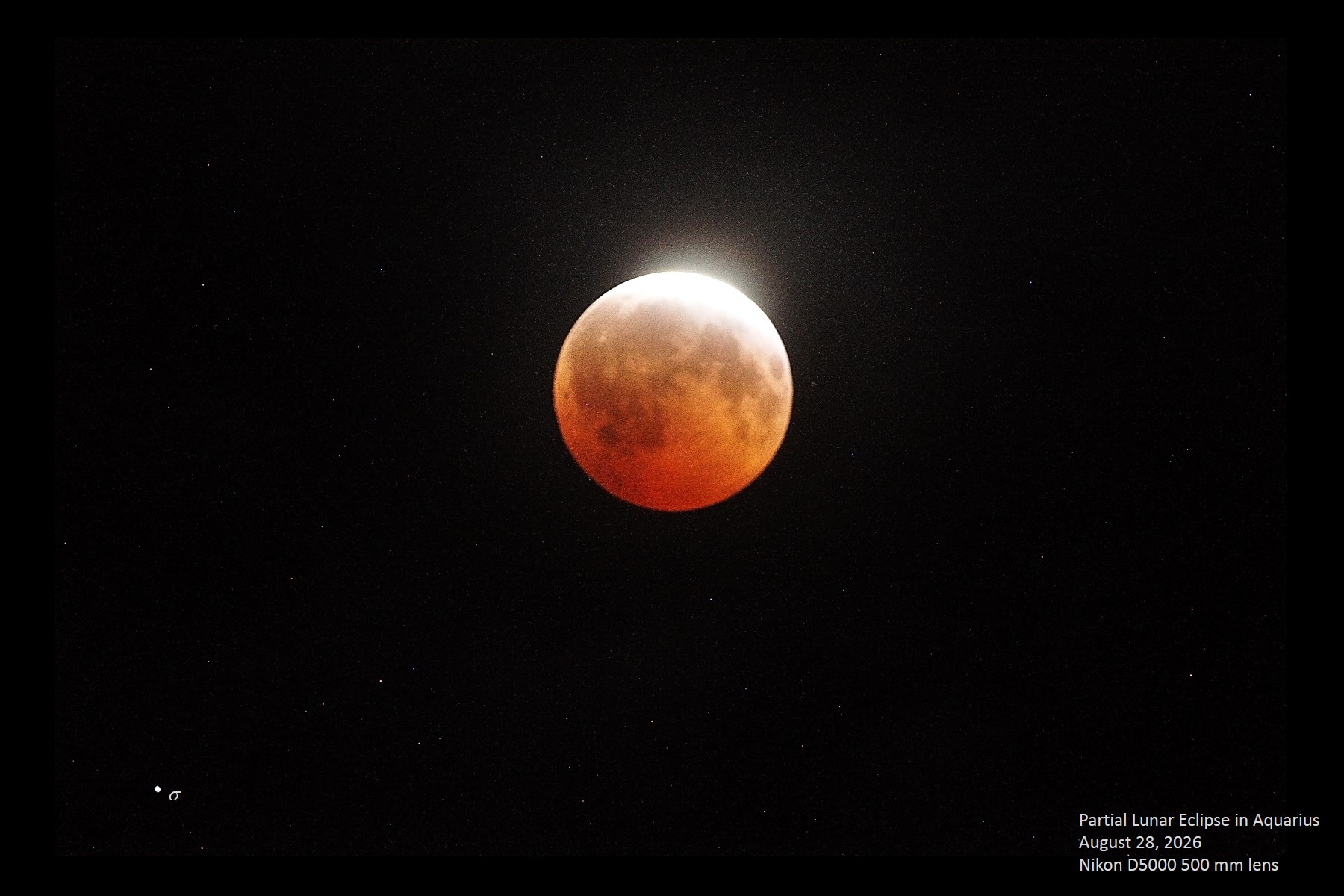
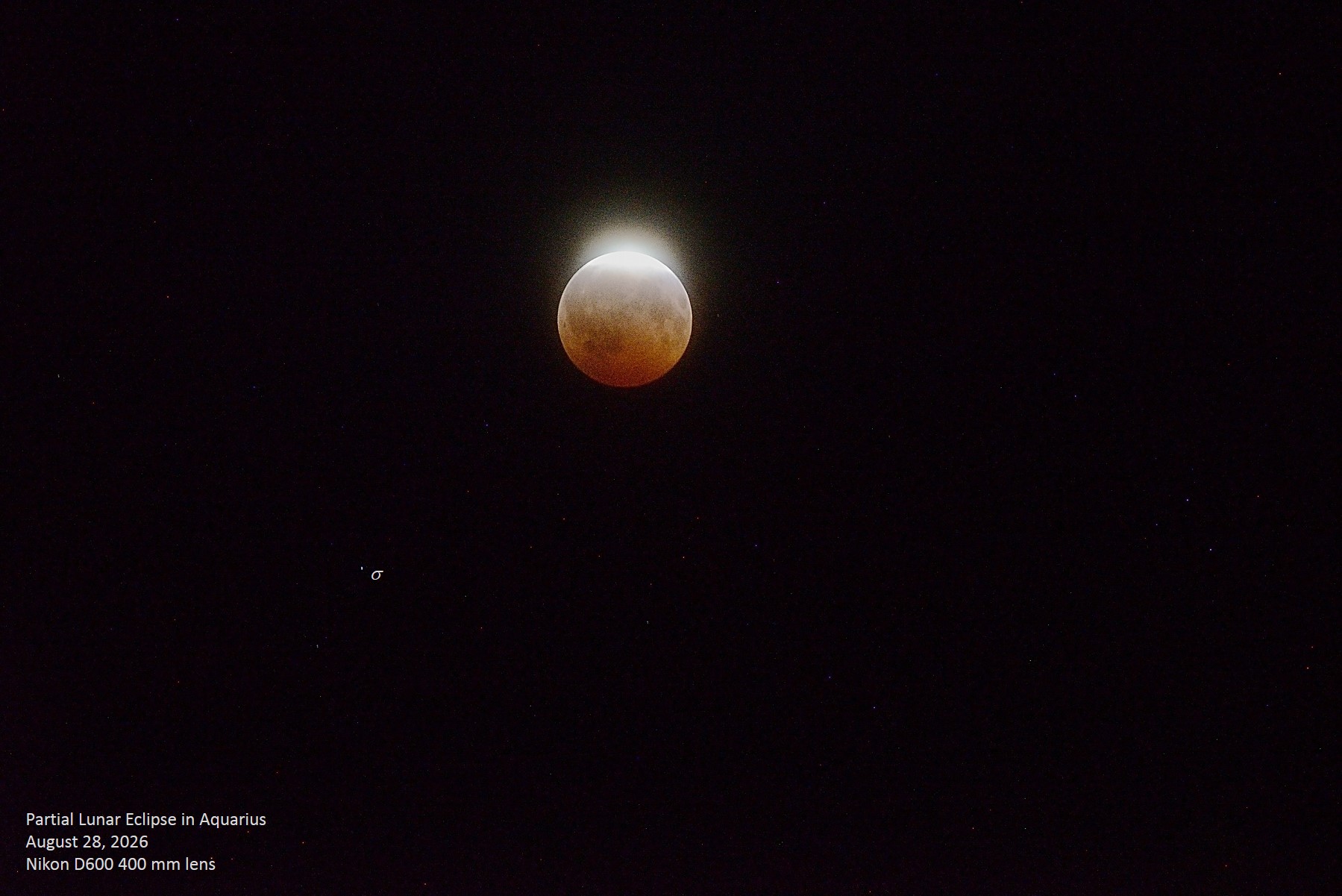
Two weeks after the total solar eclipse of August 12, which was visible in the arctic regions and in Europe, most of the western hemisphere was treated to a partial lunar eclipse on the night of August 27/28. This eclipse was almost total, approximately 96% obscuration, so it would be of nearly the same visual impact as a total one. In this case, the Moon was going through ascending node just before it passed through the Earth's shadow, and thus the northern part of the Moon above Mare Frigoris was outside of the umbra, remaining illuminated by direct sunlight.
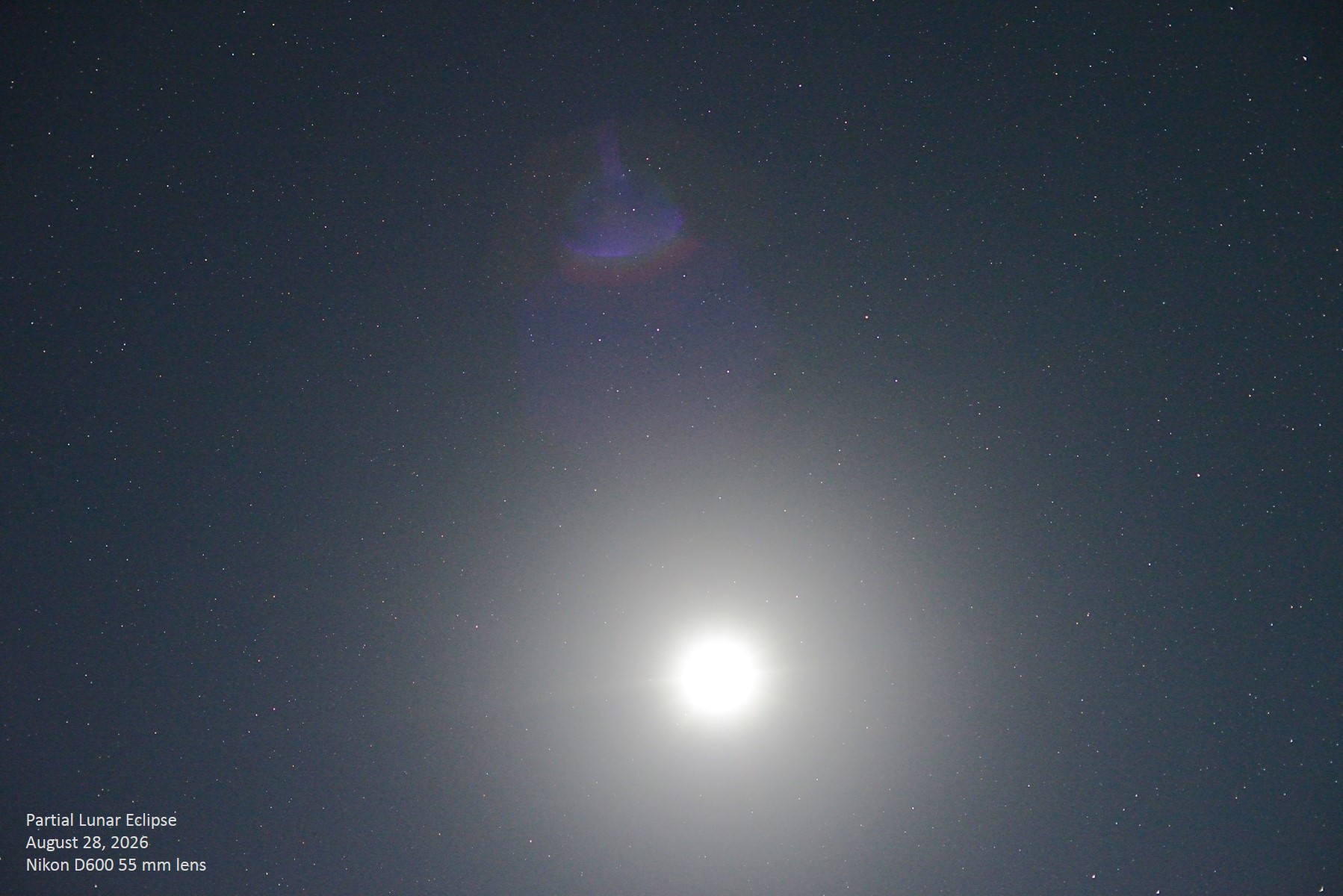
Because the eclipse occurred near the September equinox, it is not surprising that the Moon was opposite that point in the sky, in central Aquarius, in the area below the Water Jar asterism. I didn't get a good picture of the sky scene because it was mostly cloudy from where I viewed the time of greatest eclipse, so after I left to start driving home, the sky became completely clear and I stopped again to take the below picture when the Moon was already significantly out of the Earth's shadow. It therefore appears overly bright and resulted in the hideous blue flares. Unannotated image.
Because the weather forecast for my home east of Fredericksburg, Virginia was not promising, I decided to drive to southern Virginia, speci-fically a location along Interstate 85 southwest of Petersburg, where the forecast was for clear skies during the two hours centered around the time of maximum eclipse. I ended up at one of the very well appointed rest areas on I-85 between South Hill and Petersburg and captured all of the telephoto images of the eclipse from the parking lot of that rest area.
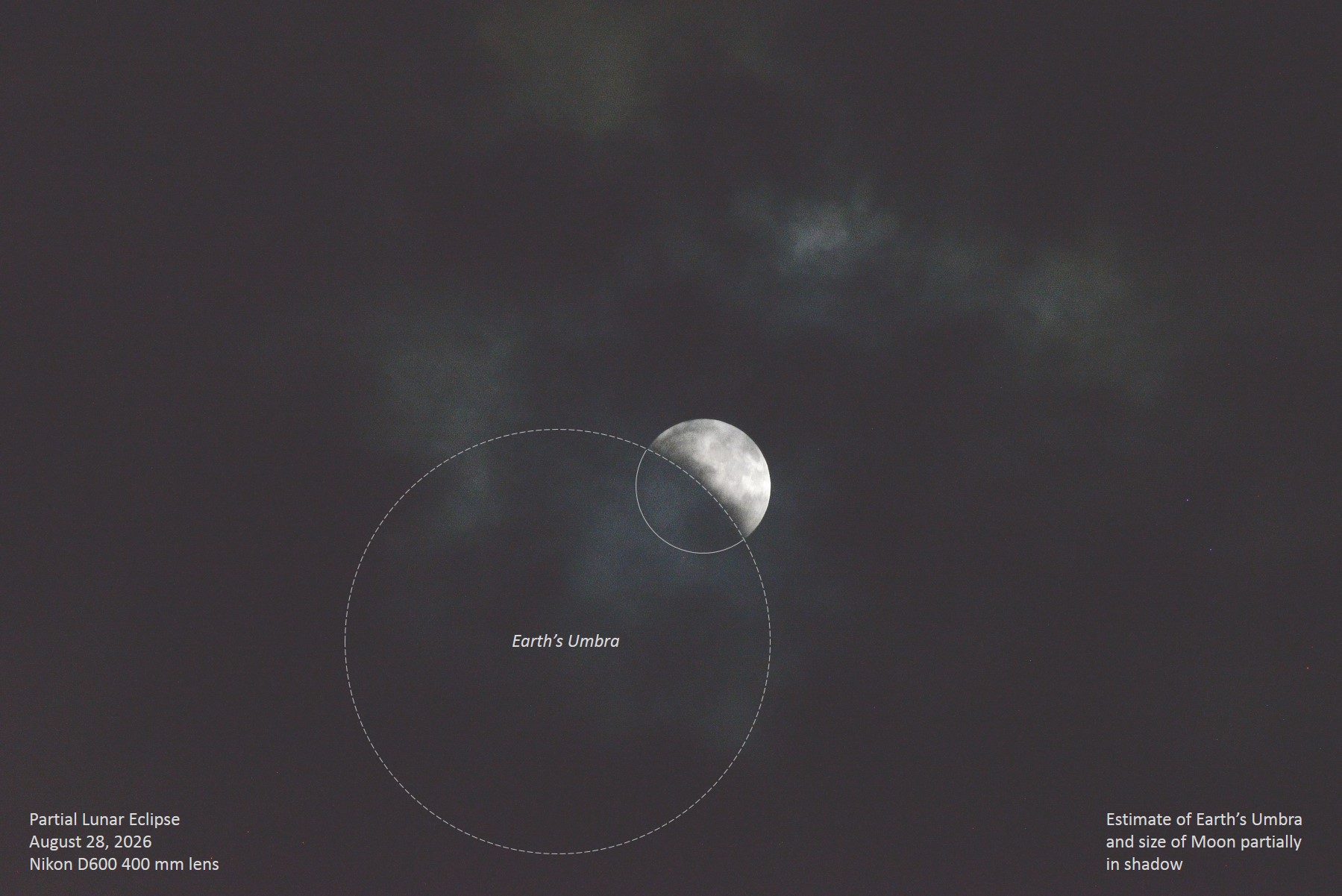
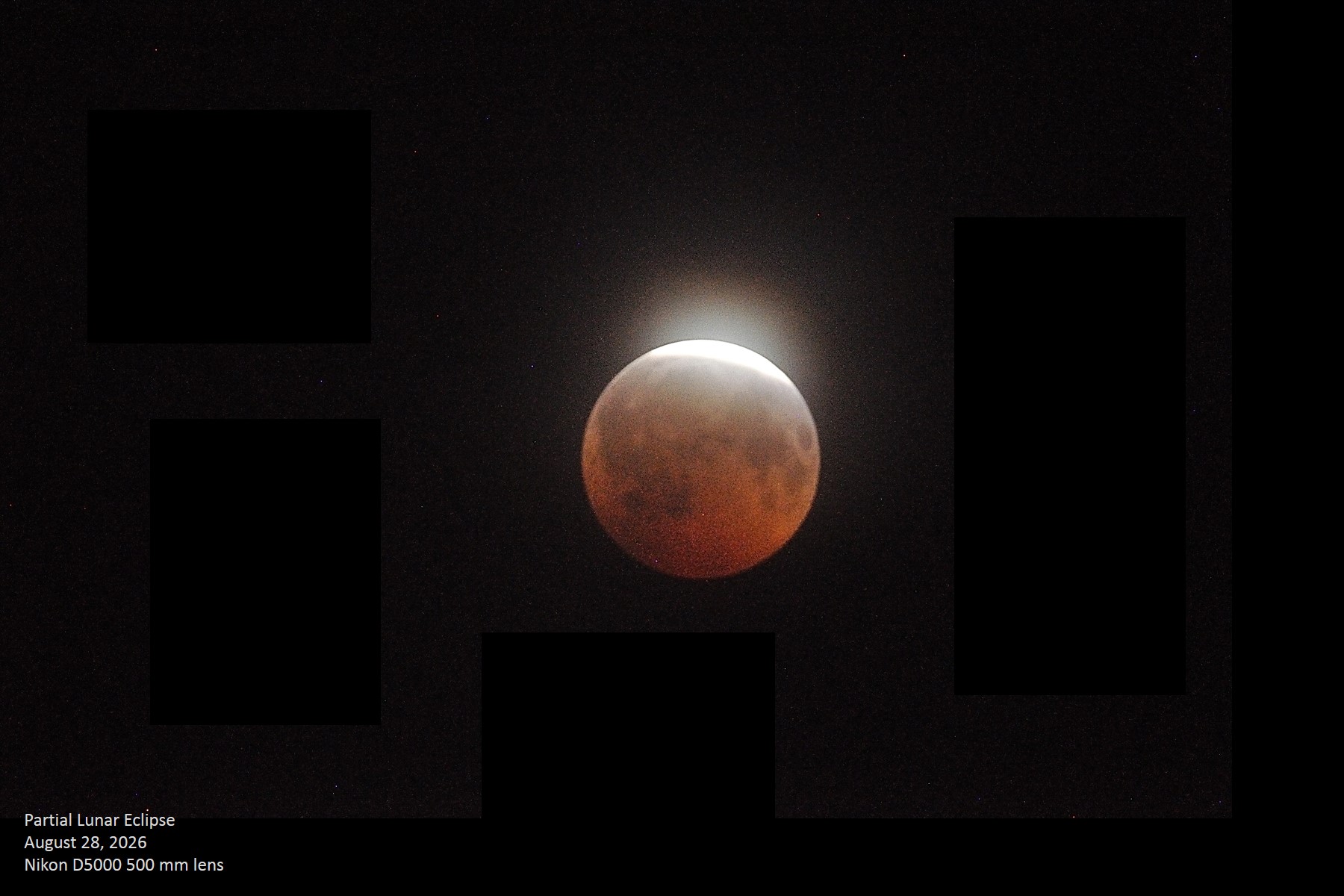
Lunar eclipses give us an opportunity to see one of the phenomena that helped convince ancient astronomers that the Earth was a sphere in-stead of flat. The first two pictures above right show the Moon moving into the Earth's umbra which very clearly has a curved boundary, so in the picture below I use that curve to estimate the size of the Earth's umbra by matching a circle to the shadow outline.